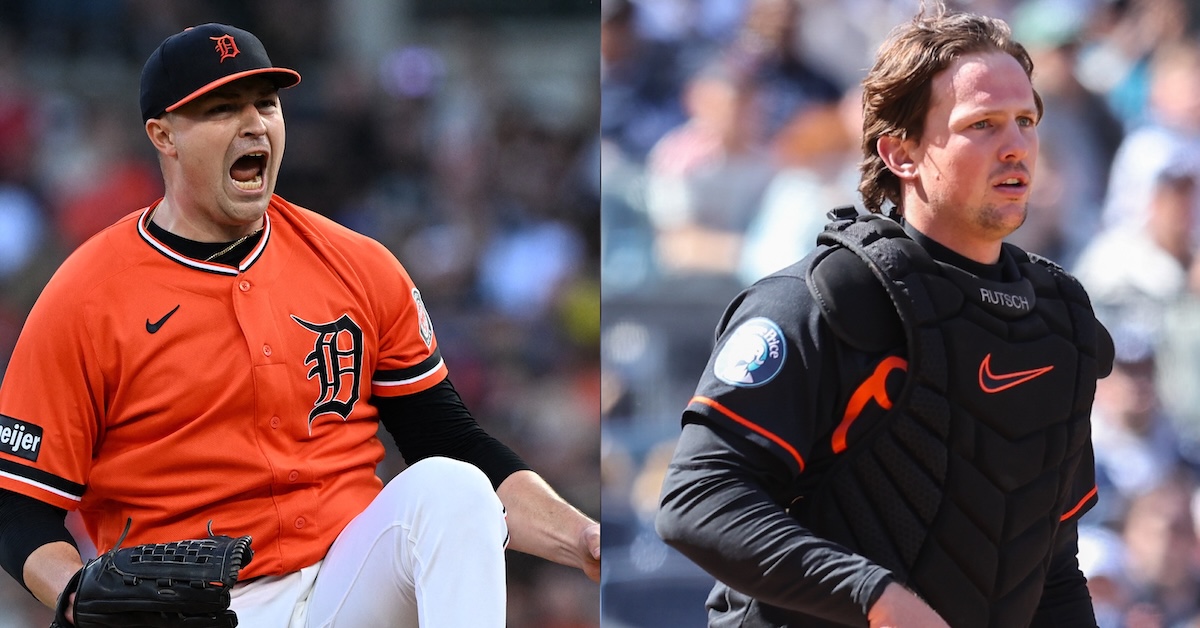
Lon Horwedel and Wendell Cruz, Imagn Images Every year, baseball teams cram a whole season of trade activity and rumors into about four days of mayhem. This year was no exception, and there was an even bigger prize than normal. The best player available at the deadline isn’t always one of the best players in baseball; it’s often merely the best player nearing free agency on a team that isn’t competing. But this year, one of the best few pitchers on the planet fell into that category, and a broad cast of would-be contenders saw opportunities to add some juice to their rosters too. This isn’t a comprehensive list. Give me another few weeks, and I’ll have more nuanced opinions about everyone’s actions. But one day after the sound and the fury, here are the trends that most stood out to me. Winner: The Dodgers Duh. They got Tarik Skubal. Analysis doesn’t always have to be complicated. The Dodgers gave up two Top 100 prospects in the deal, but they’re accumulating top prospects through good drafting and development faster than they can spend them in trades and major league playing time, so that’s not a huge cost. They even get the ancillary benefit of preventing their opponents from trading for Skubal, which is non-neglible. The Dodgers have made three big acquisitions in the past year: Skubal, Kyle Tucker, and Edwin Díaz. That’s the top available starter, hitter, and reliever (in expectation, at least) over that time period, whether in free agency or trade. The Dodgers know that they’re good now, and they’re pressing the advantage at every turn. That killer instinct puts them in great position to add a third straight championship. Not that they’re favorites, because the baseball playoffs are fueled by randomness, but they’re about as favored as it’s possible to be. It’s not just that the Dodgers have the most money, though of course that helps. And it’s not just that they have the best infrastructure and development, though that helps too. Andrew Friedman also seems to be a good game player. Forget NPVs and future expected WAR and the cost efficiency of free agency contracts; Friedman has his foot on the gas because there will never be a better time to go for it than now. They have late-peak Shohei Ohtani. They have peak Yoshinobu Yamamoto. They have a gaudy collection of older superstars backing up those two. Wasting this window would be a mistake, and Friedman simply isn’t letting that happen. Not everyone would operate in the same way. Lots of teams cry sustainability when they’re competing. But the Dodgers are trying to lift the hunk of metal every year. It’s admirable. Can they keep it going? In the long run, I have no idea. Changes to the game’s economic system are coming, one way or another. That sweet, sweet TV money is getting chopped up and redistributed. Ohtani isn’t getting any younger. Freddie Freeman can only play like this for so long (well, okay, this one’s less certain — the man is ageless). Nothing lasts forever. But while the window is still open, Friedman is doing everything he can to squeeze more championships out of his resources. Winner: Pearl Clutchers It was also a good deadline for people who like to complain about the injustice of all. The hand-wringing that ensued after the Dodgers made a trade would make you think that they’d greased the palms of a security guard to sneak into Detroit and literally steal Skubal from the Tigers. I promise you, there’ll be plenty of time to get upset about the state of parity and labor relations in baseball. We’re going to have an entire winter to talk through these same arguments over and over again. There’s going to be no major league baseball going on — none at all! — and both parties will be threatening to keep it that way indefinitely unless the other side agrees to their terms. You Aren't a FanGraphs Member It looks like you aren't yet a FanGraphs Member (or aren't logged in). We aren't mad, just disappointed. We get it. You want to read this article. But before we let you get back to it, we'd like to point out a few of the good reasons why you should become a Member. 1. Ad Free viewing! We won't bug you with this ad, or any other. 2. Unlimited articles! Non-Members only get to read 10 free articles a month. Members never get cut off. 3. Dark mode and Classic mode! 4. Custom player page dashboards! Choose the player cards you want, in the order you want them. 5. One-click data exports! Export our projections and leaderboards for your personal projects. 6. Remove the photos on the home page! (Honestly, this doesn't sound so great to us, but some people wanted it, and we like to give our Members what they want.) 7. Even more Steamer projections! We have handedness, percentile, and context neutral projections available for Members only. 8. Get FanGraphs Walk-Off, a customized year end review! Find out exactly how you used FanGraphs this year, and how that compares to other Members. Don't be a victim of FOMO. 9. A weekly mailbag column, exclusively for Members. 10. Help support FanGraphs and our entire staff! Our Members provide us with critical resources to improve the site and deliver new features! We hope you'll consider a Membership today, for yourself or as a gift! And we realize this has been an awfully long sales pitch, so we've also removed all the other ads in this article. We didn't want to overdo it. But right now, there’s baseball on. Every team in the playoff race can win the World Series. The games haven’t been played yet! Clearly, a great number of teams think they can make some noise in the postseason, or there wouldn’t have been so many Top 100 prospects flying around. We all get it. The economic system in baseball is going to be a hot topic this winter. But now? Now I want to go watch good teams try to win it all. Winner: Patient Sellers Some of the early deals this deadline made me think that the buyers had the upper hand. The Cubs got Kevin Gausman for a relative pittance. Taylor Ward, a righty outfielder in a market completely lacking in that combination, brought back three fringey relief prospects. The Skubal sweepstakes didn’t go completely bonkers. It was a slow buildup. But as sellers held the line, bids started to increase. The Red Sox gave up two Top 100 prospects and another interesting arm for Adley Rutschman. The Brewers sent a Top 100 prospect to the rival Cardinals for two rental players, the Milwaukee front office equivalent of a bender. The Red Sox cut bait on Marcelo Mayer for relief help. The Cubs decided that they needed more pitching – even after getting Gausman, David Peterson (earlier), and Braxton Garrett – and sent out a Top 100 prospect of their own for Clay Holmes. Not every trade followed this pattern of better returns as the deadline approached. The Nats held onto Foster Griffin until the last minute and then had to settle for four marginal prospects instead of just keeping him. But I think the shape of it makes sense. While plenty of teams seemed happy to go into the deadline with a halfway approach, offloading a few pending free agents or adding around the edges, there weren’t many motivated sellers, teams that knew they were out of the race and had valuable players to move. That meant that as the clock ticked down, the negotiating leverage swung. Loser: Half Measures A few teams tried to have their cake and eat it too this deadline, playing one role partway or trying to switch between buying and selling. For the most part, I thought this group missed the mark. The Blue Jays traded Gausman and Daulton Varsho, but then they acquired José Soriano and Josh Smith. They traded Jeff Hoffman, a key reliever under contract through next year, for three guys who aren’t likely to help them in the near future. They acquired Jameson Taillon, albeit for basically nothing, to finish out the 2026 season. That’s trying to thread an incredibly thin needle, and I’m not sure they accomplished it. Between moving near-majors prospects for far-off ones and trading from players with team control, their 2027 squad feels only a little better to me today than it did yesterday. I think I would have preferred for them to just pick a lane and go that way, even if that lane was boring. I just think they fell victim to Fancy Play Syndrome, the nagging idea in the back of your head that says “Do this, it’d be so cool.” To a lesser extent, the Diamondbacks, Braves, and Astros fell into this group for me too. All three added at the deadline, but all of them added lethargically. The Diamondbacks are barely holding onto a playoff spot and have one of the worst rotations in baseball, but their only addition was Lars Nootbaar. The Braves look playoff-bound, but their rotation could use some oomph, and their lineup is a bat or two short of fearsome. Tyler Mahle and Lane Thomas don’t exactly address those issues. Maybe Chris Sale can do it all himself, but well, maybe he can’t. And the Astros might just not have had enough of a farm system left to feel like they could make more moves, but that didn’t stop the Padres, who found themselves in a similar spot and still made moves to bolster their rotation. I like Varsho’s fit in Houston, but I don’t think 2027 is going to look better for the Astros than 2026, so I would have tried harder to improve the current team if I decided to buy. Winner: Craig Breslow’s Sudden Aggression I’m not sure how Boston’s season is going to turn out, but it’s been a delight to watch as a neutral observer. The Sox made industry standard, consultant-approved team building moves all winter, trying to stack up accumulations in value and Build Sustainably Through Agile Thinking, or whatever buzzword you’d call it these days. To be clear, I liked those moves. I wrote about them this winter. But they were based on playing the odds, taking a long view, trying to make improvements while minding the cost. Then things started to fall apart. The Sox started as cold as possible. Breslow fired Alex Cora and most of his staff before the end of April. The front office drew plenty of criticism both for the way they handled the firings and the timing. Breslow’s focus on analytics, his team construction, probably his Dunkin’ order of choice, it all came under scrutiny. But July saw them go 21-4, spurred by a 15-game win streak. Suddenly they found themselves in a playoff spot and with a good farm system, and Breslow said screw it, I can go get Adley Rutschman, why wait? The first sign that the Sox were going to be aggressive buyers was the Connelly Early/Curtis Mead trade, which is a good avatar for all of Boston’s consequential moves this deadline. In terms of pure surplus value, I like the Nats’ side of it. But from the perspective of trying to be good this year, the Sox won it for sure, even if Mead broke his hand right afterwards and ruined their plans. The deal for Rutschman was their big swing, and while it might be another overpay, only the Dodgers added a better player at the deadline, and the Red Sox even get Adley next year too. Likewise, I was shocked to see Mayer moved for a reliever, albeit a solid lefty, but clearly the Red Sox had had enough of looking at the little cell in their spreadsheet that told them how valuable Mayer was to the team, and decided to get out while the getting was still good, improving the team in the process. We might look back on these trades in a few years and say that Boston overpaid. Certainly, the industry consensus leans that way now, and I agree. But I’m not all that confident, because I’m not all that confident in my evaluations of the 10 players the Red Sox dealt. I am sure that they made themselves better this year, and that’s the point of this exercise. You do all the boring, accumulative stuff in the slow times so that you can move fast and break things in the heat of a playoff race. I find myself in the strange place of agreeing with Craig Breslow’s strategy (go for it) while being unsure of his tactics (at what cost?), after his entire tenure until now had been marked by my thinking the opposite (great short-term tactics, but not enough long-term plan). Undecided: The Phillies I was ready to crown the Phillies a winner when they traded for Luis Arraez early in the day. Is it a great fit? Not even a little. Did they pay up? They sure did. But think of it this way: In two years, this Phillies team won’t be as good as they are now. They probably won’t be good, period. Their 26-man roster only has four players under the age of 28. More talent in 2028 isn’t going to do them much good. They’re contending for the playoffs this year, though; a win in 2026 is incredibly valuable to them. Adding Arraez and figuring out where he goes later? A great recognition of that tactic. But uh, not like this. After the Arraez deal, the Phils didn’t keep hammering. Their outfield was weak, but they didn’t add any outfielders (no, Colby Thomas and Kameron Misner don’t count). Instead, they’re shifting Bryce Harper to right field, and I hate it. Maybe this will somehow work out. Maybe Harper will turn back the clock. But you’ll never convince me that this is a good move in a vacuum. The injury risk alone makes this an unpalatable decision, and that’s before considering how playing a guy who figures to be one of the worst defensive outfielders in the business will affect Philly’s pitching. It would be one thing to shoehorn in an out-of-position slugger to get an extra elite bat in the lineup. The Phillies have been the masters of this over the years; their Kyle Schwarber/Nick Castellanos/Harper outfield trio was the best example. But this time, they’re doing it to get Alec Bohm’s bat in the lineup. Bohm is hitting .226/.283/.362! He’s a career 100 wRC+ hitter, and he’s playing meaningfully worse than that at the moment. Why not just get an outfielder for some nominal cost and play him in right? What, he’s going to hit worse than Bohm has? Winner: The Giants It’s been an absolutely miserable season in San Francisco. The record, the vibes, the controversies, the feuding with a beloved local radio station – as an SF resident, I can tell you that the mood here is not good. But this deadline, the Giants did a great job of turning some useful but hardly overwhelming players into a big accumulation of prospect talent. Trading Arraez brought back fast riser Ramon Marquez, an exciting pitching prospect. I’ve already mentioned Mayer, a great acquisition for a reliever (Erik Miller) with nasty stuff, indifferent command, and durability issues. Heliot Ramos had been trending down for a few years after his breakout 2024, but he’s a righty outfield bat, so the Giants flipped him for a good return anyway. They turned Robbie Ray into two interesting prospects. At the start of the 2025 season, we had the Giants 27th in our Farm System Rankings. After this deadline, we have them up to 10th, and this despite graduating Bryce Eldridge, their top prospect. The present hasn’t been good in the Buster Posey era, but there’s reason to believe that the future is bright, or at least brighter. This was a much-needed win for a beleaguered front office. Winner: Animal Spirits I’m not quite sure what “animal spirits” are, but John Maynard Keynes coined the term to describe the collective instincts that make the market behave in irrational ways, and I’ve used it inappropriately ever since I learned it to describe anything in my life governed by collective mood. This year’s deadline woke the spirits for sure. When the dust finally settled, 10 Top 100 prospects had changed hands. Do these guys have warts, questions to answer, risks to their profiles? Of course. But that hasn’t always stopped teams from overvaluing their own best guys and standing pat even when they could really use a boost. The expanded playoffs make for fewer sellers, but they haven’t always made for more motivated buyers. This year, good minor leaguers were available for the right return, though. I can’t prove it, but I think that the ominous clouds on the labor horizon might have helped. Even if they don’t admit it consciously, team decision-makers surely have that scary cliff looming over their thoughts. They might not have any work to do this winter. In the extreme case, they might not have any work to do next year, either, and the way they do their work could be set to change meaningfully. Competing in 2026 looks a little bit more interesting when you don’t know what 2027 will be like. Whether it was that or something totally unrelated, this deadline delivered. I didn’t even have room to talk about all the decisions that fascinated me – the Tigers, Nats, Marlins, and Orioles planting the flag as sellers when teams with similar records went the other way is intriguing, I just wasn’t sure whether to put them in the winners or losers camp. I’m exhausted, as it should be after a trade deadline, but I’m exhilarated, too, because this was a good one.
Winners and Losers From the 2026 Trade Deadline
Full Article
Original Source
Read the full article at Blogs →KhanList aggregates and links to publicly available news content. We do not host full articles from third-party sources. Always verify important information with original sources.