
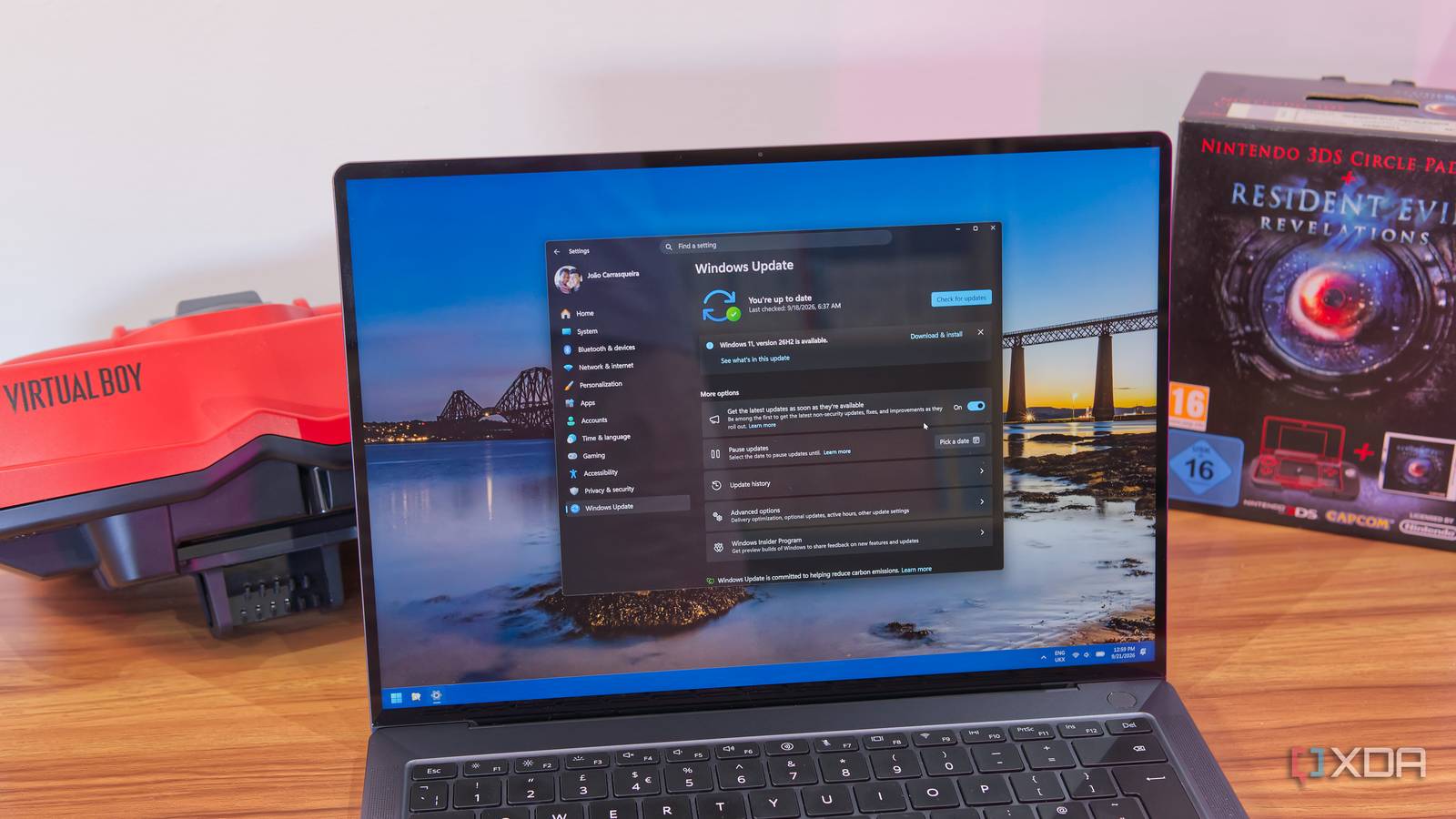
Published Sep 22, 2026, 9:00 AM EDT João has been covering the tech world for over 7 years, with a heavy focus on laptops and the Windows ecosystem. I also love all things tech and videogames, especially Nintendo, which he's always happy to talk about. Prior to joining XDA in 2021, he worked at Neowin: https://www.neowin.net/news/poster/jo%C3%A3o-carrasqueira/ Windows updates are pretty infamous for a number of reasons, and not all of them are completely fair. People like to complain about their PC restarting at inconvenient times, for example, but even minimal planning should work around that. But some criticisms are completely justified, such as the fact that, as of late, Windows updates break something more often than not. It often feels like end users are beta testers for Microsoft, and it's gotten to the point where I just can't trust Microsoft's Windows updates. Now, I have to double-check before installing anything. Windows updates are a mess Every month there's something new It's not exactly a shock that software updates can sometimes come with issues, and at times they can be massive problems, but for the past few years, it seems like this has become the norm for Microsoft, rather than the exception. Even the monthly maintenance updates that are usually supposed to be smaller and don't add tons of new features can give users massive headaches. Seriously, it feels like every other month there's a report about some big problem with a Windows update. Just earlier this month, users reported issues with the Windows Subsystem for Linux after installing the latest update, along with Claude Cowork. And while it's not a Windows update itself, there was an update for Microsoft Excel on Windows that broke copy-paste functionality. That's not a small issue. Then, in July, Microsoft had to put an update on hold because some Dell PCs were randomly shutting down after installing the update. Our own Ty Sherback wrote earlier this year about every time Windows had broken something on his PC, and it's shocking to see how common it is to have things just stop working as they should. This shouldn't happen with a piece of software that's this ubiquitous. Holding off on updates It's not the mentality I want, but the one I need I've always been big on installing updates as soon as I can. In fact, I look forward to them. I used to keep an eye on the clock so I could install them and make sure the updates wouldn't come when I'm using the PC for something else. I'm just naturally curious about any potential improvements, whether it's security, stability, or speed. But all these issues have forced me to change my attitude towards Windows updates specifically. Now, instead of installing updates as they become available, the best strategy is to just wait and see what's reported before making the jump. It only takes a few days for problems to start popping up online, whether it's on places like Reddit or Microsoft's official forums, and when it gets bad enough, it may even make the news. Thankfully, Windows 11 provides the option to pause updates for up to a few weeks, and updates are released frequently enough that I can do that on a consistent schedule. Microsoft's "Patch Tuesday" release schedule means that new updates always arrive on the second Tuesday of every month, so I can simply hit pause on the updates for the maximum of five weeks, wait for Patch Tuesday to come and then wait until the weekend or so to see if any major issues have been reported. If everything is good that month, I can resume updates and install everything that's pending, then hit pause again, and the cycle repeats. If there is an issue, the five-week pause period means I have at least one more week before I need to accept incoming updates, which could give Microsoft time to issue fixes or workarounds for those problems. It's good standard practice, too It took Microsoft some time to realize that Even if a particular piece of software isn't especially prone to bugs, holding off for a while before installing updates can be a good approach, especially when those updates make a lot of changes. And interestingly, competitors with Windows have realized that for a while. Most Linux distributions don't install updates automatically at all, meaning the user is always in control of when updates are downloaded and installed. And on macOS, while automatic updates are the default, you can still easily disable them and just get updates when you're ready to install them. Windows 10 and 11 didn't really have this mechanism for a long time. The idea of pausing updates has been around for a while, but for Home editions of Windows, you used to only get one week to pause updates, which is not ideal if you want to safeguard against the buggy monthly updates. That limit only increased recently, and even then it's not an ideal approach, because you're forced to get updates at the end of the pause period unless you manually extend the pause period before it ends. You can't just make it so that updates are always installed manually, which deprives users of the level of control they rightfully should have over their own hardware. Windows updates should be more reliable While the limited control users have over updates is certainly a problem, Microsoft would do itself some big favors if it just had better quality control on the updates themselves. A single OS update every month shouldn't cause problems as frequently as it does considering how little is being changed with each update. I'm not particularly hopeful, but I'd love to see Windows improve in this regard.
Windows has been so buggy I paused monthly updates, and now I wait for reports before installing anything
Full Article
Original Source
Read the full article at Xda-developers →KhanList aggregates and links to publicly available news content. We do not host full articles from third-party sources. Always verify important information with original sources.