
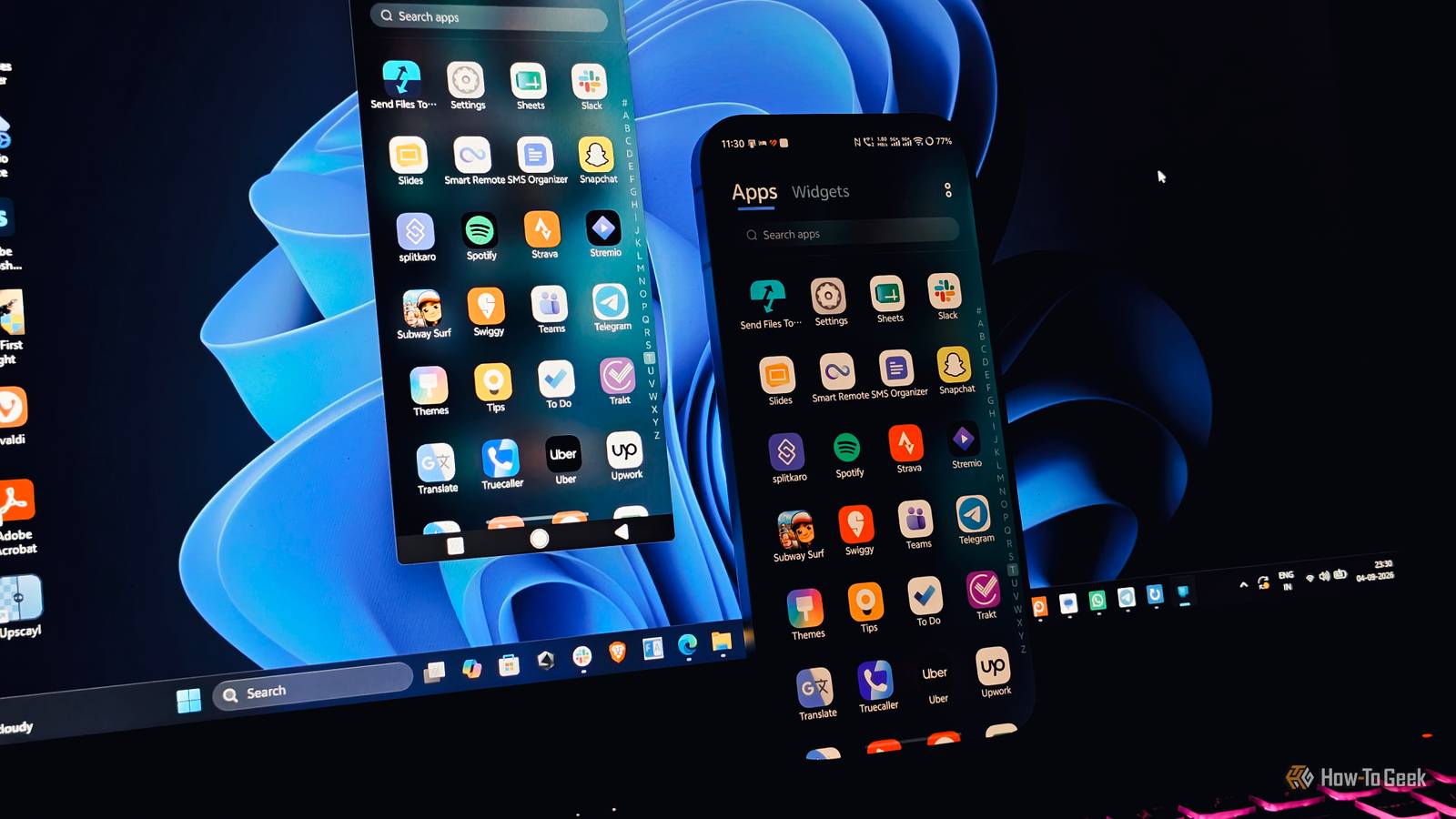
Published Nov 20, 2026, 5:07 PM EST Jefferson Mangubat is an experienced technology journalist who has reported on consumer electronics, software updates and big stories in the industry. He's now a Reporter at How-To Geek, and has built a solid reputation for delivering accurate, accessible, and insightful tech journalism. Prior to that, he was a tech reporter for Neowin, where he extensively covered hardware developments from Apple and Google, in addition to digital trends and application updates. Sign in to your How-To Geek account Microsoft’s Phone Link already does a decent job bridging the gap between Windows PCs and Android phones by bringing your mobile notifications, photos, and apps to your desktop. Now, the company may be taking that relationship a step further. New code discovered in the Link to Windows app suggests Windows 11 may soon let Android phones and tablets double as wireless second monitors, as spotted by Windows Latest. That would give PC users another way to expand their workspace without having to buy a second display. Called “Extend display,” the feature would send part of a Windows desktop to an Android device, giving users extra screen space without a separate third-party app. Unlike Phone Link's existing tools, which let users access Android content from their PCs, Extend display would send Windows desktop content to an Android device, effectively turning it into an extra monitor. Credit: Windows Latest The code points to a dedicated “Phone as Display” system with the ability to initiate a session either from Link to Windows or the PC. It also references video codecs such as H.264 and HEVC, alongside display information such as resolution and refresh rate. That means the computer could encode its desktop as video to be decoded by the phone or tablet. Plenty of technical questions remain Connectivity, resolution, and performance are still unclear There are still a lot of unknowns. The code does not establish whether Extend display will use Wi-Fi or USB or both, or whether it will divulge supported resolutions, refresh rates, and compatible Android devices. A session may terminate if the PC locks up, the connection is lost, or the phone display receiver fails. The app apparently times out after 60 seconds if the first frame of the video never appears. A phone as a second monitor makes even less sense than an Android tablet. The latter’s bigger screen could mean a Teams chat or reference document could sit alongside a laptop. A phone can handle a messaging pane, but its tiny screen is hardly a productivity paradise. Foldables could be somewhere in the middle. Samsung’s Second Screen already exists on some Galaxy tablets, while spacedesk needs a PC driver and a separate mobile app. It’s fiddly as it is, but integrating the option in Link to Windows could make it less so. The biggest hurdle could be compatibility. Some existing Phone Link features, such as screen mirroring, are only available on certain Android models from Samsung, OPPO, Realme, ASUS, Vivo, iQOO, Honor, OnePlus, and Xiaomi devices, per Microsoft's support page. Whether Extend display will support the same devices remains unclear. It looks promising in code, but it’s not ready for your workflow. Source: Windows Latest
Windows 11 could soon let your Android phone double as a second monitor
Full Article
Original Source
Read the full article at Howtogeek →KhanList aggregates and links to publicly available news content. We do not host full articles from third-party sources. Always verify important information with original sources.