
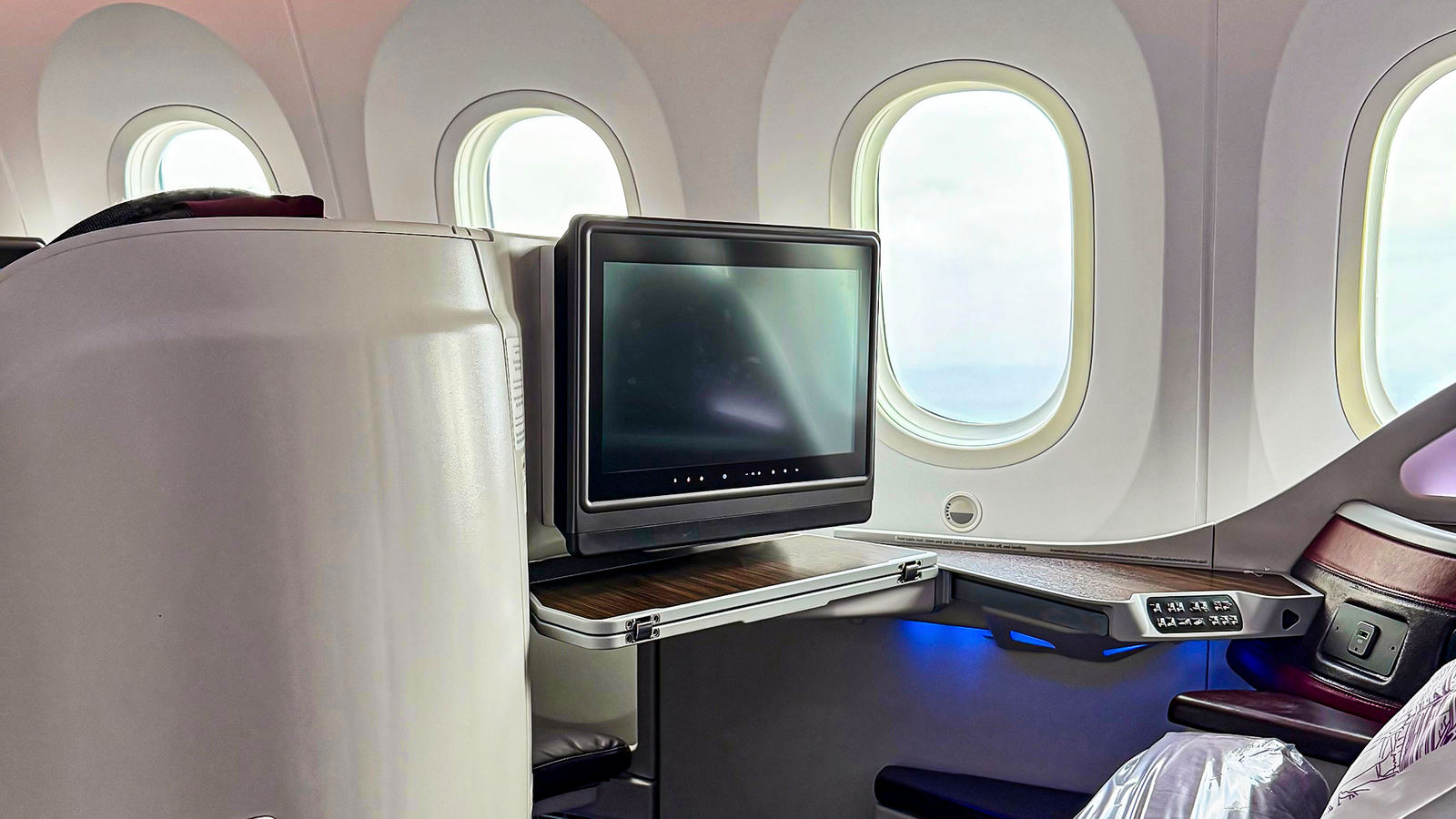
Published Aug 29, 2026, 3:00 PM EDT Writer - Patricia joins Simple Flying with over 20 years of experience in aviation. She has served as cabin crew on flights from economy-class through to first-class and on private jets as well as being head of cabin crew and cabin safety focal point. Patricia has a master's level postgraduate diploma in Human Factors in Aviation and has written about aviation since 2010. Based in Dubai/Cyprus. On most commercial aircraft, the passenger seated next to the window has control over the window shade, and most passengers choose the window seat for the view outside. However, on one particular aircraft, the Boeing 787 Dreamliner, it is only partly true that those sitting next to the window have control of the shade. On the Dreamliner, the traditional pull-down window blinds were replaced with electrochromic glass developed by Gentex in conjunction with PPG Aerospace. Each seat has its own individual control with different settings. However, each window is also linked to a flight attendant panel in which the crew can set or lock the shades across the entire cabin. This can be very practical in terms of cabin operations, but has become a bone of contention and not such a popular feature with those traveling in the cabin. Let's find out more about this issue, the technology behind it, and what might happen in the future. The Technology Behind It Credit: Shutterstock The Gentex Corporation is a supplier of automatic dimming mirrors in the automotive industry. In 2007, they shipped the first set of dimmable aircraft window shades to PPG Aerospace for use in the cabin of the Boeing 787 Dreamliner. PPG Aerospace is the sole source to Boeing for their cockpit windows on the 737, 767, and 777 aircraft. Of course, all aircraft windows have several layers of glass or stretched acrylic material to withstand the pressure differential inside and outside the aircraft, so what makes these different? The new aircraft windows are 60 percent larger than most other aircraft windows and uniquely dimmable. They measure a full 10.7 by 18.4 inches in size (about 30% to 65% larger than standard aircraft windows) and completely replace the traditional plastic pull-down shades with an electronic dimming system. The second-largest windows, in comparison, belong to the Boeing 777 which are 10 by 15 inches. The new Boeing 777X will feature significantly larger, higher-positioned windows than those on standard widebody aircraft (roughly 29% larger than the A350). So what is the technology behind the windows? The electrochromic glass shades use a gel layer sandwiched between two panels that darkens the window across five settings, from fully transparent to nearly opaque when an electric current is applied. The higher the voltage, the darker the gel becomes and vice versa. The electrodes are placed on the sides of the windows, behind the inner panels, and out of view of the passengers. Although there is a switch at each passenger's seat, the crew onboard can also control the window shades. Simple Flying Quiz Think you really know Boeing? Answer 10 questions and put your knowledge to the test Simple Flying Quiz Think you really know Boeing? Answer 10 questions and put your knowledge to the test Practical For The Crew Credit: Bamboo Airways Every window in the cabin can be controlled from the flight attendant panel, and crew can decide when to set or lock the entire shade selection. That capability exists for practical reasons, including darkening the cabin for overnight sectors and allowing passengers more sleep through different time zones. The crew can also use it to manage cabin temperature on arrival in hot climates. It can also be set to settle any disputes between passengers and shade use, without having to discuss the issue with the passengers. Flight attendants can centrally control, override, or lock all cabin windows at once. During takeoff and landing, the crew overrides passenger controls to ensure all windows are set to 100% transparent. This allows the eye to adapt to the conditions outside, which is crucial if there is an emergency and necessary for a speedy evacuation. Compliance is the same as on other aircraft where the shades remain open during takeoff and landing. The crew also needs to be able to see outside for any hazards, should any emergency situation occur. On traditional airplanes, flight attendants have to walk down the aisle and manually ask passengers to pull up their plastic shades. On the Boeing 787, the crew bypasses this entirely by pressing a button on their central flight attendant panel to instantly clear and lock all the windows at once, speeding up the cabin secure process. However, there have been debates regarding the crew's control of the windows, and some issues were reported. Subsequent Issues Credit: Shutterstock Although practical, the new window shades have also caused some friction between passengers and crew. It is sometimes reported by passengers on long-haul flights that flight attendants frequently use the master galley switch to fully dim and lock the windows across the entire aircraft. Forum posts suggest that crew lock the windows to keep the cabin dark and encourage sleep, which significantly reduces the workload for flight attendants. Travelers who specifically pay extra for a window seat to enjoy daylight, snap photos, or look at landmarks find themselves permanently locked in darkness with no manual override, which has caused some passenger outrage. The conflict and subsequent backlash has caused airlines to intervene and change procedures. Indeed, United Airlines issued a directive to its crew to not use the flight attendant panel to force window shades to darken or lock them. American Airlines reportedly issued a memo asking crew to stop locking passengers out of the controls, noting that window-seat customers value watching takeoff, landing, and landmarks. Passengers objected to the crew locking the dimming of the windows, therefore not allowing passengers to dim the windows to suit their personal circumstances. Japan Airlines was also accused of a similar practice. Etihad Airways, Air India and LOT Polish Airlines have a more relaxed policy allowing passengers to mostly control the window shades as they wish. Technological Quirks Credit: Shutterstock The technology behind the shades has produced some quirks along the way. When introduced, dimming the shades could take up to a minute in each direction on newer aircraft and longer on older Boeing 787s. There were also issues that even at the darkest setting, the windows still admitted some light, which was a limitation significant enough that Airbus rejected the same shades for the A350. When the windows were first introduced, they could not go entirely dark, and there was criticism that they let in too much light in the harsh sunlit conditions above the clouds. There were also reports of screen glare which disturbs sleep. However, the manufacturer made improvements to the technology in 2015, and now they can block out almost all light, similar to the traditional pull-down plastic blinds. Furthermore, the transition time from clear to dark has been halved. Although there have been issues, the windows also have benefits. They allow passengers to darken windows whilst still being able to see outside. They also eliminate the need for traditional window shades, removing some weight from the aircraft. Finally, they have an inbuilt heat control solution that blocks infrared energy from entering the cabin and reduces the need for air conditioning. Why The Boeing 787 Is Different Credit: Shutterstock The Boeing 787 Dreamliner is a family of super-efficient aircraft that provides passengers with a better flying experience. It first entered commercial service in October 2011, flying for launch customer All Nippon Airways. It is the world's first commercial aircraft that is mostly made of composite materials. Its efficiency has allowed airlines to move away from four-engine aircraft such as the Boeing 747 and Airbus A380 previously used on long-haul flights. The aircraft uses 20% less fuel per passenger than similarly sized aircraft and produces fewer carbon emissions, and will have quieter takeoffs and landings. The Boeing 787 features significant improvements in the passenger experience, including cleaner air, larger windows, a lower cabin altitude and higher humidity, meaning less fatigue and jet lag. The larger windows allow for a better viewing experience for passengers. The Boeing 787 is built using large one-piece composite barrels instead of thousands of aluminum panels and fasteners, reducing the overall weight and corrosion. The highly aerodynamic raked wings flex significantly to absorb gusts, creating a smoother ride and less chance of turbulence. Although the dimmable windows are one of the aircraft's main features, will other aircraft follow suit and adopt this technology? The Future Of Dimmable Windows Credit: Gentex The unique and innovative dimmable windows introduced on the Boeing 787 have always raised some derision and somewhat of a debate. Some like the larger windows for the outside view and reduced fatigue, whereas others do not like that the crew can control the window shades. There have also been issues with the early versions of the windows, including the lack of darkness and the speed it takes to dim. Boeing says that the windows are supposedly maintenance-free for at least 20 years or as long as the aircraft is in service. Improvements to the windows have included making the windows much darker and dimming faster, as well as being longer lasting and scratch-resistant. The newer windows will also be replaceable in one piece, making installation and maintenance easier in the long run. Boeing plans a next-generation version for the 777X, which is designed to darken twice as fast and block over 99.999% of visible light. Airbus has since revisited the technology for future aircraft, since the improvements have been made, This includes Qantas' A350s used on ultra-long-range flights and Project Sunrise. Airbus will introduce dimmable windows on the A330neo starting in 2027.
Window Seat Rules: The Aircraft Where Cabin Crew Control The View
Full Article
Original Source
Read the full article at Simpleflying →KhanList aggregates and links to publicly available news content. We do not host full articles from third-party sources. Always verify important information with original sources.