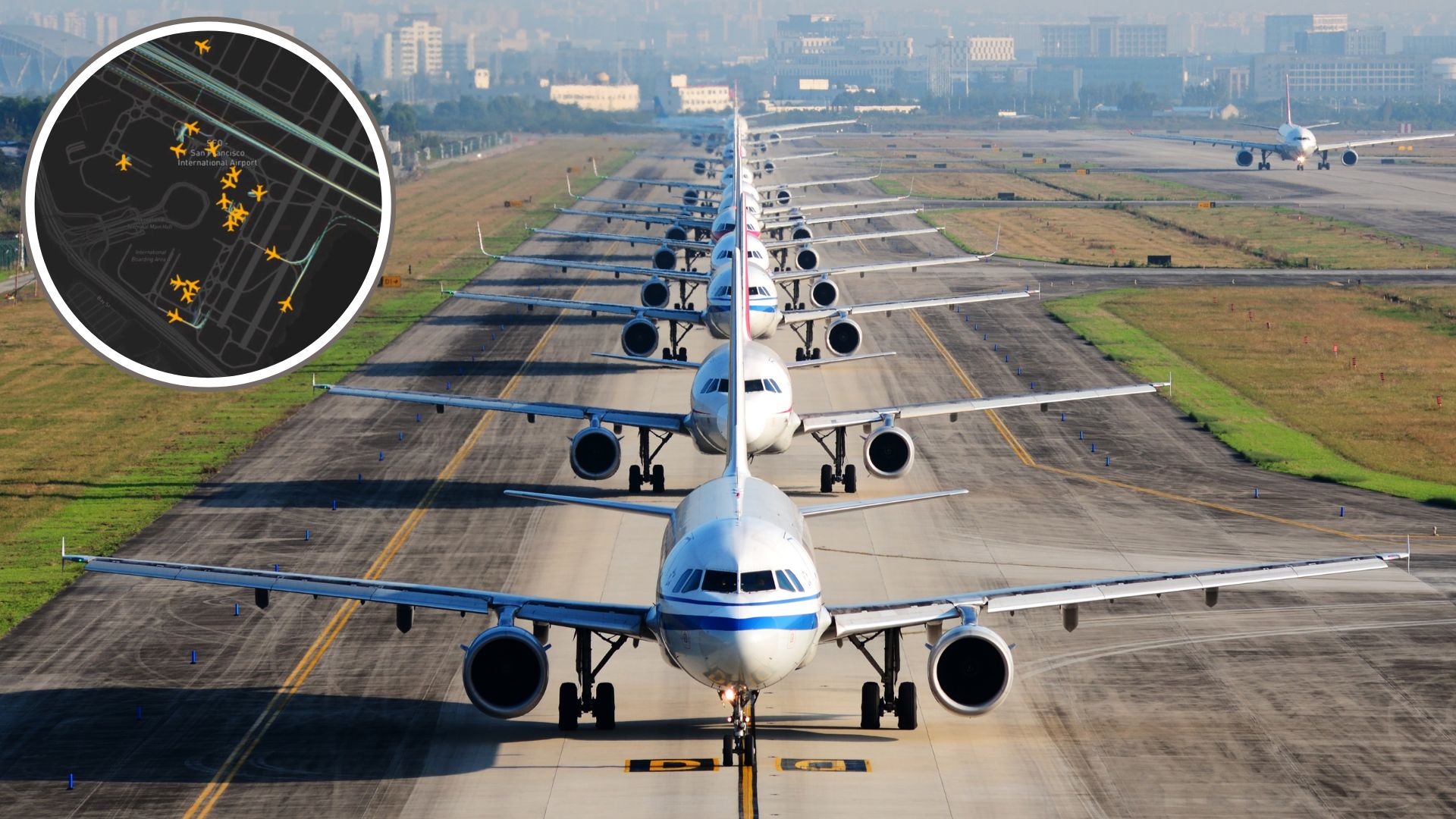
Growing air traffic is putting more pressure on pilots and air traffic controllers, especially during airport ground operations where aircraft converge on runways and taxiways. Safety experts have long viewed these moments as some of the most demanding in commercial aviation, driving efforts to develop tools that can identify potential conflicts before they unfold. Archer Aviation believes artificial intelligence could become part of that solution. The company has introduced ZEE, an aviation foundation model designed to predict aircraft movements on airport surfaces several minutes into the future. Archer says the system can help controllers and flight crews detect emerging conflicts earlier, giving them more time to make informed decisions before safety risks develop. Smarter airport predictions Controllers across the US National Airspace System coordinate more than 44,000 flights every day. Although much of the industry’s modernization effort has focused on managing crowded airspace, runway operations remain a persistent safety concern. Archer said runway-related events account for roughly 30% to 40% of aviation accidents worldwide. The company argues that improving awareness on the airport surface could deliver meaningful safety gains as flight activity continues to increase. Unlike conventional tracking systems that primarily show where an aircraft is now, ZEE attempts to forecast where it is likely to go next. The model processes information from multiple sources and generates predictions several minutes ahead, creating what Archer describes as an additional layer of situational awareness for human operators. Mario Srouji, Archer’s vice president of AI Products, said the technology provides a “window into the future.” He said the model turns raw operational data into predictive context that can flag unusual aircraft movements. It can also identify potential crossing conflicts before they become immediate safety concerns. Modeling multiple outcomes Predicting aircraft movement on the ground presents a unique challenge because pilots can choose different taxi routes depending on traffic, controller instructions, and airport conditions. A single projected path often fails to capture those changing decisions. To address that problem, Archer built ZEE using a generative AI approach called conditional flow matching. The framework models multiple realistic future trajectories instead of locking onto one expected route, allowing the system to account for several possible aircraft movements at the same time. The company paired that capability with a vision transformer trained on high-resolution satellite imagery. The model recognizes physical airport features, including runways, taxiways and aprons, and uses those visual cues to improve its spatial understanding during prediction. Expanding real-world testing Archer has already begun evaluating ZEE at Hawthorne Airport in California, which the company took control of late last year. Engineers have compared the model’s forecasts with real aircraft tracking data, and Archer said the early results have been encouraging enough to support broader testing. The next phase will involve working with government agencies to build the evidence needed before introducing the technology into operational aviation environments. Archer says the goal is not to replace pilots or air traffic controllers, but to provide an AI-powered predictive safety layer that supports faster decision-making. As airports become busier and advanced aircraft enter service, the company believes predictive systems such as ZEE could help aviation authorities improve ground operations without changing the central role of human oversight. Recommended ArticlesGet the latest in engineering, tech, space & science - delivered daily to your inbox.Aamir is a seasoned tech journalist with experience at Exhibit Magazine, Republic World, and PR Newswire. With a deep love for all things tech and science, he has spent years decoding the latest innovations and exploring how they shape industries, lifestyles, and the future of humanity.
‘Window into the future’: New aviation model predicts runway risks minutes ahead
Full Article
Original Source
Read the full article at Interestingengineering →KhanList aggregates and links to publicly available news content. We do not host full articles from third-party sources. Always verify important information with original sources.