
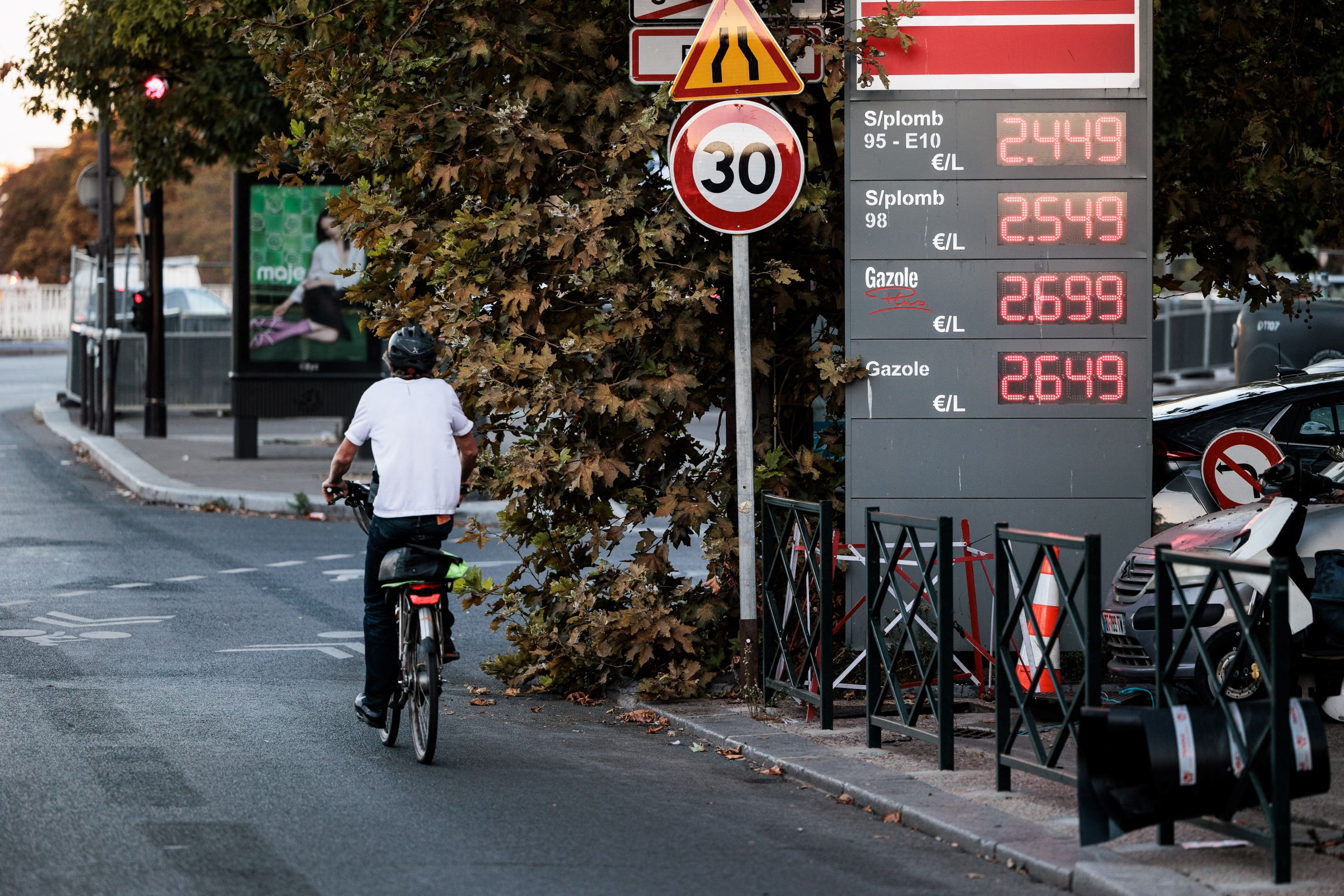
A court adviser agreed with taxing energy company profits to ease soaring bills, but experts questioned how far emergency powers should reach.(CN) — Europe’s grab for energy companies’ windfall profits got a boost Thursday from an adviser to the EU’s top court, who backed using emergency powers to help consumers pay punishing bills.Advocate General Athanasios Rantos advised the Court of Justice of the European Union to uphold EU rules underpinning levies challenged by Vermilion’s Irish gas businesses and Varo Energy Belgium and other oil companies. The companies seek to overturn the national charges, arguing the EU framework is unlawful.Europe’s reliance on Russian gas left it exposed when Moscow cut supplies after invading Ukraine in 2022. Prices were already rising after the pandemic and Asian demand grew. Costlier gas pushed up electricity bills, too, while fossil fuel businesses reaped massive profits.In October 2022, the EU required a contribution of at least 33% on profits exceeding 120% of the 2018–2021 average, for 2022, 2023 or both. Countries could adopt equivalent national measures instead.Rantos said emergency powers allowed the tax because the main purpose was crisis relief, rather than permanent national taxes.He considered the burden proportionate since the contribution was temporary and took only some surplus profits. Ireland’s 75% rate and exclusion of losses predating 2018 were also permissible, subject to national judicial checks.Belgium could extend its alternative levy to oil distributors outside the EU scheme and calculate it differently, he found, provided it met EU requirements.There is no judgment to appeal yet. Advocate general opinions are nonbinding; the court must answer the EU law questions before Ireland’s High Court and Belgium’s Constitutional Court settle the national disputes. Its EU law ruling will be final and binding. The companies’ tax challenges remain undecided.By late September, European gas and power prices had again reached their highest levels since 2022 as war in the Middle East disrupted liquefied natural gas supplies, according to S&P Global Energy.Chiara Putaturo, deputy head and inequality and tax policy adviser at antipoverty group Oxfam’s EU office, welcomed the opinions and saw their emergency power and retroactivity arguments as strong grounds for renewed action, if judges eventually agree.“What we would need is a permanent windfall profit tax on energy companies, to be activated automatically in crisis times,” she said.That enthusiasm was not shared by Matthias Valta, professor of public and tax law at Heinrich Heine University Düsseldorf, who questioned whether the levy eased supply difficulties. He criticized insufficient scrutiny of treaty limits on tax measures and the sidelining of the European Parliament.“This would enable the EU legislator to piggyback taxes and levies onto the actual emergency measures,” he said.Joachim Englisch, professor of tax and public law at Münster University, welcomed the narrow, temporary reading of emergency powers but questioned using them to fund long-term goals such as energy autonomy, or treating redistribution as policy.“The regulation did not create a uniform windfall tax regime for the EU,” he said. He also questioned why solidarity between member states required investment-friendly countries to yield to those favoring redistribution.For Ricardo Garcia Anton, assistant professor of tax economics at Tilburg University, the concern extended to future taxes: Using emergency powers to raise revenue risked bypassing Parliament’s role in tax procedures. He said the opinion failed to set clear boundaries on those powers. He also wanted more guidance on selecting taxpayers, measuring extraordinary profits and setting rates, given potential overlap with corporate taxation.Ireland’s 2023 law reached back to 2022, which Rantos considered justified by the public interest and advance notice to businesses. Historical losses had eliminated Vermilion’s ordinary corporate tax liability; the levy amounted to 25.2% of its total 2022 profits. He also found no prohibited border charge or discriminatory product tax in Belgium.Błażej Kuźniacki, professor in the Department of Administrative, Constitutional and Labor Law at Lazarski University, accepted governments’ broad tax discretion and saw no apparent manifest error or abuse. But he wanted taxpayers’ burdens weighed more closely against public benefits. “Still, I am of the opinion that the AG could have considered alternative and less restrictive measures,” he said. He proposed requiring decarbonization investment and using additional consumption tax revenue to help households, while highlighting parallel investment arbitrations against the EU and several countries.Jeroen Lammers, associate professor in the Department of Business Humanities and Law at Copenhagen Business School, also wanted a tougher test. He accepted the tax’s place in the emergency package but said the opinion overlooked governments’ possible role in driving up gas prices through their purchases.“Even though I would also agree that there has been no manifest error, given the limited effectiveness of the measure and the retroactivity of its application, there may have been good reason for subjecting its proportionality to closer scrutiny than that,” he said.Parties in the two cases did not immediately respond to requests for comment.Courthouse News reporter Eunseo Hong is based in the Netherlands.Subscribe to our free newslettersOur weekly newsletter Closing Arguments offers the latest about ongoing trials, major litigation and rulings in courthouses around the U.S. and the world, while the monthly Under the Lights dishes the legal dirt from Hollywood, sports, Big Tech and the arts.Additional Reads
Windfall tax on Big Oil wins backing of EU legal adviser as energy bills bite
Full Article
Original Source
Read the full article at Courthousenews →KhanList aggregates and links to publicly available news content. We do not host full articles from third-party sources. Always verify important information with original sources.