
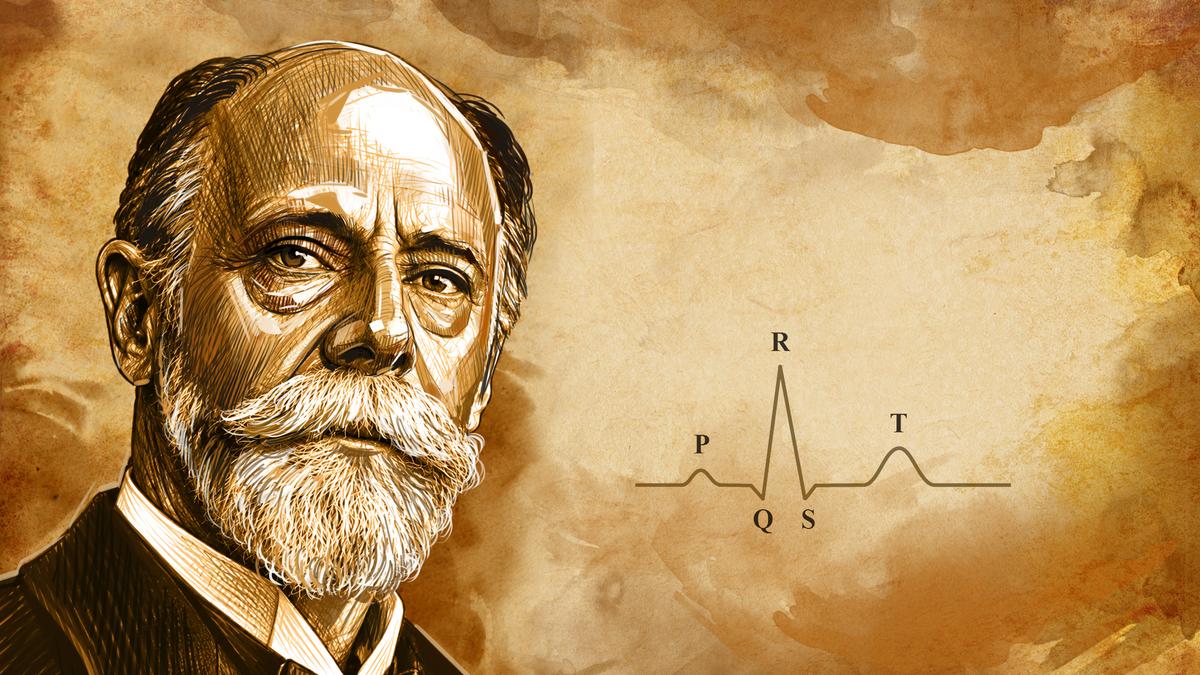
Dutch physiologist Willem Einthoven developed the string galvanometer, making it possible to record the heart’s electrical activity more accurately and laying the foundations of modern electrocardiography |Image used for better representational purpose only | Photo Credit: Photo Credit: Photo Credit: Sainath B. In 1924, Dutch physician and physiologist Willem Einthoven was awarded the Nobel Prize in Physiology or Medicine “for his discovery of the mechanism of the electrocardiogram (ECG)”.His work made it possible to record the electrical activity of the heart with greater accuracy. By developing the string galvanometer and establishing a standard method for interpreting its recordings, Einthoven helped turn electrocardiography into an important tool for studying heart function. Today, the ECG is routinely used to investigate irregular heart rhythms, detect signs of reduced blood supply to the heart muscle and identify evidence of previous heart attacks. Published - November 08, 2026 09:03 am IST
Willem Einthoven’s Nobel-winning discovery that laid the foundations of the modern ECG
Full Article
Original Source
Read the full article at Thehindu →KhanList aggregates and links to publicly available news content. We do not host full articles from third-party sources. Always verify important information with original sources.