
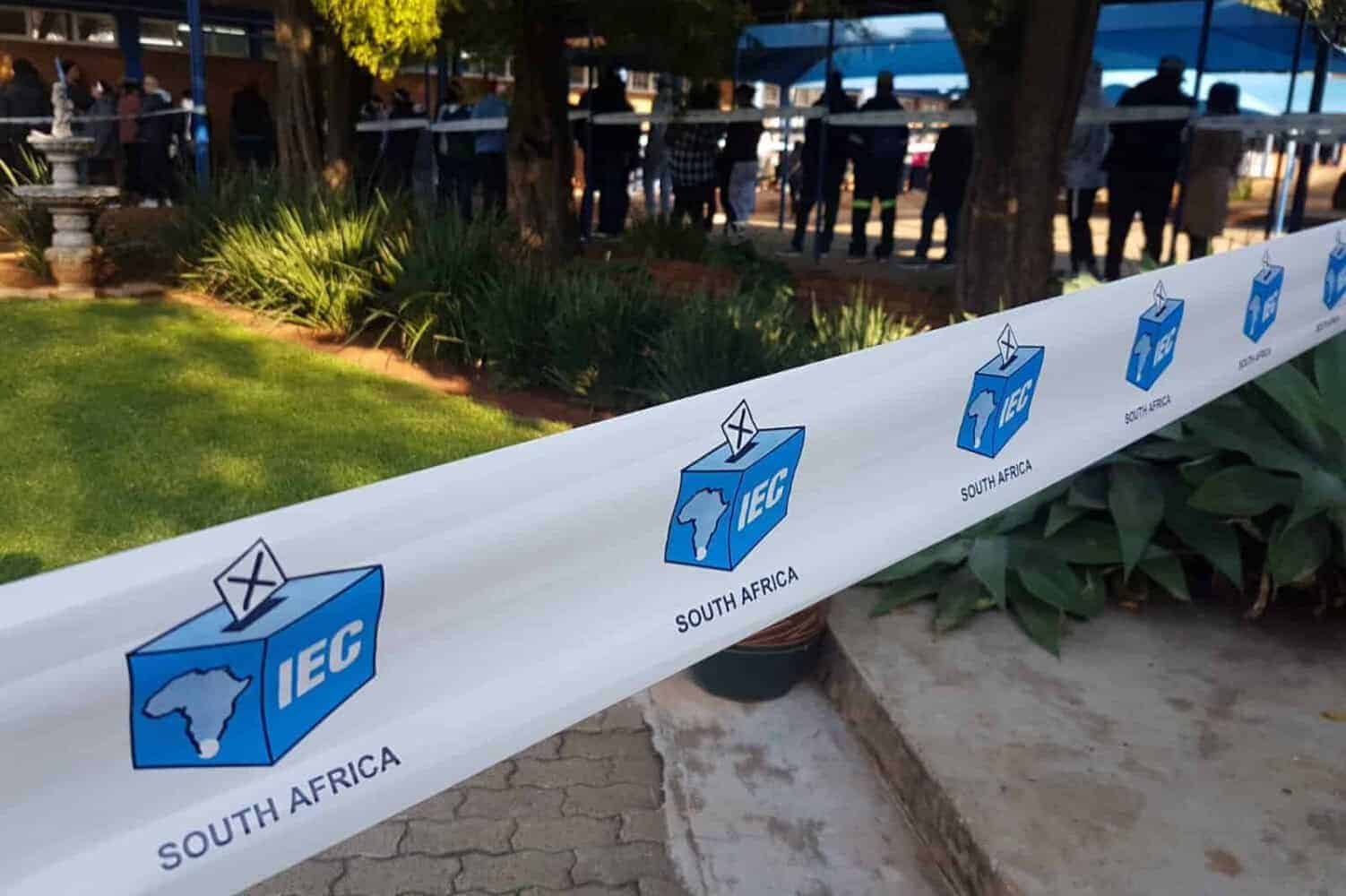
South Africans head to the polls on Wednesday amid widespread frustrations over service delivery, governance failures. Political analyst Ebrahim Fakir says South Africa’s 2026 local government elections will be “one of the strangest South African elections since 1994”, arguing that the poll is shaping up as an election of “stabilisation, recovery, and rehabilitation” amid what he describes as a crisis of representation and responsiveness. South Africans head to the polls on Wednesday amid widespread frustrations over service delivery, governance failures, unemployment, and crime. Polling Recent polling by the Social Research Foundation, MarkData, Ipsos and SABI suggests Johannesburg and Tshwane are likely to return hung councils after the 4 November municipal elections, making coalition negotiations a key factor in determining who governs South Africa’s largest metros. LIVE interactive map, latest news, multimedia and more! View Map Across the surveys, support for the DA and ANC remains below the 50% threshold required for outright control, while parties including the EFF, MK Party, and ActionSA are expected to play influential roles in coalition talks. Are elections credible? Against this backdrop, Fakir argues that voters are increasingly questioning whether elections remain a credible instrument of change. “This will be one of the strangest South African elections since 1994,” Fakir said. Fakir said the election is unlikely to be driven primarily by ideology, values, or policy considerations. “It is hard to imagine that amidst the decline and decay, anyone will vote on the basis of values, ideology, policy compatibility, or political fit. That is, if people bother to vote at all.” Instead, he believes the election will be centred on stability and recovery. “The 2026 election appears to be an election of stabilisation, recovery, and rehabilitation. The missing R – redistribution – is an equally necessary political virtue, but redistribution and development can only occur after stabilisation and recovery.” Democratic engagement Fakir said democratic engagement has increasingly been reduced to voting every five years, while corruption and governance failures persist. “Democratic engagement through political rights and civil liberties appear to have been reduced to voting every five years while re-enforcing neo-liberal austerity and overlooking elite corruption.” He said this has created “a crisis of representation and responsiveness”, prompting voters to question whether participation in elections can still bring about meaningful change. “In this context, the question facing South Africans is fundamentally existential and tactical. Do they participate in these elections?” he said. “Will social, economic and service improvement come from the ballot (voting) and does the ballot remain a credible instrument of popular power?” Major metros Fakir also highlighted challenges in South Africa’s major metros. “Johannesburg, led by the ANC, has been beset with the twin evils of dysfunction due to maladministration and malfeasance and then the dysfunction due to the instability of craven coalitions. In Johannesburg, both coexist.” On Cape Town, he said: “Cape Town, led by the DA, may be spared the instability, but it is not spared the dysfunction.” Proportional representation Fakir further argued that South Africa’s proportional representation system weakens accountability because voters cannot directly reward or punish individual representatives for their performance. “A party-based PR system severs this chain,” he said, adding that government policy frameworks have failed to identify the electoral and governance system itself as a structural contributor to South Africa’s developmental challenges.
Will you be voting? Why analyst predicts the ‘strangest election since 1994’
Full Article
Original Source
Read the full article at Citizen →KhanList aggregates and links to publicly available news content. We do not host full articles from third-party sources. Always verify important information with original sources.