
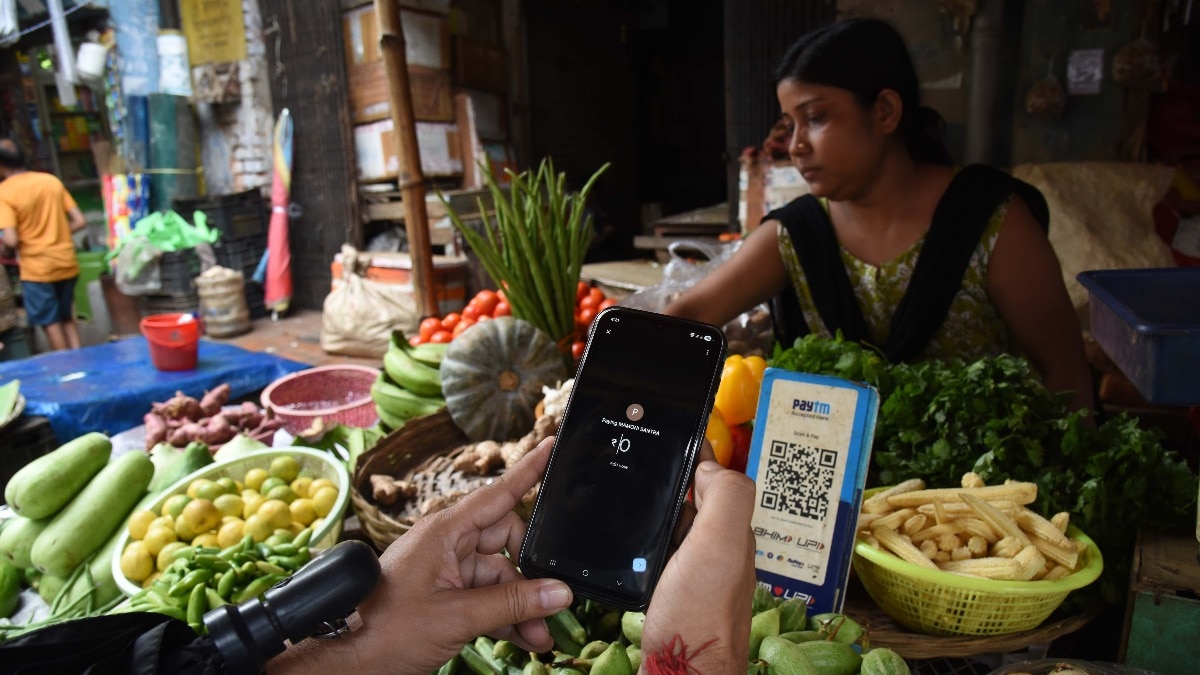
A survey found that nearly 41% of merchants are resisting the proposed introduction of charges on high-value UPI payments. It revealed that they wouldn't bear the burden of high-value payments. Meanwhile, a separate survey from August revealed that 53% of the consumers said that they were ready to shift from the UPI mode if charges impacted their payments.India's UPI payment system is one of the largely used methods by people to transfer and receive money directly on their bank accounts. (Image: Getty)A transaction is made. The money is transferred to the merchant without them having to incur any additional charges. For years, this has been a norm for Indians making payments through Unified Payments Interface (UPI). This frictionless experience has been central to UPI's explosive rise across the country. But that model could now be tested.With the Centre expected to take a decision on introducing a Merchant Discount Rate (MDR) on certain high-value UPI transactions, a new LocalCircles survey has revealed a significant resistance among merchants to absorbing the proposed charge. The survey found that only 17% of merchants and businesses were willing to bear an MDR of 0.3% or higher on UPI payments above Rs 2,000.However, at least 41% of merchants surveyed said they wouldn't bear any MDR charge on UPI payments above Rs 2,000.On August 5, Reserve Bank of India Governor Sanjay Malhotra said that "someone will have to pay the cost" of UPI transactions, which are currently free for merchants and customers both. The cost is currently being borne by banks and the National Payment Corporation of India (NPCI). A separate survey published in August found that 53% of customers would move away from UPI for higher-value transactions if an MDR was passed on to them.The findings come at a crucial moment. An MDR of around 0.3% on UPI transactions of Rs 2,000 and above has been reported as being under consideration by the Finance Ministry. However, the exact rate and threshold had not been reported when the survey was released on August 31. Zero MDR was introduced in January 2020 to encourage digital payment adoption. The government subsequently introduced incentives for banks and the business ecosystem to support UPI transactions.But with UPI now processing transactions on a massive scale, the sustainability of the system has become a growing concern. Industry estimates cited in the LocalCircles report put the annual cost of running the UPI rail at Rs 5,000-6,000 crore, while the existing incentive pool covers only part of that cost.MERCHANTS UNWILLING TO ABSORB EXTRA UPI CHARGESThe highlight of the survey is that the surveyed merchants were not only reluctant to pay the reported 0.3% in MDR changes, but a large section of them didn't want to pay "any MDR at all."Of the 32,796 responses collected by LocalCircles, 41% said they would not bear any MDR charge on UPI payments above Rs 2,000. Another 9% said they do not accept UPI payments.Among those willing to pay something, the tolerance is heavily concentrated at the lower end.Around 15% of the merchants said they were ready to bear 0.04%, while 8% were willing to pay 0.25%. Five percent each said that they would be comfortable with 0.5%, 0.2% and 0.1%. Around 12% said they would be willing to bear an MDR of 1%.That puts the proposed 0.3% charge well above what most respondents were willing to accept.The survey findings said, "five in six merchants surveyed would not be willing to absorb a 0.3% MDR." Even at a lower rate of 0.25%, willingness would rise only to 25%.INDIAN MERCHANTS CAUGHT IN UPI DILEMMAThe overall problem is what happens when a business that has become accustomed to free UPI acceptance is suddenly asked to pay a fee.According to the survey, merchants unwilling to bear the MDR essentially have three options. One, they can stop accepting UPI for transactions above the Rs 2,000 threshold. Two, they can increase prices of their products and services. The third would be that they recover the charge from their customers.That creates another question if they would be allowed to pass the charge on to consumers.The government has said that MDR would be a merchant-side charge and that consumers would not be charged for making UPI payments. However, the report notes that the legal and policy framework does not expressly settle whether merchants could recover the cost from customers through a convenience fee, service charge or similar mechanism.This could become particularly important for sectors such as schools, ticketing services, utilities, hospitals and government service portals, where customers often have limited alternatives and payments can easily cross Rs 2,000.53% OF CONSUMERS SAY WILL MOVE AWAY FROM UPI IF CHARGES LEVIED: SURVEYA separate LocalCircles consumer survey, which was published in August 2026 before the latest one, suggested that customers could react sharply if the MDR reaches them indirectly.The August survey, which received more than 45,000 responses from UPI users across 322 districts in India, found that 53% would move away from UPI for higher-value transactions if an MDR was passed on to them.Among them, 27% said they would shift to credit cards, 14% to debit cards and 12% to cash or bank transfers. Only 12% said they would pay the fee and continue using UPI, while another 18% said they would continue if the merchant absorbed the charge.The resistance becomes even clearer at the point of purchase. Nearly half of UPI users surveyed said they would avoid UPI for purchases above Rs 3,000. Twenty-one percent would switch to another digital payment method, while 14% would stop shopping with merchants that recover the fee where alternatives exist.UPI'S MDR CHARGES A CONCERN FOR SMALL BUSINESSESThe move could also have consequences for smaller businesses. Data cited by LocalCircles in its report suggested a possible annual turnover threshold ranging from Rs 20 lakh to Rs 4 crore, although no figure had been officially notified when the survey was released.The survey report warned that if MDR liability is tied to turnover, businesses close to the threshold could have an incentive to keep their reported turnover below it. This could include under-reporting turnover, splitting billing or moving larger transactions to cash or personal UPI handles.Such behaviour could undermine the wider benefits of the UPI system, like bringing more transactions into the formal digital economy.The survey does not suggest that merchants are universally opposed to MDR. In fact, half of the merchants surveyed by the LocalCircles said they were willing to bear some level of charge. The issue is where that charge is set. And that is where the reported 0.3% rate faces its biggest challenge.- EndsPublished By: Avinash KateelPublished On: Sep 1, 2026 12:26 IST
Will traders pass on MDR fees to UPI users? 41% unwilling to bear burden: Survey
Full Article
Original Source
Read the full article at Indiatoday →KhanList aggregates and links to publicly available news content. We do not host full articles from third-party sources. Always verify important information with original sources.