
Tuesday is Election Day for most Americans. For the Supreme Court, it’ll also be their latest chance to rewrite a major precedent on American religious pluralism in St. Mary Catholic Parish v. Roy. At stake is if, when, and how anti-discrimination laws that protect same-sex couples and LGBTQ children must yield to the First Amendment’s Free Exercise Clause.The case centers on Colorado’s universal preschool program, or UPK. Private, public, and religious preschools can enroll in the program, in what the state described as a departure from how other states with UPK operate. “More than forty faith-based providers—including six Catholic Charities preschools that are part of the Archdiocese of Denver—participated in UPK’s inaugural year,” the state told the justices in their brief.Among the state law’s requirements for participating preschools are a variety of health and educational standards, ranging from student-teacher ratios and classroom sizes to free health screenings for students. The law also requires preschools to allow eligible children to enroll “regardless of race, ethnicity, religious affiliation, sexual orientation, gender identity, lack of housing, income level, or disability, as such characteristics and circumstances apply to the child or the child’s family.” It does not allow exceptions.In 2023, the archdiocese instructed Catholic preschools not to register with the program because the non-discrimination requirements ran counter to church teaching on “issues of sexual and gender identity.” The archdiocese and its schools requested a general exemption from the non-discrimination requirement, but state officials replied that they had no authority under state law to grant one.Two Catholic preschools and a Catholic family sued the state to challenge the exception’s denial on Free Exercise Clause grounds soon thereafter. They alleged that Colorado’s refusal to provide a carve-out for their religious beliefs had caused them direct harm and violated their constitutional rights.“Enrollment in [the plaintiffs’] preschools has dropped almost twenty percent, St. Bernadette closed its preschool, and Daniel and Lisa Sheley have been denied over $12,000 in tuition assistance simply for choosing a Catholic education,” they told the justices in their merits brief. “Colorado’s interference with [plaintiffs’] free exercise of religion ought to have been obvious.”The Tenth Circuit Court of Appeals sided with the state by leaning on the landmark 1990 decision Employment Division v. Smith. In that case, two Native American plaintiffs challenged an Oregon law that denied unemployment benefits to them because they used illegal drugs. The drug in question was peyote, which has a sacramental role in certain tribal religious traditions. They argued the state had violated their Free Exercise Clause rights.Justice Antonin Scalia led the court as it rejected their claims in a 6-3 ruling. Scalia concluded that the Oregon law in question was a “neutral law of general applicability,” and rejected the plaintiffs’ claim that they could excuse themselves from it by invoking the Free Exercise Clause. “We have never held that an individual’s religious beliefs excuse him from compliance with an otherwise valid law prohibiting conduct that the State is free to regulate,” he wrote.Scalia’s reasoning was grounded in precedent, but was also largely pragmatic: He warned against an outcome where judges would have to weigh the importance of various religious beliefs against a government’s basic function of regulating society. “Any society adopting such a system would be courting anarchy, but that danger increases in direct proportion to the society’s diversity of religious beliefs, and its determination to coerce or suppress none of them,” he added.“It may fairly be said that leaving accommodation to the political process will place at a relative disadvantage those religious practices that are not widely engaged in,” Scalia acknowledged, “but that unavoidable consequence of democratic government must be preferred to a system in which each conscience is a law unto itself or in which judges weigh the social importance of all laws against the centrality of all religious beliefs.”Smith was not a popular ruling. Congress, responding to bipartisan public outrage, passed the Religious Freedom Restoration Act to try to reverse the decision by statute. The conservative jurists who joined the court after the ruling have generally criticized it, starting with Justice Clarence Thomas (who was confirmed later that year) to more recent Republican appointees. The court’s conservative bloc has not yet managed to overturn Smith, instead opting to narrow its scope, bit by bit.In 2021, for example, the court sided with a Catholic foster-care nonprofit in Philadelphia that refused to place children with same-sex couples despite the city’s nondiscrimination policy. The Supreme Court ruled that Smith did not apply because the policy was not “generally applicable” since it allowed for multiple exceptions. In a concurring opinion, Justice Amy Coney Barrett rejected calls to overturn Smith because its opponents had not put forward a persuasive framework to replace it.The plaintiffs in Roy hope to get around Smith in one of two ways. The Supreme Court has often treated Smith “more as a residual rule than as a primary rule of decision,” they argued, while the lower courts have applied it more consistently over the years. They instead pointed to a line of cases since 2017 that took a different approach to the Free Exercise Clause. The most recent case, Carson v. Makin in 2022, struck down Maine’s “nonsectarian” requirement for private tuition-assistance programs. “The Tenth Circuit ‘distinguished’ Carson by claiming it applied only when religion is ‘specifically targeted,’” the plaintiffs claimed in their brief. “But that view, if accepted, would dramatically narrow Carson and make it easy to evade.” If Carson applies, Colorado would have to overcome strict scrutiny, a level of judicial review with a survival rate on par with rabies. If Smith applies, Colorado’s policy would instead face rational-basis review—the judicial equivalent of the common cold.Even if the court wants to stick with the “ill-fitting Smith framework,” the plaintiffs argued, Colorado’s non-discrimination rule should still fail because it is not “generally applicable” either. They describe certain placement-preference requirements as “numerous exceptions that violate the plain text of the mandate and thus undermine Colorado’s asserted interest in ensuring equal access,” such as preferences for low-income families and children with disabilities.Colorado countered that its placement-preferences system doesn’t amount to exceptions to the non-discrimination rule. State officials testified in the lower courts that law, policy, and practice allow for adjustments to the sorting algorithm “only when those adjustments do not violate the equal-opportunity requirements.” Those requirements, the state insisted, “ensure that all Colorado parents—Catholic, Jewish, Muslim, gay, or straight—can trust that their four-year-olds will not be turned away from publicly funded preschools because of religion, sexual orientation, gender identity, or other protected characteristic.”The Supreme Court has made a habit out of taking up religious-freedom cases from Colorado that challenge the state’s non-discrimination laws, most famously in cases involving a Christian wedding-cake baker and a Christian web designer who did not want to work with hypothetical same-sex couples. The justices are unlikely to overturn Smith here and the plaintiffs notably did not ask them to do so, instead hewing to the trend of working around the 1990 ruling. Oral arguments should provide some insight on how far that trend will go.
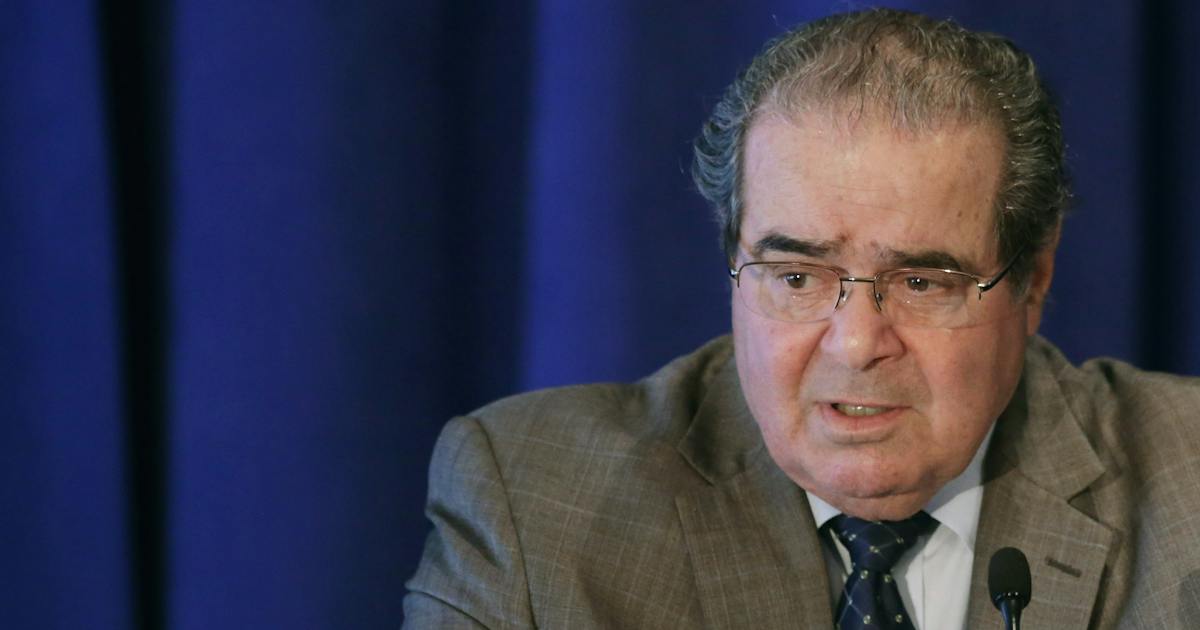
Will the Supreme Court Forsake Antonin Scalia’s Warning?
Full Article
Original Source
Read the full article at Newrepublic →KhanList aggregates and links to publicly available news content. We do not host full articles from third-party sources. Always verify important information with original sources.