
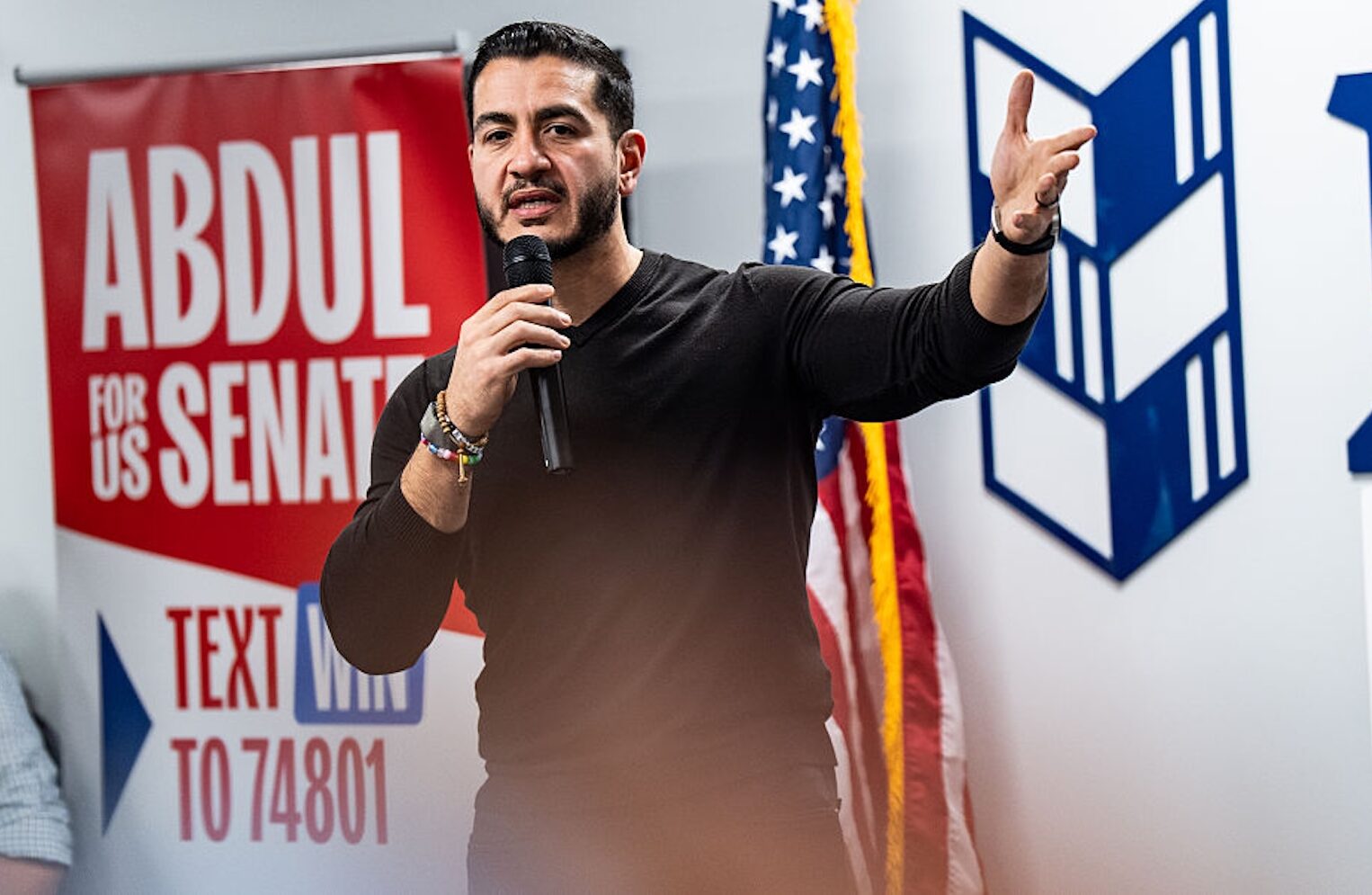
analysis Democrats expect big wins. But 2026 could still have surprises in store Published November 3, 2026 12:59PM (EST) Michigan Democratic Senate candidate Dr. Abdul El-Sayed speaks to supporters at "Knock Out The Vote Tour" on Oct. 31, 2026 in Sterling Heights, Michigan (Salwan Georges/Getty Images) Across the country, voters are making their way to the polls in the climax of a vitriolic midterm election cycle set against the backdrop of an electorate souring on Donald Trump and Republicans. Inflation is up, consumer confidence is down, gas and diesel prices are through the roof, largely due to the president’s war of choice in Iran. The cruelty of his MAGA agenda has roiled the country and left a bad taste even in the mouths of some of his erstwhile supporters. Each election is billed as being consequential; this one lives up to the hype. As we await the results, it’s worth taking note of several questions: How big will the blue wave be? A tsunami, a trickle — or something in the middle? All are possible, but signs are pointing to significant Democratic gains, likely up to 25 seats in the House, as well as a Senate majority. Dr. Abdul El-Sayed looks increasingly likely to win in Michigan, and James Talarico has Democratic hopes up in Texas. Senate races in Maine, Kansas, Iowa and Alaska are in play, and it’s worth keeping an eye on South Carolina, Mississippi and Louisiana as well. One sign will come at 7 p.m. when polls close in Kentucky, where Democrat Zach Dembo is facing off against Republican Ralph Alvarado in the state’s 6th Congressional District. Once a Democratic stronghold, the seat went Republican in 2012 and, despite a close call in 2018, has remained in GOP hands since. Although the district has been gerrymandered to favor Republicans, the energy on the ground is with Dembo. If he posts and maintains a healthy lead, look for significant Democratic gains to unfold throughout the night. What effect did redistricting have on the GOP’s chances? The midterms will be the first test of the GOP’s redistricting strategy, which saw the party redraw congressional districts in Florida, Texas and other states, partly in response to the gains Trump made with Black and Latino voters in 2024. But polls show those margins have been largely erased as the electorate has turned on the president after nearly two tumultuous years in office, while Democratic legislatures in California and Virginia have imposed their own gerrymanders. According to a Politico poll, the GOP increasingly sees the coalition that returned Trump to office as “crumbling,” and may have gained little or nothing from all this adventurous map-drawing. Will progressives be bolstered or chastened? Losses — or even narrow wins — by progressive candidates could be used as more evidence by the party’s establishment wing of the need to tack toward the middle ahead of the 2028 presidential election. Larger wins would provide rocket fuel to the movement. The size of the blue wave could well come to be seen as a measure of progressives’ influence and power within the Democratic Party. Losses — or even narrow wins — by progressive candidates could be used as more evidence by the party’s establishment wing of the need to tack toward the middle ahead of the 2028 presidential election. Larger wins — and victories in unexpected places, such as Michigan’s 7th Congressional District where William Lawrence, co-founder of the Sunrise Movement, stands a real chance of unseating incumbent Republican Tom Barrett — would provide rocket fuel to the movement. Progressive groups are already on the offensive, getting a head start on spinning tonight’s election results, particularly in anticipation of a narrow El-Sayed win in Michigan. “Expect to hear narrow victories cited as evidence of weak electability,” a Progressive Change Campaign Committee memo obtained by Politico reads. “But a candidate’s first winning margin is not their electoral ceiling.” Will the Haley Stevens drama matter in Michigan? Haley Stevens, the Democratic congresswoman who narrowly lost to El-Sayed in Michigan’s Senate primary, has brought the drama in the race’s closing days. As late as Saturday night, she pledged to colleagues and friends that she was backing El-Sayed, only to turn up hours later at a church service with his Republican opponent Mike Rogers, and endorse the former congressman in a video. The cold-dish move has virtually drowned out El-Sayed’s closing message, with Stevens being formally kicked out of the Michigan Democratic Party. Want more sharp takes on politics? Sign up for our free newsletter, Standing Room Only, written by Amanda Marcotte, now also a weekly show on YouTube or wherever you get your podcasts. The question now is if any of it will matter, especially in light of a New York Times/Siena poll taken before Stevens’ move that showed El-Sayed leading Rogers by 11 points. Michigan Republicans seem to think it won’t, telling Politico they wish the congresswoman had crossed the aisle earlier. The nonpartisan Cook Political Report agrees, moving the race in their ratings to “Leans Democratic,” a shift that was already in the works before Stevens detonated her bomb. Still, the results in the state’s Democratic primary were far narrower than the polls showed, with El-Sayed besting Stevens by only 1%, or 14,893 votes. Will Elon Musk get his money’s worth? The New York Times reported yesterday that the world’s first trillionaire has dropped a staggering $474 million this election cycle, an historic first. The amount has been spread out across a variety of groups, PACs and funds, but it doesn’t include the “dark-money donations” the Times reports he has also made. Most of the $168 million he contributed to the Senate Leadership Fund has served to shore up Ken Paxton, the GOP nominee for Senate in Texas, who is locked in a tight race with Talarico. Musk has a lot riding on Tuesday’s results. Beyond the simple math of whether he got enough bang for his buck, there is also the issue of what will surely face him in the event of a Democratic congressional majority: investigations. Musk has a lot riding on Tuesday’s results. Beyond the simple math of whether he got enough bang for his buck, there is also the issue of what will surely face him in the event of a Democratic congressional majority: investigations. If the blue wave materializes, Musk can expect congressional inquiries of his activities, including his reported interventions in Russia’s war against Ukraine and his leadership of DOGE during the early months of Trump’s second administration. Where will the surprises be? Each election brings surprises. Think not one but both of Georgia’s Senate seats going to Democrats in 2020, or Republicans making big gains in New York two years later. This is the year we could hear the echo of Georgia’s 2020 election results in another Southern state. Despite boasting large Black populations, Senate seats in South Carolina, Mississippi and Louisiana have long been out of reach for Democrats. But there is now a path to victory for the party’s candidates in each of those states. In South Carolina, the GOP incumbent Darline Graham, who was appointed to the seat at Donald Trump’s command following the death of her brother, Sen. Lindsey Graham, has proven to be a lackluster candidate, alarming even some Republicans with her performance in debates and on the stump. Democrat Annie Andrews has run a more nimble campaign, and between Graham’s performance and the national state of affairs, she appears to have narrowed the gap. Mississippi’s incumbent GOP Sen. Cindy Hyde-Smith has also run a lazy campaign, expecting to coast to victory. But the national political environment under Trump, coupled with campaign gaffes, large Black turnout in the aftermath of the Supreme Court’s decision to gut the Voting Rights Act and clever campaigning by Scott Colom, her Democratic opponent, have helped to put the race in play. Louisiana is also a wild card. The state, which is one-third African American, has also seen a surge in early voting among Black residents, and according to a recent poll, the race between Republican Julia Letlow and Democrat Jamie Davis, who is Black, is tied. Polls are not predictive. The political history of these states continues to favor Republicans, but any of them could deliver one of 2026’s electoral surprises. If that happens, it will signal that the blue wave has become a blue tsunami. Related Topics ------------------------------------------ Related Articles
Will the midterms live up to the hype? 6 key stories we’re watching
Full Article
Original Source
Read the full article at Salon →KhanList aggregates and links to publicly available news content. We do not host full articles from third-party sources. Always verify important information with original sources.