
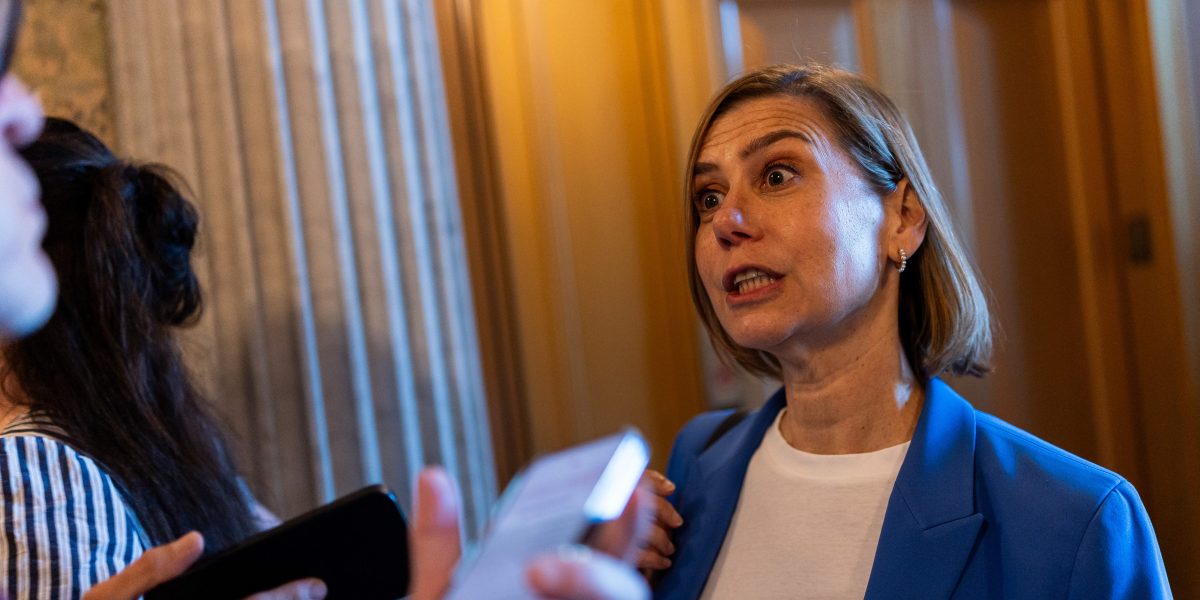
A proposed “buffer zone” around religious facilities across the country — touted as protecting the right to worship — is alarming free-speech advocates who say the Trump administration could use it to crack down on protests. The new bill, a national version of a controversial law passed in smaller jurisdictions, could hamper demonstrations against illegal sales of land in the West Bank to Jewish settlers that occur inside U.S. synagogues, the advocates say. The bipartisan legislation could face another layer of opposition from a surprise corner, however, in the form of reproductive rights groups worried it would undermine an existing law that protects abortion clinics. “Protecting religious freedom must not come at the expense of other Constitutional rights.” Called the Right to Worship Act, the bill cosponsored by Sens. Ted Cruz, R-Texas, and Elissa Slotkin, D-Mich., will be the subject of a Tuesday hearing in the Senate Judiciary Committee. The bill has drawn backing from Christian, Jewish, and minority religious leaders who say it could be used to prevent hate crimes. Major Muslim groups, however, have been notably absent from supporter lists. That isn’t just because Cruz regularly demonizes Muslims. Muslim leaders also worry that while in theory the law would be used to promote religious freedom, in practice it would be used to punish non-violent, pro-Palestine protesters, said Dahlia Taha, the director of the First Amendment Center at the Muslim Public Affairs Council. “Protecting religious freedom must not come at the expense of other Constitutional rights,” she said. “We believe that this can have very detrimental and long-term impacts. And under this administration, specifically, we’re concerned about those long-term implications.” Slotkin and Cruz’s offices did not respond to requests for comment. Land Sales as “Religious Services”? Under the bill, the Department of Justice could seek civil fines or injunctions against anyone who engages in a “course of conduct” that disrupts religious services, or disrupts access to them, within 100 feet of a church, mosque, synagogue, or other religious facility. Worshippers and state attorneys general could also file lawsuits. Numerous states have already passed similar legislation creating “buffer zones” around religious buildings. In New York City, Mayor Zohran Mamdani vetoed a buffer zone for protests near schools and colleges, while allowing another one for religious institutions to pass. Supporters of the federal bill argue that it is needed to protect worshippers from harassment or worse. “Attacks on synagogues, mosques, churches, and other houses of worship are unfortunately on the rise in Michigan, and across the country,” Slotkin said in an August press release. “No one should ever fear going to their house of worship. Period.” The law’s authors tout it as a narrowly tailored guardrail, but critics say that the “course of conduct” subject to fines and lawsuits is so ill-defined that the Trump administration could use it to target peaceful protesters. “There is no relationship between this legislation and the prevention of violent acts at synagogues, mosques, or churches.” One of critics’ top fears is the “religious services” protected by the law could be defined to include real-estate pitches for land illegally seized from Palestinian people in the West Bank. In a press release, the Anti-Defamation League cited two West bank land-sale protests in New York City as examples of the need for the legislation, along with the March ramming attack on Temple Israel in West Bloomfield, Michigan. When it comes to violent attacks, argued Eli Williams-Szenes, the director of advocacy and political affairs at the progressive Jewish group Bend the Arc, synagogues are better protected by an existing federal law called the Freedom of Access to Clinic Entrances Act. The FACE Act makes a federal crime out of force, threats, or physical obstruction near both religious institutions and abortion clinics. “There is no relationship between this legislation and the prevention of violent acts at synagogues, mosques, or churches,” Williams-Szenes said of the new bill. “The idea that telling someone that if they wave a pamphlet 97 feet from the entrance to a synagogue, they’ll get a $10,000 fine would be the reason that someone didn’t try to drive a car into Temple Israel is crazy.” Abortion Rights Angle The Right to Worship Act faces long odds in the final weeks of the Republican-controlled Congress. Still, Williams-Szenes said he is concerned that even a hearing could set the stage for eventual passage. Abortion rights groups are also worried. They fear that if the Right to Worship Act passes, Republicans will be inclined to repeal or weaken the FACE Act because of its protections for abortion clinics. One of President Donald Trump’s first actions upon taking office last year was to pardon anti-abortion rights protesters convicted of blockading a clinic under the FACE Act. “The Right to Worship Act is a wolf in sheep’s clothing,” Kelsey Ryland, a policy counsel at the National Abortion Federation, said in a statement. “The impact of this policy could become a backdoor FACE Act repeal, weakening enforcement against violent disruptors at abortion clinics.”
Will Senate Religious Freedom Bill Actually Protect Land Sales for Israeli Settlements?
Full Article
Original Source
Read the full article at Theintercept →KhanList aggregates and links to publicly available news content. We do not host full articles from third-party sources. Always verify important information with original sources.