
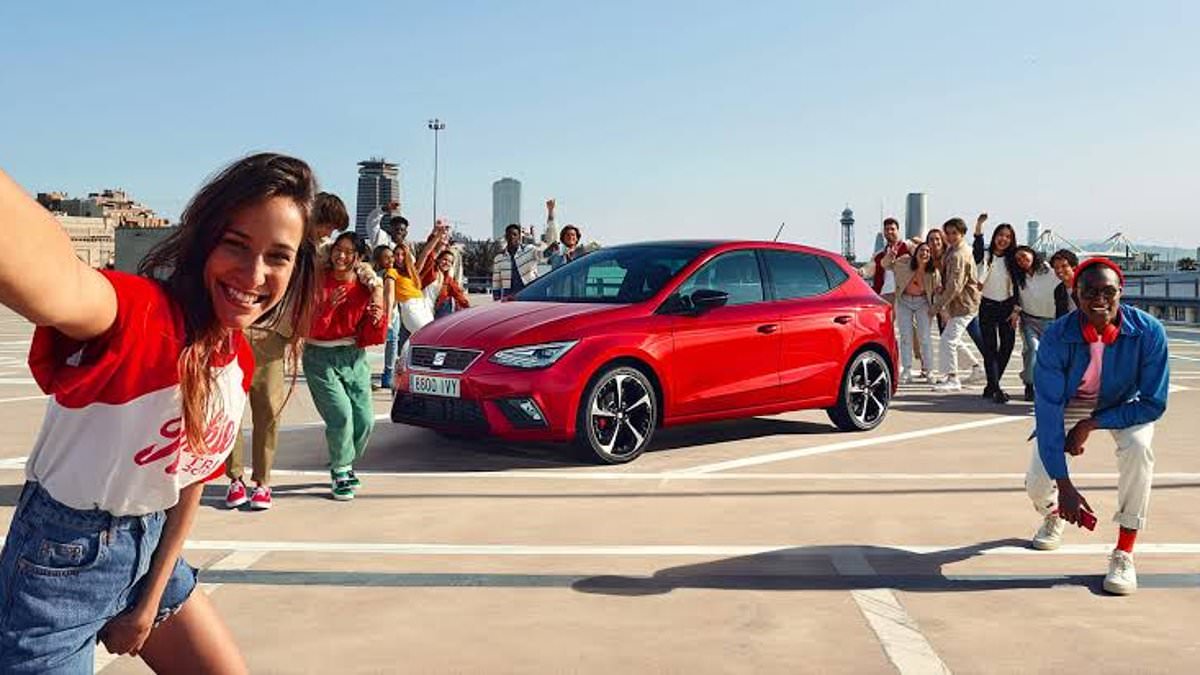
Seat could be the first car brand to fall victim to the influx of cheap Chinese cars, as its parent company Volkswagen considers pulling the plug due to nose-diving sales.VW is in the process of cutting costs and halving its model range to improve its financial reserves, and the future of Spain's well-established car marque is up in the air as a result.Earlier this month, bosses said that Seat's future 'beyond the current product cycle is still being evaluated' and that 'various scenarios remain possible beyond 2030'.Seat has been struggling of late: despite celebrating its 75th anniversary, it delivered 257,400 vehicles in 2025, down 17 per cent compared to the year previous.In contrast, Chinese brands have become serious contenders across major markets, including Europe. Chinese brands have sold more cars in Europe in the first seven months of 2026 than they did in full calendar year of 2025. Seat could be the first major car brand to be killed off by the rise of newcomers from the region.Why is Seat suffering? And how have Chinese brands and its own sister brand contributed to its potential demise? We take a look. Seat could be the first car brand to fall victim of cheap Chinese cars, as its parent company Volkswagen looks at pulling the plug on the dwindling marque. We look into whyIf Seat finds the chopping block, it would mark the first longstanding car brand to disappear since the early 2010s when household names like Saab were put out to pasture.Seat is on the back foot compared to Chinese carmakers, which are rolling out new plug-in hybrid and electric models across Europe at rapid pace.Chinese brands now hold an 11.2 per cent market share in Europe, and are expected to manufacture approximately 90,000 vehicles in Europe, either in new factories or existing ones where utilisation will increase.In the UK, China's top seven brands have registered more than 219,000 cars so far this year, with Chery hitting 29,000 sales in just 12 months.Electric cars are where Chinese car brands are surging ahead: the share they sold rose to 14.2 per cent across Western markets in the first five months of this year, according to Schmidt Automotive Research.That's one in every seven fully-electric vehicles.And the increase in EU tariffs of up to 35.3 per cent for some Chinese EVs hasn't slowed demand either – neither has the 10 per cent import duty.Thanks to the UK not imposing tariffs, Britain is Europe's largest market for Chinese carmakers, accounting for a quarter of Chinese EV sales across the 18 biggest Western European markets. Seat has been struggling of late: despite celebrating its 75th anniversary, it delivered 257,400 vehicles last year, down 17% compared with 2024 Seat's main problem is it isn't selling any electric cars and as such is leaving itself wide open to both Chinese competition – and competition from Volkswagen's other Spanish brand, Cupra.Cupra, which is owned by Seat and so is also part of the Volkswagen Group, is a high-performance, sporty spin-off that's proving increasingly popular with European car buyers.On the other hand, Seat's Mii Electric, its only EV model so far, was discontinued in 2021 after just one year on the market. No other EVs are currently planned.With its 32.3kWh battery and 160 miles of range, it was a well-liked competitor for the Mini Electric and was cheap as early EVs went, costing under £20,000.The Cupra Born EV was originally planned as a Seat El-Born in 2021 but was rebadged as Cupra when the brand became a standalone marque.In 2025, ex-Seat chief executive Wayne Griffiths told Autocar that the issue with a Seat EV was profitability, as 'cars would need to be profitable, and for Seat as a company, we are looking to make money now and invest', with the time not right for an EV 'just yet'. Cupra has three fully-electric models on sale in Europe as well as four plug-in hybrid models. Out of its 328k-plus sales last year, Cupra shifted 79,700 fully electric vehiclesWhile Seat isn't producing any EVs, Chinese brands have an increasing number of models on sale: BYD offers ten electric models to European buyers while MG offers buyers seven to choose from.As well as the very real onslaught of Chinese EV competition, Cupra has also surged past Seat in the electric game, as well as overall sales.Cupra has three fully-electric models on sale in Europe as well as four plug-in hybrid models.And it's paying off: out of its 328k-plus sales last year, Cupra shifted 79,700 fully electric vehicles (up 65.9 per cent on 2024).Could we lose other brands soon to Chinese competition?Ford chief executive Jim Farley has warned that European legacy brands are 'in a fight for our lives' as Chinese cars enter the market.The latest car registration figures from the Society of Motor Manufacturers and Traders put BYD's UK new car market share at 4.1 per cent, Chery's at 2.53 per cent, MG at 5.26 per cent and Jaecoo and Omoda at a combined 6.62 per cent.Despite their well-established histories and clientele, BMW sits at 5.24 per cent, Land Rover at 2.33 per cent, Mercedes at 5.55 per cent and Volkswagen at 8.09 per cent.Jaguar Land Rover has just announced plans to cut up to 4,000 jobs over the next two years as part of a £1.7billion cost-saving initiative.Even more drastically, the board of German car giant Volkswagen this month approved a plan to cut another 50,000 jobs as part of the biggest restructuring in the group's 89-year history.The group – which owns VW as well as Audi, Porsche and Skoda – is also considering the future of four of its German plants.It's also planning to cut the number of models it produces by 50 per cent by 2035 and reduce the complexity of its lineup by 75 per cent.VW's profits have fallen sharply in recent years, especially because of falling sales in China, which was once one of its biggest markets, but where Chinese brands now dominate.All of this spells trouble for the household names drivers in Western Europe love. From unglamorous origins, Seat was started 'to get Spain moving' post-WWII. In 1953, its first factory started producing the first model: the Seat 1400Seat's history in briefSeat – which stands for Sociedad Española de Automóviles de Turismo, S.A. - was established in 1950.From unglamorous origins, Seat was started 'to get Spain moving' post-WWII. In 1953, its first factory started producing its first model: the Seat 1400 – essentially a rebadged Fiat 1400.All early Seats were based on Fiats until 1963, when Seat launched the Seat 800. While it had no direct Italian counterpart, this was still a long-wheelbase version of a Fiat model.Twelve years later, Seat built the 1200 Sport on its own – the first creation from its new in-house R&D facility.A year later, with the launch of the Seat 128, the Spanish marque hit the three-million car sales mark. The Seat Ibiza is the all-time best-selling model in Seat history, with nearly six million units sold since its launch in 1984In 1980, the colourful and practical Seat Panda quickly became Spain’s most stylish utilitarian vehicle, helping to entice the Volkswagen Group to partner with, and later buy, the manufacturer.Over its 75-year history, Seat has built and sold over 21 million vehicles worldwide and has produced more than 75 different models.The Seat Ibiza is the all-time best-selling model in Seat history, with nearly six million units sold since its launch in 1984.This is Money has contacted Volkswagen and Seat for comment.
Will Seat be killed off by Chinese EVs? VW considers Spanish carmaker's future
Full Article
Original Source
Read the full article at Dailymail →KhanList aggregates and links to publicly available news content. We do not host full articles from third-party sources. Always verify important information with original sources.