
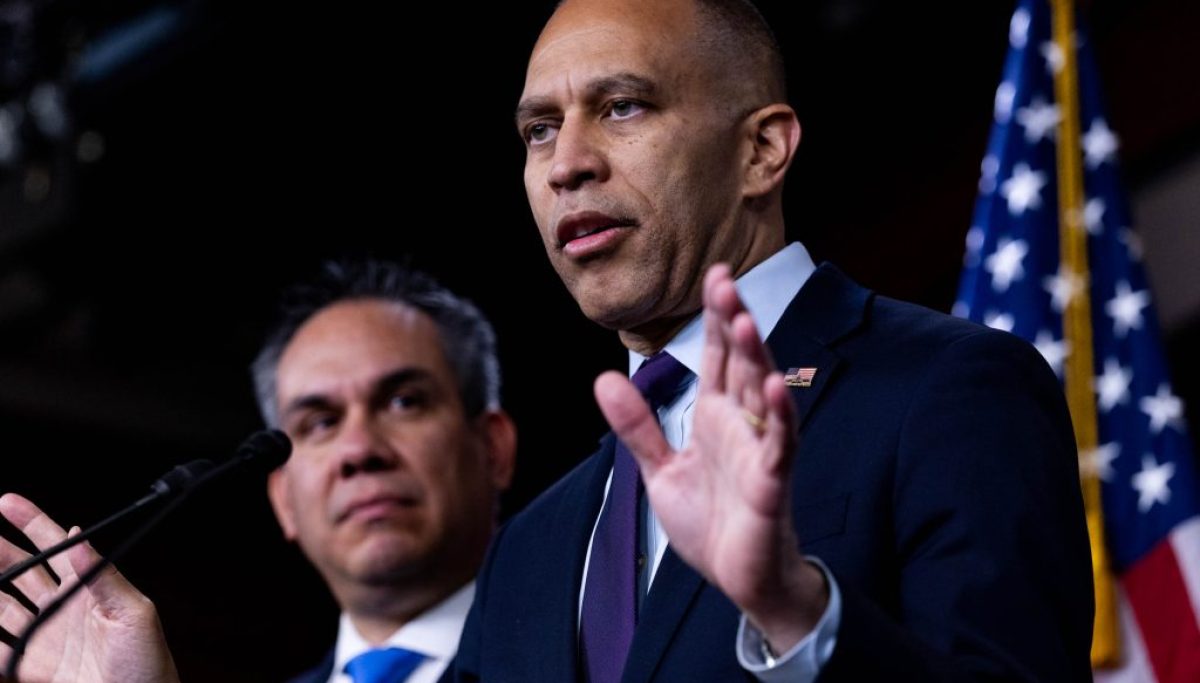
Elections have consequences, and it appears one of the first results of this year’s blue wave will be the death of permitting reform in Congress.Introduced in September by Sens. Mike Lee (R-UT), Martin Heinrich (D-NM), Shelley Moore Capito (R-WV), and Sheldon Whitehouse (D-RI), the Bipartisan American Affordability and Jobs Act would get the country building again by reforming the federal government’s most powerful energy and environmental laws, including the Federal Power Act, the National Environmental Policy Act, the Clean Water Act, and the Endangered Species Act.The bill would streamline the permitting process by exempting routine repairs and upgrades from review under NEPA and keeping federal funding alone from triggering reviews of new projects. Courts could still order agencies to correct flawed reviews, but a NEPA violation alone would no longer halt construction. States would also have less leeway to use the Clean Water Act to block projects for reasons unrelated to water pollution and could take over federal wildlife reviews under the Endangered Species Act. The bill would make it easier to build transmission lines that carry electricity from wind and solar farms to customers. Federal regulators could approve qualifying interstate lines when states reject them or fail to act. Neighboring grid regions would plan new connections together, and developers would connect their projects to the grid faster.For Democrats, the changes to the Federal Power Act would make it easier to build transmission lines and connect wind and solar projects to the grid, while Republicans would get limits on environmental reviews and lawsuits that have delayed pipelines, wells, and other infrastructure.The Senate passed the Bipartisan American Affordability and Jobs Act by a seemingly strong 62-33 vote last Thursday night, but procedural maneuvering by the bill’s most determined opponents prevented a vote on a key amendment that could have secured more Democratic support.The four bipartisan sponsors of the bill had come to an agreement on a manager’s amendment that would have narrowed exemptions to the National Historic Preservation Act, increased spending on the Historic Preservation Fund, and made it harder for states to use eminent domain for transmission projects.But Sens. Jeff Merkley (D-OR) and Ron Wyden (D-OR) refused to consent to a time agreement that would have allowed votes on up to a dozen amendments, including the bipartisan manager’s amendment, thus blocking changes to the legislation on the floor. This meant that while 21 Democrats voted to end a filibuster and move on to the bill, just 14 voted for final passage. Those who switched from yes to no included two possible presidential candidates, Sens. Jon Ossoff (D-GA) and Raphael Warnock (D-GA).The Bipartisan American Affordability and Jobs Act now moves to the House, where the chamber’s lame-duck status will complicate efforts by Speaker Mike Johnson (R-LA) to get it across the finish line. In theory, Johnson should have the votes to move the bill to the floor and pass it as is, but he can’t force his members to show up, especially those who lost and have no reason to come back other than the quaint, old-fashioned idea of doing their jobs and serving their country. Republicans were missing an average of 30 members per vote last week.While much of the language in the Senate bill is taken from the bipartisan work of Reps. Bruce Westerman (R-AR) and Jared Golden (D-ME), Democratic opposition to the latest Senate version of the bill has grown thanks in part to the Democratic Party’s overwhelming victory earlier this month.“From what I’ve seen, Sens. Whitehouse and Heinrich have done some good work, but they’ve been negotiating from a position of weakness,” future House Natural Resources Committee Chairman Jared Huffman (D-CA) said of the bill. “Folding our hand now or in the lame duck makes no sense when we can keep working on this and, in a few more months, have a much better deal that works for everyone.”EDITORIAL: TRUMP DIDN’T GET THE CORRUPTION MESSAGEHuffman is not alone. He is joined by House Minority Leader Hakeem Jeffries (D-NY), an array of green activist organizations (such as Defenders of Wildlife, Earthjustice Action, Friends of the Earth, the Natural Resources Defense Council, and the Sierra Club), and Democratic attorneys general from 15 states, including California, New York, and Massachusetts. It is hard to see how House Democrats would be willing to give President Donald Trump such a policy victory after soundly beating him at the polls when they are set to take power in two months.Democrats want to make it easier to build infrastructure, but only infrastructure they like. That is the problem with the Bipartisan American Affordability and Jobs Act from their perspective. It makes it easier to build transmission lines to solar projects, but it also makes it easier to build natural gas pipelines and data centers. Democratic states have an abysmal track record of building homes, pipelines, and high-speed rail projects. Now voters have handed that party control of Congress. If House Democrats run out the clock on permitting reform, Americans will start getting the anti-growth policies they voted for before the new majority is even sworn in.
Will permitting reform be the first casualty of the blue wave?
Full Article
Original Source
Read the full article at Washingtonexaminer →KhanList aggregates and links to publicly available news content. We do not host full articles from third-party sources. Always verify important information with original sources.