
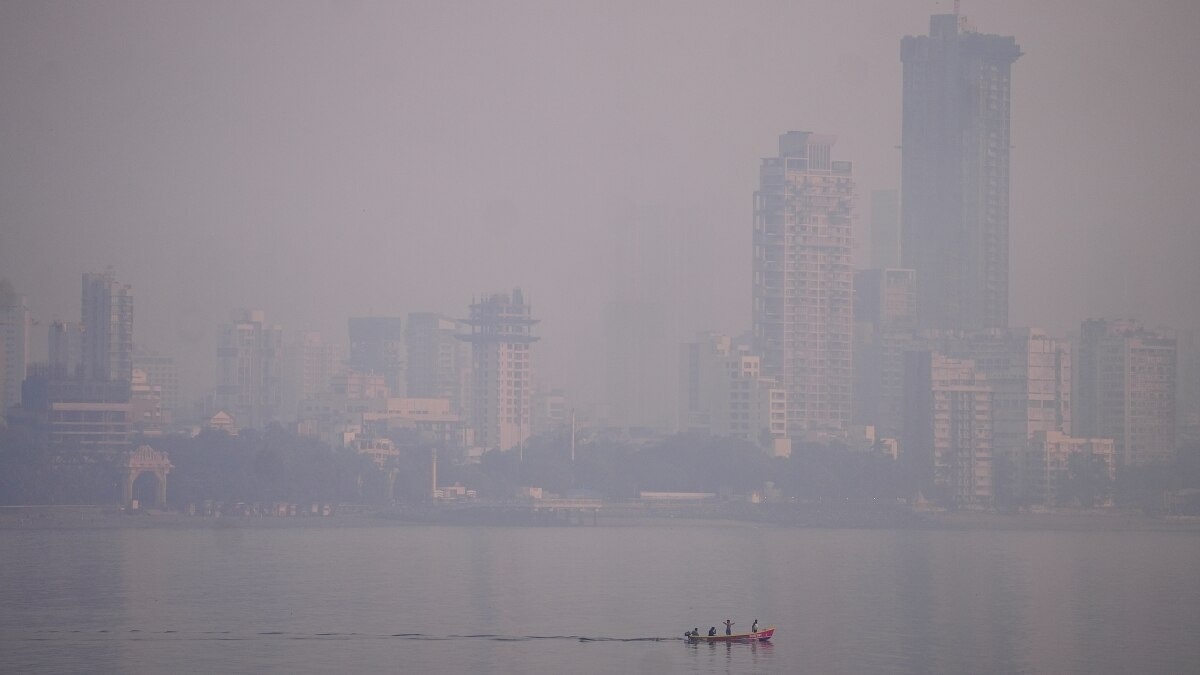
As Mumbai struggles with poor air quality, the Brihanmumbai Municipal Corporation (BMC) has identified five green spaces across the city for installing new Continuous Ambient Air Quality Monitoring Stations (CAAQMS).However, an expert has raised concerns over the proposed locations, warning that placing all the new monitors inside gardens could lead to an underestimation of the city's pollution levels.The Rs 22-crore initiative aims to expand Mumbai's real-time air quality monitoring network to areas that are currently not covered by existing stations operated by the Maharashtra Pollution Control Board (MPCB) and the Indian Institute of Tropical Meteorology (IITM).The civic body has selected locations to extend the monitoring grid without overlapping with these existing stations. The five identified locations are SK Patil Garden on Charni Road, C D Deshmukh Garden in Mulund East, Raheja Garden in Goregaon, Pramod Mahajan Garden in Dadar and Swami Muktanand Garden in Santacruz.However, Gufran Beig, chair-professor at the National Institute of Advanced Studies, questioned the decision to place the new monitoring stations in green spaces. He said a city's air quality monitoring network should cover different micro-environments to provide a representative picture of pollution levels.Citing guidelines of the World Meteorological Organization (WMO), Beig said monitoring stations should be distributed across different types of locations in a city.These should include areas with varying levels of traffic and pollution, so that the readings collectively reflect the city's overall air quality."If you install it at a place with very heavy traffic, at a traffic junction, then that would be called an overestimate. If you install it inside gardens, or at a very clean place, then its average underestimates," Beig said.He added that both approaches could distort the overall assessment of air quality. According to him, if all five new stations are installed inside gardens, as reported in the media, the network may record lower pollution levels than those experienced in other parts of Mumbai."If new stations in Mumbai have all been installed inside gardens, then that would not be appropriate, because that will underestimate the AQI, because it is a clean environment there," he said.NEW STATIONS TO TRACK PM2.5, PM10 LEVELSThe proposed monitoring stations will operate round the clock and track the concentration of key air pollutants, including particulate matter PM2.5 and PM10. They will also record local meteorological conditions such as temperature, relative humidity, wind speed and wind direction.The data generated by the stations will be transmitted every hour, allowing citizens to access localised Air Quality Index (AQI) updates. The BMC also aims to use the information to identify pollution hotspots at the micro level and frame more targeted mitigation measures.The expansion is intended to address gaps in Mumbai's existing air quality monitoring network. However, Beig's concerns highlight the importance of selecting monitoring locations that represent the range of environments across the city.While stations in green spaces may provide readings for those particular areas, relying on them alone could leave the monitoring network with an incomplete picture of pollution in traffic-heavy and other urban locations. A representative distribution across different micro-environments would be necessary to ensure that the data reflects the city's broader air quality conditions.- Ends
Will Mumbai's AQI look cleaner than it is? Expert flags BMC's garden monitor plan
Full Article
Original Source
Read the full article at Indiatoday →KhanList aggregates and links to publicly available news content. We do not host full articles from third-party sources. Always verify important information with original sources.