
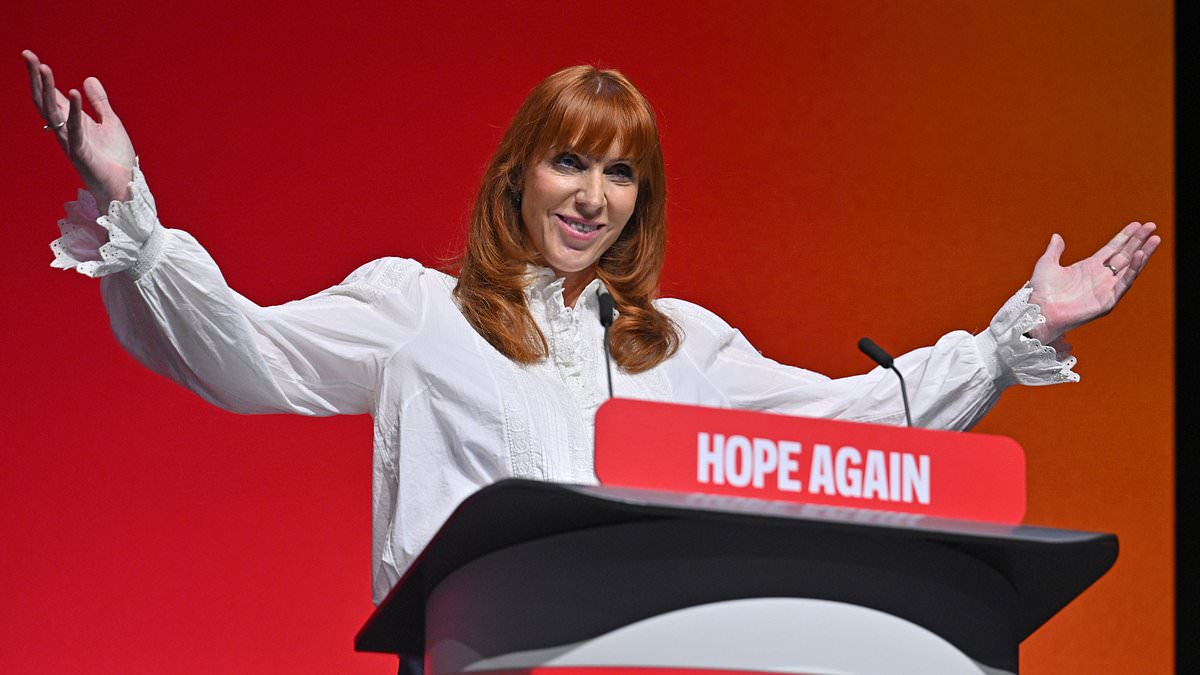
Angela Rayner pledged to end the injustice of 'fleecehold' at the Labour party conference, taking aim at property managers and estate agents.The housing secretary promised to cap leasehold ground rents, curb unfair administration and permission fees and set up an independent regulator for managing agents.Leaseholders have voiced concerns in recent years over ever-increasing service charges, ground rents, hidden insurance commissions and inflated quotes for repairs.The Government has already responded with the Commonhold and Leasehold Reform Bill, which will now be introduced to Parliament later this year. But Rayner said she had 'unfinished business' over leasehold reform.We look at the plans and whether they will move the dial for leaseholders. Changes: Angela Rayner has announced measures aimed at curbing excessive administration and permission fees for leaseholdersWhat did Angela Rayner promise on leasehold? Rayner reiterated the Government's promise to cap ground rents by 2028 – and then eventually scrap them altogether.Leaseholders pay ground rents to their freeholder for the 'right' to occupy the land their home is built on. Some see it as controversial as it is a nominal charge and there is no service given by freeholders in return.The Government's plan is to cap annual ground rents at £250, eventually reducing to a 'peppercorn' or virtually zero in 40 years time. Rayner also said the Government would bring an end to certain rip-off administration and permission fees.She said: 'I've heard of leaseholders being charged £250 for permission to own a pet, £400 for permission to change their own front door and then a further £60 to put a doorbell on that door - just for the basic right to do what you want in your own home. 'Which is why we are also capping outrageous administration and permission fees for leaseholders.'The housing secretary also announced plans for an independent regulator of property managing agents. This would affect both renters and leaseholders who live in managed blocks. The regulator will set codes of practice, such as standards of conduct and proper complaint handling for those they regulate. Property agents will be required to obtain a licence to do the job, as well as appropriate qualifications to operate.Rayner said that alongside freeholders, there are too many estate agents, letting agents and property management firms that are exploiting leaseholders.She said the sector is being 'undermined and undercut by far too many cowboys, crooks and con-artists' and that Labour would 'legislate for an independent regulator to rein these cowboys in'.How have property experts responded? Reactions to yesterday's announcements have been mixed.Katie Kendrick, co-founder of the National Leasehold Campaign voiced concerns about how independent the regulator will be and how it will be funded.'Any regulator must be genuinely independent, properly funded and equipped with real enforcement powers,' said Kendrick.'It cannot become industry self-regulation dressed up as reform. Leaseholders should not be expected to pay for the policing of an industry that has failed them.' She also said managing agents should fund their own regulation and not pass the cost back to consumers.Jo Ironside, a leasehold expert at law firm Mayo Wynne Baxter, thinks these announcements feel 'more like a headline than a solution'.She added: 'In my experience, the greatest risk to leaseholders is not the occasional administration charge but the prospect of being presented with substantial service charge demands or large one-off contributions arising from years of poor management and inadequate planning. Those costs can be genuinely life-changing for ordinary homeowners.'If reform is to be meaningful, I would like to see greater focus on the financial management of service charge funds held on trust for leaseholders, stronger protections where those funds are mismanaged, and a simpler route for leaseholders to recover losses. Those measures would deliver tangible benefits.'When is the Commonhold and Leasehold Reform Bill coming? The Prime Minister Andy Burnham also spoke about leasehold in his speech to the conference, pledging to introduce the long-awaited Commonhold and Leasehold Reform Bill to Parliament before Christmas. The draft bill, which has undergone pre-legislative scrutiny, will aim to tackle some of the issues faced by leaseholders.If passed, it will make it easier for existing leaseholders to convert to commonhold. This means homeowners would receive a stake in the ownership of their buildings and be given a stronger say in the issues that affected them, with greater control over how the building is managed and the bills they pay.It will also abolish the threat of forfeiture, which is where a freeholder can effectively take back a leaseholder's home and claim all their equity.This can be forced upon leaseholders who fail or refuse to pay their service charges or ground rent. Long-awaited: The Prime Minister pledged to introduce the Commonhold and Leasehold Reform Bill before ChristmasLinz Darlington, founder of lease extension firm Homehold, says even with this announcement, any change may still be years away.He said: 'Introducing a bill is still an early step in a long journey. The bill might be in parliament by Christmas 2026, but the question many leaseholders will be asking is - by which year's Christmas will I actually see the benefit?'Leasehold campaigner Katie Kendrick said that after years of consultations, delays and missed deadlines, leaseholders will remain skeptical about the promised changes.She is also worried that vested interests will undermine the move towards commonhold as legislation progresses through Parliament. 'We welcome the commitment to introduce the bill before Christmas, but the Government missed an opportunity to reaffirm its commitment to ending leasehold altogether and replacing it with commonhold,' added Kendrick.'Leasehold remains one of the biggest consumer scandals in modern Britain. Millions of homeowners are still paying excessive charges, facing unfair practices and lacking control over their own homes.'Best mortgage rates and how to find them Mortgage rates have shot up again due to inflation triggered by the conflict with Iran reversing hopes that the Bank of England would cut rates. This means those remortgaging or buying a home face higher costs.That makes it even more important to search out the best possible rate for you and get good mortgage advice, whether you are a first-time buyer, home owner or buy-to-let landlord.This is Money's partner L&C can help you with its fee-free mortgage service.> Compare mortgage rates> Find the right mortgage for you To help our readers find the best mortgage, This is Money has partnered with the UK's leading fee-free broker L&C.This is Money and L&C's mortgage calculator can let you compare deals to see which ones suit your home's value and level of deposit.You can compare fixed rate lengths, from two-year fixes, to five-year fixes and ten-year fixes.If you’re ready to find your next mortgage, why not use This is Money and L&C’s online Mortgage Finder? It will search 1,000s of deals from more than 90 different lenders to discover the best deal for you.> Find your best mortgage deal with This is Money and L&C Mortgage service provided by London & Country Mortgages (L&C), which is authorised and regulated by the Financial Conduct Authority (registered number: 143002). The FCA does not regulate most Buy to Let mortgages. Your home or property may be repossessed if you do not keep up repayments on your mortgage.
Will Labour's plans to end leasehold injustice and rein in 'outrageous' fees work?
Full Article
Original Source
Read the full article at Dailymail →KhanList aggregates and links to publicly available news content. We do not host full articles from third-party sources. Always verify important information with original sources.