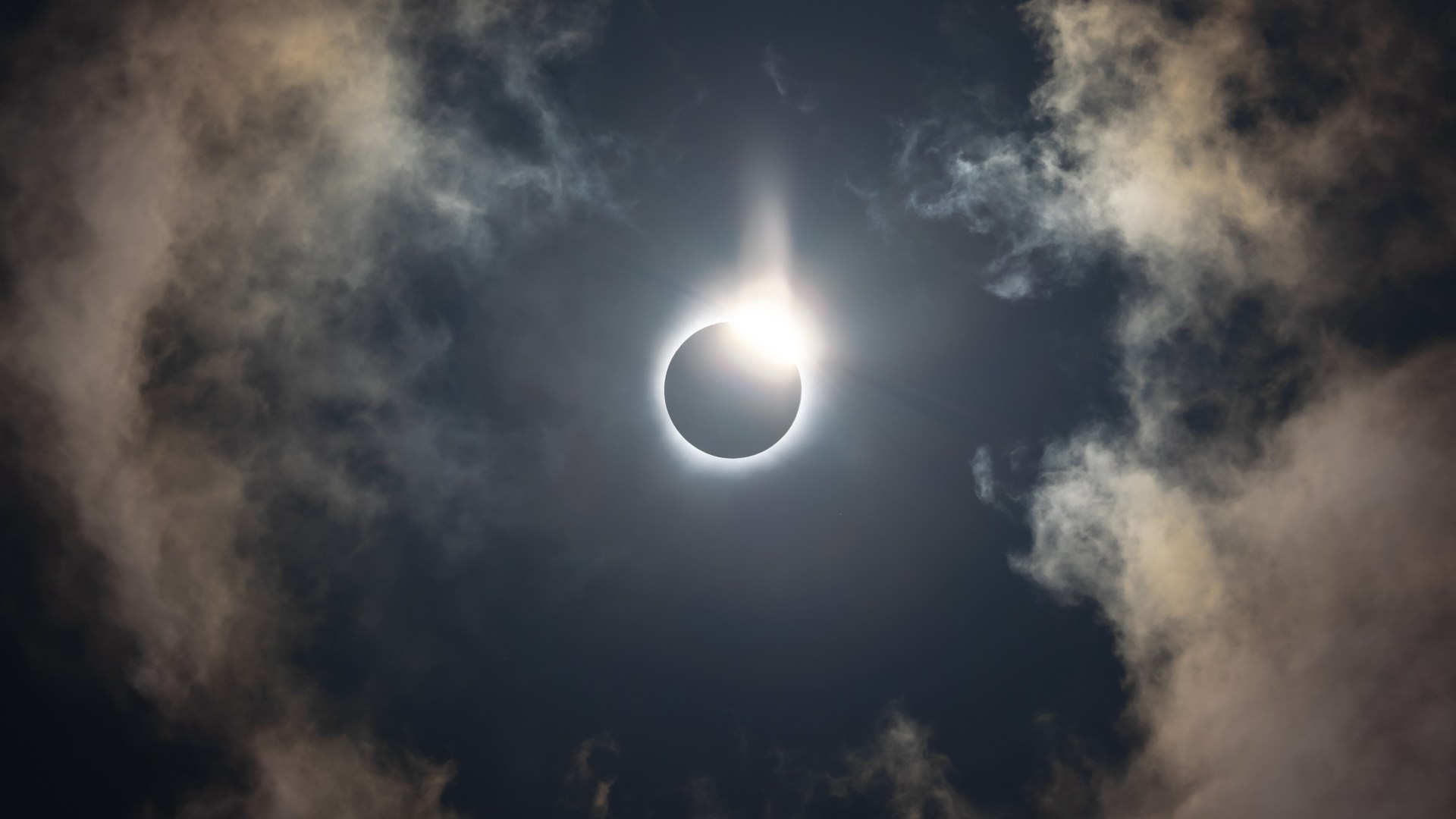
EXCITEMENT is building across Europe as a handful of countries are expecting to see a total eclipse of the Sun on Wednesday, August 12. In the UK, the event will be the biggest of its kind in almost 30 years. A handful of countries in Europe will see a total eclipse of the Sun on Wednesday, August 12 Credit: Getty The eclipse will be the biggest of its kind in the UK in almost 30 years Credit: EPA But which other countries will be able to catch a glimpse of the celestial show? When is the solar eclipse? Europe will experience its first total solar eclipse since 1999 on Wednesday, August 12. Sign up for the Tech newsletter Thank you! Between two and five solar eclipses occur somewhere on Earth every year, with the last of any kind anywhere on Earth being an annular “ring of fire” eclipse on February 17, 2026. But August 12’s spectacle will mark the first total solar eclipse to take place anywhere on Earth since April 8, 2024. That took place in North America, with millions of people gathering to see the eclipse as the path of totality swept from Mexico through 15 US states and into eastern Canada. Which countries will see the solar eclipse? Parts of the UK will see over 96% of the Sun covered as the Moon crosses the Sun’s “disc”, with the eclipse taking approximately two hours. The total solar eclipse will be the first to take place in Europe since 1999 Credit: Alamy The last total solar eclipse to take place on Earth was in North America, two years ago Credit: Getty The time of greatest eclipse is set to take place between 7.05pm and 7.13pm in the UK, depending on where you are watching from. The path of totality, where the Moon completely blocks the Sun, will sweep across Greenland, Iceland, the extreme northeastern part of Portugal, and Spain. Most read in Science Other locations in store for a total eclipse include the Arctic and the Atlantic Ocean. A total solar eclipse will be visible along a narrow path passing through: Spain (Northern and central regions, including the Balearic Islands) Iceland (Western and southern regions, including Reykjavik) Greenland (Eastern and southern coastlines) Portugal (Extreme northeastern border area near Rio de Onor) Russia (Far northern Taymyr Peninsula and Arctic island territories) Along with the UK, most of continental Europe will be expecting to catch sight of a partial eclipse – weather permitting. A partial solar eclipse will be visible across a large area of Europe: United Kingdom Ireland France Germany Italy Portugal (rest of the mainland, Azores, and Madeira) Netherlands Belgium Luxembourg Switzerland Austria Norway Sweden Finland Denmark Poland Czech Republic Slovakia Hungary Slovenia Croatia Bosnia and Herzegovina Serbia Montenegro North Macedonia Albania Greece (far northwestern areas only) Bulgaria Romania Estonia Latvia Lithuania Belarus Ukraine Moldova Malta European Microstates: Andorra, Monaco, San Marino, Vatican City, Liechtenstein The path of totality will sweep across Greenland, Iceland, the extreme northeastern part of Portugal, and Spain Credit: Getty Most of continental Europe, North America and northwestern African countries will also get to see a partial eclipse Credit: AFP Across North America, eastern and far-northern Canada will see the deepest coverage – ranging from 40% up to 80% – while southern and western parts of the country will see much smaller partial views. In the northern and eastern United States, from Alaska through to New England and the mid-Atlantic, observers will catch a minor partial eclipse, with the Moon blocking up to 10% to 20% of the Sun. Meanwhile, northwestern African countries – including Morocco, Western Sahara, Mauritania, Senegal, The Gambia, Mali, and Algeria – will also witness a partial, sunset eclipse. Across Asia and Eurasia, parts of Turkey, Kazakhstan, Georgia, Armenia, Azerbaijan, and northern Russia will catch a partial glimpse of the eclipse. How do I safely view the eclipse? Although the eclipse provides an incredible spectacle, watching it with the naked eye can be very dangerous. Be sure never to look at the eclipsed Sun without using ISO 12312-2 certified eclipse glasses or proper solar filters if using cameras, telescopes or binoculars. For a safe alternative to eclipse glasses, stand with your back to the Sun and use a kitchen colander to project dozens of crescent-shaped solar shadows onto the ground or a piece of card. Comment now
Will I see the solar eclipse? Full list of countries where the 2026 August eclipse will be visible
Full Article
Original Source
Read the full article at Thesun →KhanList aggregates and links to publicly available news content. We do not host full articles from third-party sources. Always verify important information with original sources.