
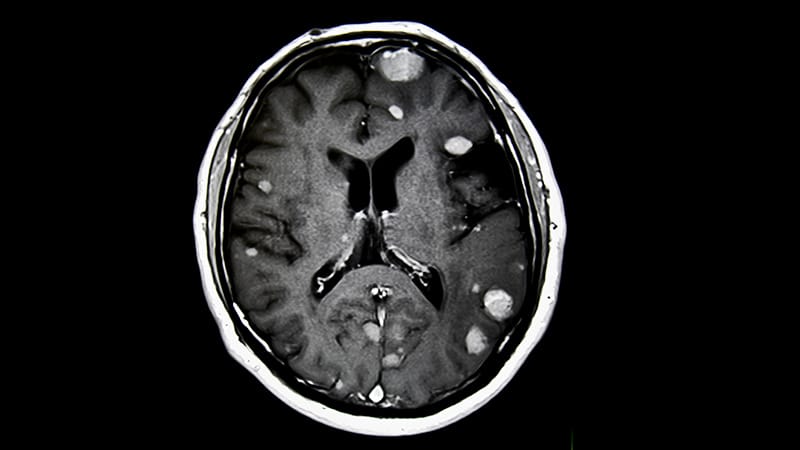
BOSTON — Giving fractionated stereotactic radiosurgery (SRS) instead of single-fraction SRS to those with resection of large brain metastases reduces cancer recurrence, shows the first randomized trial to compare the two options head-to-head.After resection of one brain metastasis > 2 cm across, 1-year surgical bed control was 87% among 120 patients randomly assigned to three to five fractions of SRS compared with 81% among 122 patients assigned to single-fraction SRS treatment. Patients receiving fractionated SRS also lived a median of 9 months longer.“For patients undergoing resection of a larger brain metastasis, postoperative fractionated SRS should be considered the standard of care,” said lead investigator Ayal Aizer, MD, neurologic radiation oncologist at the Dana-Farber Cancer Institute in Boston, who presented the findings at the American Society for Radiation Oncology (ASTRO) 2026 Annual Meeting.The current standard is a single SRS dose to the cavity after removal of a large brain metastasis, but control is suboptimal. Spreading radiation across more sessions allows for the safe delivery of larger doses to wipe out residual disease.Retrospective studies have suggested a benefit with the fractionated approach, “but without a randomized trial, we didn’t truly know what worked best. This trial answered the question,” said Paul Brown, MD, principal investigator and neurologic radiation oncologist at the Mayo Clinic in Rochester, Minnesota.Patients had one to four brain metastases, including one resected metastasis > 2 cm, that most often arose from melanoma or lung or breast cancer. They were randomly assigned evenly to either single-fraction SRS (12-20 Gy according to volume) or fractionated SRS to 27 Gy in three fractions for volumes < 30 cc or 30 Gy in five fractions for larger volumes. The single-fraction arm had a median surgical cavity volume of 14.8 cc, whereas the median volume in the fractionated group was 16.5 cc; 91% of fractionated patients received three fractions.Overall survival was 29 months with fractionated SRS compared to 20 months with single-fraction SRS. Radiation necrosis and cerebral edema were 14% and 8% in the fractionated group compared with 10% and 9% in the single-fraction SRS group, respectively. The differences weren’t statistically significant.Unresected metastases were treated with either single-dose or fractionated SRS according to the study arm; the recurrence rate of unresected brain metastases was 4% with fractionated SRS compared with 11% with single treatment.Commenting on the study, Lia Halasz, MD, neurologic radiation oncologist at the University of Washington in Seattle, noted that while some clinicians already opt for fractionated SRS, the trial gave the field the randomized evidence it needs to be sure that “additional visits translate into a meaningful improvement in local control without a significant increase in side effects.”The overall survival difference in the trial, dubbed Alliance A071801, was unexpected, especially because deaths in the study were due to systemic disease, not brain metastases.“Something with brain control affects survival. We don't know quite what, but it gives us more questions to explore,” said Brown.The trial was funded by the National Cancer Institute. Aizer disclosed research funding from Siemens and TherAguix. Brown and Halasz didn’t have any relevant disclosures. M. Alexander Otto is a physician assistant and award-winning journalist. He is also an MIT science journalism fellow. Email: aotto@medscape.net.
Will Fractionated Radiation Become SOC for Brain Metastases?
Full Article
Original Source
Read the full article at Medscape →KhanList aggregates and links to publicly available news content. We do not host full articles from third-party sources. Always verify important information with original sources.