
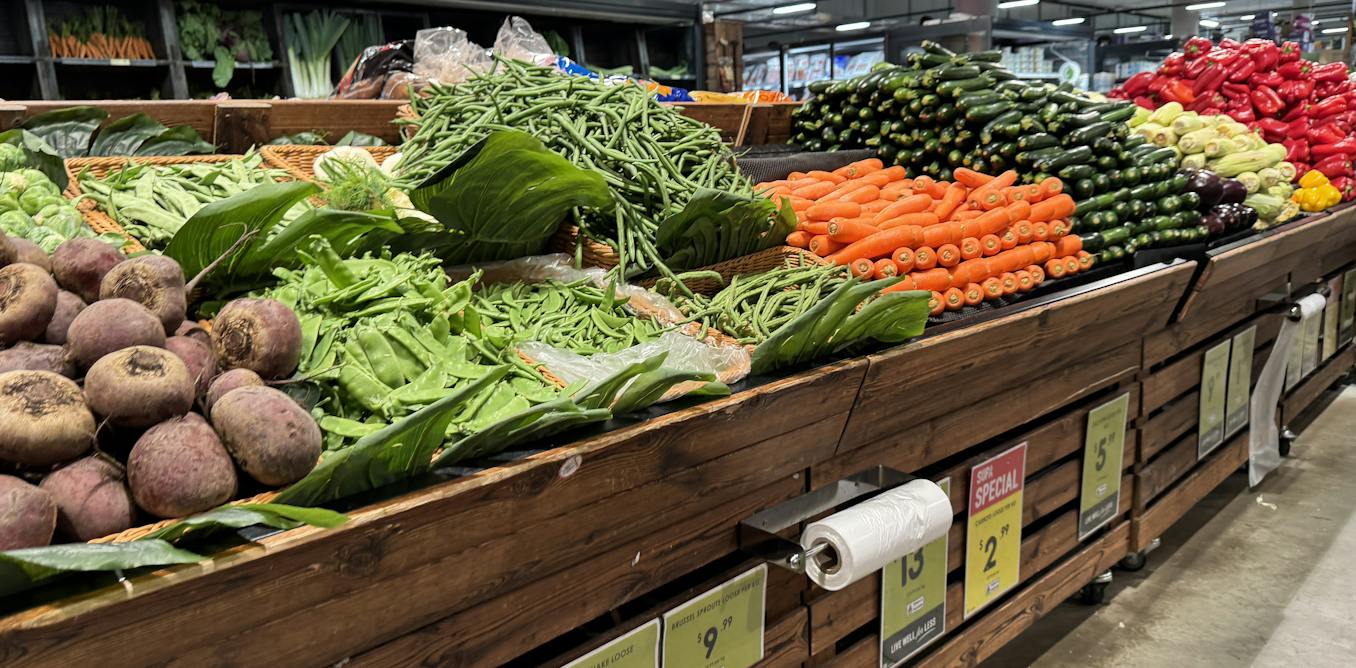
Australia’s farm sector currently faces a double whammy from weather and non-weather related factors: a confirmed El Niño effect and surging inflationary pressures. The Bureau of Meteorology says a strong El Niño is underway in late spring and into summer in Australia. This week it said: Models indicate the current event is likely to become the strongest El Niño event on record, with reliable records dating back to 1950. The research division of the Department of Agriculture, known as ABARES, says the current El Niño could lead to lower spring rainfall in parts of Australia, but the impacts are uncertain. These events have coincided with non-weather factors such as rising fuel and fertiliser prices caused by conflict in the Middle East, and ongoing inflationary pressure in the economy. So, how will these various pressures affect prices of food in coming months? Fewer leafy greens? Fruits and vegetables that are part of the regular diet of many households are likely to be affected, but to varying degrees. Consumers could see lower availability and higher prices for some vegetables, such as leafy greens, peas, broccoli and cauliflower later in the year. On the other hand, due to drier growing conditions, greater supply of citrus, apples and stone fruits is likely. Consumers may find greater availability of peaches, nectarines and plums in markets. The appearance of vegetables and fruits can be affected by extreme heat and sun exposure, potentially reducing their visual appeal. But product quality is not affected, a point the industry has been keen to promote with sales of “imperfect” fruit and vegetables. In eastern and southern parts of Australia, winter and spring rainfall is likely to be lower due to El Niño, leading to a fall in the production of pasture. For cattle and sheep producers, lower pasture availability can force them to use feed supplements or to reduce stock numbers. If many producers attempt to sell livestock at the same time, livestock prices can come under pressure. A dry spring therefore can lead to repercussions beyond the season itself. In drought years, farmers need to buy in feed supplements. Klae Mcguinness/Getty Images ABARES forecasts for winter crop production (mainly wheat, barley and canola) in 2026–27 provide a mixed picture. Output is forecast to fall by between 16% and 44% in Queensland, New South Wales and Western Australia due to below average rainfall. On the other hand, winter crop output in Victoria and South Australia is forecast to rise, reflecting excellent growing conditions. Consumers are likely to face rising food prices It’s not easy to predict by how much the prices of specific food items will increase. Many supply and demand side factors are at play. Some business forecasts indicate that wheat, sugar and beef prices will be relatively higher for the rest of 2026, and prices are expected to remain above their longer-term averages. The higher prices are likely to flow through to consumers. Higher prices for fertiliser and diesel are ramping up pressure on farm input costs, with diesel prices above A$2.60 a litre. The impact of fuel price hikes also tend to move beyond the farm gate, increasing the cost of transport, freight and logistics along the supply chain. Overall, these price hikes will result in higher costs for farmers, and in turn for consumers through higher food prices. Rainfall has been declining for decades El Niño effects have coincided with the occurrence of severe droughts over the past several decades (for example, in 1994, 2002, 2006 and 2015) in Australia. The entire farm sector was affected, through lower availability of pasture, reduced crop yields and reduced profits. Yet El Niño is not the only phenomenon impacting Australian farming conditions. The CSIRO has pointed to a decline in rainfall in southern Australia since 1970 in the main growing season from April to October, citing both natural variability and climate change. Inflationary pressure to continue Inflation data from the Australian Bureau of Statistics showed food and non-alcoholic beverage prices were the second-largest contributor to inflation in the year to July, rising 3.2%. Only housing costs rose by more. Financial market economists have said rising food prices could be an “unwelcome shock” that prevents an improvement in inflation. With inflation top of the list of the Reserve Bank of Australia’s concerns, higher food prices look set to keep inflation above the bank’s 2–3% target for some time.
Will El Niño send food prices soaring this summer?
Full Article
Original Source
Read the full article at Theconversation →KhanList aggregates and links to publicly available news content. We do not host full articles from third-party sources. Always verify important information with original sources.