
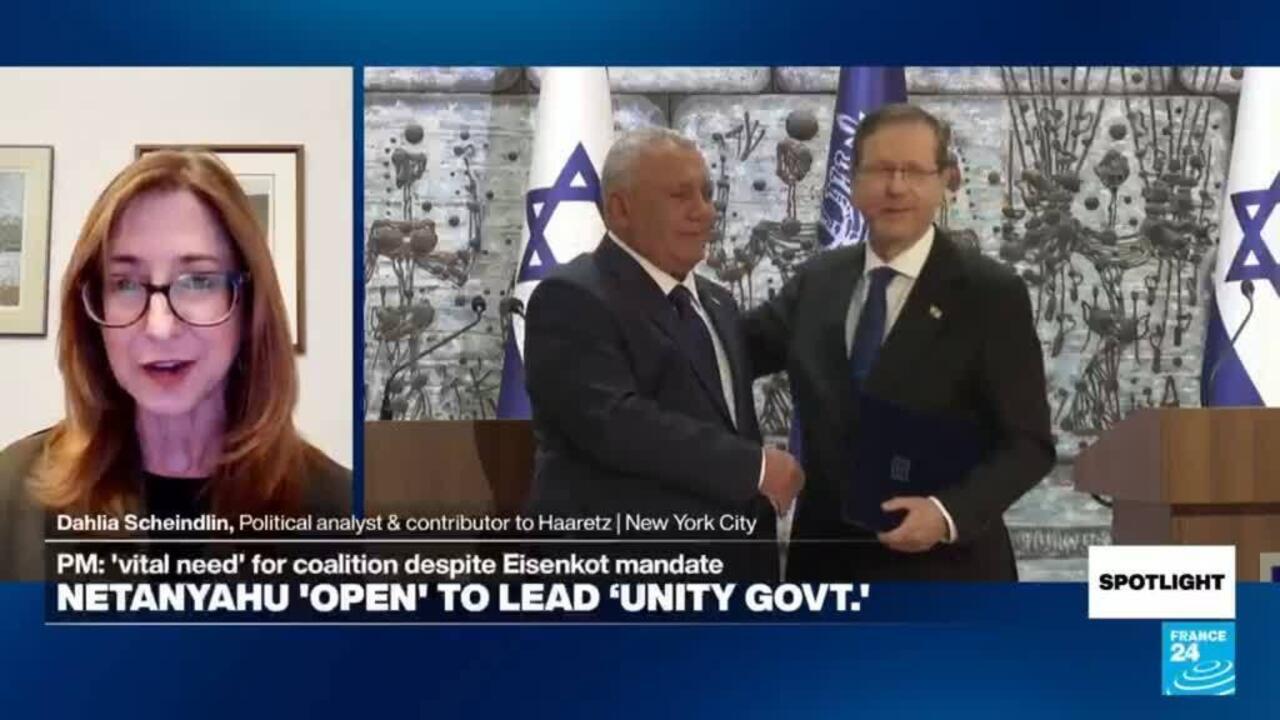
François Picard welcomes Dahlia Scheindlin, Israeli author, political analyst, strategic consultant and pollster, to examine a question that reaches far beyond the immediate struggle for power: Can Israel move beyond Netanyahu amid coalition deadlock, growing disillusionment in Washington and the persistent limits of political inclusion? As Gadi Eisenkot embarks on a 45-day race to form a government, following Israeli President Isaac Herzog's decision to entrust him with the task of assembling an elusive parliamentary majority, Scheindlin offers a timely reminder: “It's always too early to eulogize Netanyahu politically.” seemingly insurmountable political crises. After all, the veteran prime minister has repeatedly demonstrated an extraordinary capacity to surviveScheindlin explores the uncertain prospects of Eisenkot's coalition-building efforts, alongside the erosion of Israel's traditional bipartisan support in Washington. She places considerable responsibility on Netanyahu himself, arguing that the “complete collapse of the old bipartisan consensus” was largely driven by a leader who “invested the entire relationship in one party and increasingly one person.” Her analysis reveals how parliamentary arithmetic, competing visions of national identity and Israel's increasingly strained relationship with the United States have converged into a broader crisis of political legitimacy, democratic inclusion and long-term strategic direction. Yet perhaps the most revealing contradiction lies within the opposition itself: determined to unseat Netanyahu, its leading figures remain deeply reluctant to cooperate with Arab parties. Scheindlin calls this a “completely self-imposed constraint”, questioning why those seeking political change continue to rule out partnerships that might make it possible. For her, Jewish-Arab political cooperation is not merely a matter of coalition arithmetic but a fundamental question about Israel's democratic future. The immediate outcome, Scheindlin suggests, may be either parliamentary stalemate or a structurally fragile minority government. But the deeper challenge lies in Israel's political architecture itself. Against a backdrop of mounting international isolation and concerns over the departure of some of the country's brightest and most highly skilled citizens, can new political leadership overcome the entrenched exclusions and divisions that stand in the way of meaningful change, or will Israel's political crisis outlast Netanyahu himself? Our guests Dahlia Scheindlin International political consultant
Will Eisenkot succeed in 'minefield of Israeli politics' where 'so many other generals' have failed?
Full Article
Original Source
Read the full article at France24 →KhanList aggregates and links to publicly available news content. We do not host full articles from third-party sources. Always verify important information with original sources.