
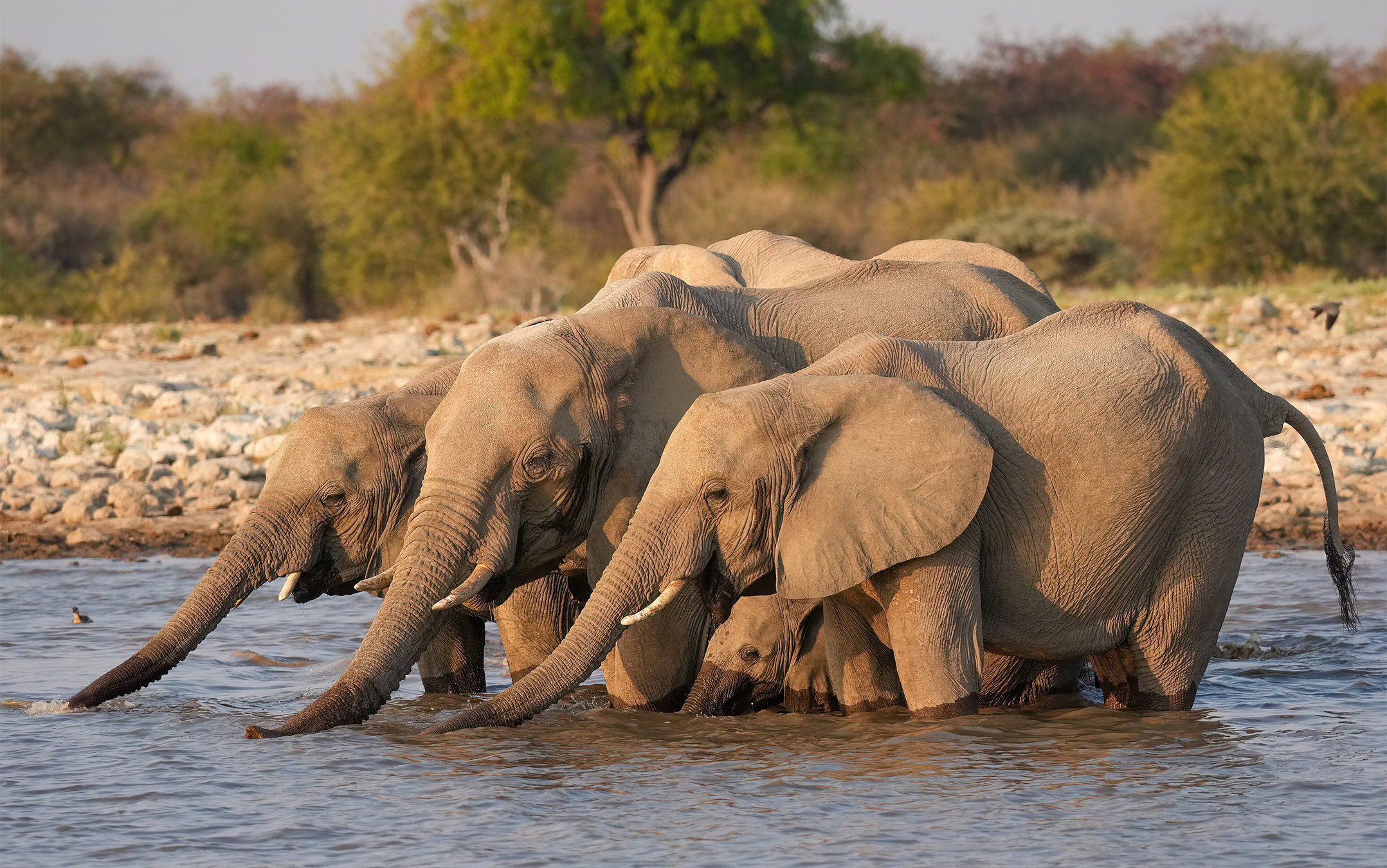
Despite greater enforcement in recent years, Nigeria has persisted as a key export hub for elephant ivory and pangolin scales shipped to Asia, becoming a central node of the illegal wildlife trade from Africa, according to a new report by the Environmental Investigation Agency.While enforcement operations have increased in Lagos, the illegal trade has now relocated to the country’s smaller port cities.Enforcement is still lacking: Of 58 documented wildlife crime incidents in Nigeria since 2021, only six resulted in prosecutions.Across West and Central Africa, the arrest-to-conviction rate is just 16%, with low-level actors often taking the fall while key players avoid justice. At his storefront in Lagos’s sprawling Lekki Craft Market, alongside handwoven raffia baskets and Ankara fabrics, an illegal wildlife trader, identified only as Mr. X, sells an array of carved ivory products. It’s from this shop that he established links with buyers across Asia, sending out large volumes of wildlife products sourced from the forests of Gabon, Cameroon, and the Central African Republic. In early 2022, Mr. X was arrested for unlawful possession of nearly 900 kilograms (nearly 2,000 pounds) of pangolin scales and 145 kg (320 lb) of elephant ivory. His operations ceased, and in May 2023, he was convicted and sentenced to two years in prison. But within months, Mr. X was free. Some 18 months later, investigators found that he was once again offering up pangolin scales for sale. Business had rebounded. Investigators found that Mr. X had likely spent only a few months in custody and reportedly paid several million naira, the equivalent of a few thousand U.S. dollars, in bribes through his lawyer during court proceedings. The saga of Mr. X is emblematic of the ongoing corruption and persistence of West and Central Africa’s illegal wildlife trade that’s pushing many species to the brink, despite better enforcement in recent years, according to a new report by the Environmental Investigation Agency (EIA), an international NGO that digs into environmental crimes across the world. Criminal networks, investigators found, have continued to evolve and evade efforts to clamp down on the flow of products derived from imperiled wildlife. A pangolin captured in Cameroon. Image by Eric Freyssinge via Wikimedia Commons (CC BY-SA 4.0). “On the one hand, there’s been progress. Nigeria has had its first prosecutions … Even five years ago, it had not had any on wildlife trafficking at that level,” said Justin Gosling, who leads EIA’s program on securing criminal justice. “But there are competing crime interests and priorities in [African] countries. Even with the best intentions of tackling wildlife crime, we have all sorts of other issues, he said, noting that there could have been more progress. “But [these] countries have been blighted by the same kind of economical and other issues that have affected us all.” While East and Southern Africa have long been hotspots of illegal wildlife trade — particularly Dar es Salaam in Tanzania — traffickers shifted their operations to West and Central Africa following crackdowns in the 2010s. Nigeria was found to be the primary exit point for illegal wildlife from Africa in 2015. “We started seeing the emergence of Nigeria as probably the key hub for wildlife trafficking. It became internationally notorious for that,” Gosling said. “That shift from East to West Africa essentially meant that the traffickers had to make new contacts and establish new geographical and logistical routes.” Trafficked pangolin scales and elephant ivory in Nigeria, a central node of the illegal wildlife trade in Africa and key export hub to Southeast Asia. Image courtesy of Environmental Investigation Agency. EIA investigators last assessed this illegal industry in West and Central Africa six years ago, finding that the region had become the epicenter of rampant poaching and trafficking. They now report that despite improved enforcement since 2020, with more incidents detected, more arrests and more prosecutions, such efforts have barely made a dent in disrupting trafficking networks. Investigators conducted online research and field-based undercover investigations into the trade in Nigeria and across the region. They focused on pangolin scales and elephant ivory — two expensive products highly coveted by Chinese buyers. Pangolin scales are used in traditional Chinese medicine and are removed from the nocturnal mammals by boiling or burning. The scales — which are composed of keratin, the same protein making up human nails and hair — are then ground into powder or pill firm and sometimes mixed into liquid remedies. There is no proven medicinal value. The meat is also eaten as a purported remedy. Pangolins are the world’s most trafficked mammal and have been for decades. Already, demand for pangolin scales has pushed all four pangolin species found in Southeast Asia and China to critically endangered status. With Asian supplies depleted, poachers have targeted Africa where two of its four pangolin species, are now endangered; the other two are classified as vulnerable on the IUCN Red List of Threatened Species. Left: Here, a trader shows EIA the details of an illegal wildlife shipment listing Onne, a major port town in Nigeria, as the port of loading. Right: Paperwork documenting an air cargo shipment of illegal wildlife products shipped from Lagos Airport. Images courtesy Environmental Investigation Agency. In 2017, all eight pangolin species were given the highest level of protection under CITES, the treaty regulating international trade in endangered species, banning all cross-border commercial sale. EIA’s researchers found that Gabon recorded the most incidents of wildlife crime from 2021 to 2026, but Nigeria remained the beating heart of the trade by volume, with more than 50,000 kg (more than 110,000 lb) of elephant ivory and pangolin scales seized by authorities during that time period. The Democratic Republic of the Congo followed, with more than 16,000 kg (about 35,000 lb) seized. “If you’re looking at Nigeria, the main wildlife products that you’re going to see coming out of there illegally are pangolin scales and ivory,” according to an EIA investigator who spoke on condition of anonymity. “EIA has been working on pangolin scales and ivory for decades, and, even so, it’s still a problem. It’s not decreasing. And obviously, the elephant and pangolin populations are decreasing.” Carved ivory products offered for sale at Lekki Arts and Crafts Market in Lagos, Nigeria. Image courtesy of Environmental Investigation Agency. The leaking bucket Though Nigeria has now, for the first time, prosecuted some individuals for wildlife crime, conviction rates remain low. Between January 2021 and February 2026, Nigeria recorded 58 incidents with 72 suspects arrested. Of those, 19 were charged with a crime and just 12 were convicted in connection with six incidents. That means that about 16% of those arrested for poaching or trafficking are convicted, allowing the illegal trade to continue to flourish. “This investigation shows that we must take a holistic approach to fighting the illegal wildlife trade,” said Ruth Musgrave, CEO of the Elephant Protection Initiative Foundation, the secretariat of a pan-African alliance working to conserve elephants and end the ivory trade. “Influencing public opinion, designing and enforcing better conservation laws, anti-poaching and intelligence work are each vital, as is international cooperation.” She added, “We’ve worked hard in several West African countries on just one piece of the puzzle: ensuring that government-held stockpiles of ivory and pangolin scales are secure, and, wherever possible, destroyed. This ensures they do not leak back onto the illegal market.” Left: Sacks of pangolin scales in Nigeria, packed in a shipping container ready for export. These scales are made of keratin, the same protein found in human fingernails and hair, and have no proven medicinal value. Right: A large quantity of ivory being weighed by a trader in Nigeria. Targeted for their tusks, mostly sold to China, an intense wave of elephant poaching began around 2007; the population fell from an estimated 1.3 million elephants then to 450,000 -550,000 today. Images courtesy of Environmental Investigation Agency. Across the region, many of the perpetrators who are fined or sentenced are of little consequence in the bigger picture. It’s mostly the poachers, middlemen, and other low-level, easily replaceable actors that take the fall, rather than powerful kingpins or the corrupt officials, financial beneficiaries, and logistics coordinators who prop up large regional trafficking networks. This, experts say, means trade persists with near impunity. “[Wildlife crime] will continue to thrive unless we actually prosecute the right people — or disrupt [the trade],” Gosling said. “What that means is putting [the illegal wildlife trade] beyond its capabilities so it can’t actually function again … As long as the enforcement agencies are only picking off the individuals around the edge of the networks, then they will just bounce back. So they’ve got to get to the right people.” One of the biggest changes that has allowed the illegal wildlife trade to thrive in Nigeria in recent years is that criminals have shifted their operations from Lagos to new export locations with weaker enforcement, such as Enungu, some 230 kilometers (about 140 miles) from the Gulf of Guinea coast in the southeast and to Port Harcourt, a primary Gulf port city. “That’s mostly because of the so-called eyes on the ground. The law enforcement action within Lagos has increased. It means that the traders are more wary of operating there,” the EIA investigator said. “Whereas if they move to ports where it’s less observed by law enforcement, they feel a bit safer. Or it could be that they have connections within the port at Port Harcourt, so it’s easier to export.” Left: Pangolin scales offered for sale at market in Abuja, Nigeria. Right: Ivory products displayed by a vendor at Lekki Arts and Crafts Market in Lagos, Nigeria. Images courtesy Environmental Investigation Agency. In addition to relocating operations, traffickers are now using legitimate products, such as edible moringa seeds, to conceal contraband, and using bank transfers and underground banking systems to channel illicit funds, the investigation found. One glimmer of hope is that Nigeria will soon enact its Endangered Species Conservation and Protection Bill 2024, the most significant overhaul of the country’s wildlife protection framework in nearly four decades. Yet experts said such changes need to be adopted and heavily enforced across the entire region to prevent what some dub the “leaking bucket” — where a crackdown on wildlife crime in one place means that it simply picks up and moves to another. “This has to be a concerted effort. The pressure has got to be on all the time,” Gosling said. “Otherwise, it will displace somewhere else, which means the other countries … have got to get their act together.” Preventing wildlife crime, he added, is especially critical, not just seizing wildlife parts and counting it a success. “With environmental crimes, the harm is done at the outset, whether it’s the felling of a tree or the killing of an animal or the ecosystem,” Gosling said. “With many other forms of organized crime, if you intervene at some point, you actually stop the worst harm from happening or further harm. “What we have at the moment,” he added, “is just stockrooms full of dead animals which doesn’t really help anything.” Nigeria has been a major transit hub for illegal ivory trafficking networks, moving parts to Asia, but with better enforcement in Lagos, the trade has relocated to the country’s smaller port cities. Image by Charles J. Sharp via Wikimedia Commons (CC BY-SA 4.0). Pangolins have been the most heavily-traded mammal for decades, coveted for their scales and meat, which are used in traditional Chinese medicine — pushing all eight species towards extinction. Image by flowcomm via Wikimedia Commons (CC BY 2.0). Banner image: A herd of African bush elephants drinking in Etosha National Park, Namibia. Despite an ivory ban enacted in China in 2018, poaching and trafficking continues, with Namibia as a major transit point and exporter. Image by Giles Laurent via Wikimedia Commons (CC BY-SA 4.0). Nigeria’s parks chief stresses conservation gains amid struggle to protect wildlife FEEDBACK: Use this form to send a message to the author or editor of this post. If you’d like to post a public comment, you can do so at the bottom of the page. Credits Topics
Wildlife trafficking persists in West, Central Africa despite crackdowns: Report
Full Article
Original Source
Read the full article at News →KhanList aggregates and links to publicly available news content. We do not host full articles from third-party sources. Always verify important information with original sources.