
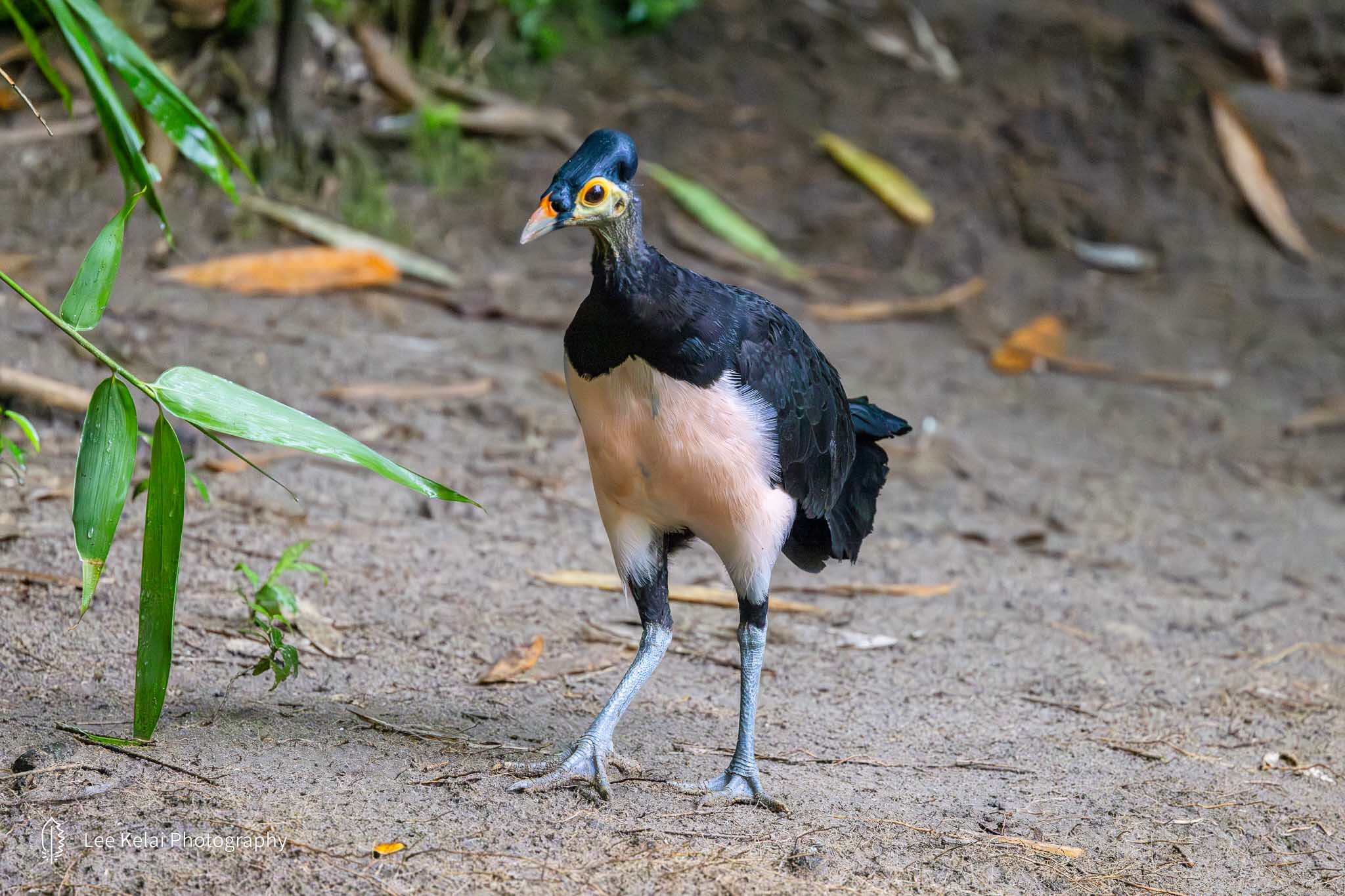
Sulawesi’s critically endangered maleo birds are increasingly targeted by wildlife traffickers, according to a new study that documented seizures of smuggled birds Some were carried by families with children, young couples or single mothers to try to avoid detection.Researchers found that 25 live juvenile maleos were seized by enforcement agents in 2024 in India or en route there. Conservationists say they may have been smuggled from hatcheries built to conserve the critically endangered species. None were repatriated alive to Indonesia.Maleos are a protected species in Indonesia, and all international commercial trade is banned under CITES, the global wildlife trade treaty.Researchers urge authorities in India, Indonesia and Thailand to increase surveillance and enforcement in airports and build a mechanism to return seized birds to Indonesia, where they could potentially be released back into the wild. Maleos, black-and-white birds that stand 60 centimeters (2 feet) tall with a distinctive splash of blue, orange and yellow on their faces, roam Sulawesi’s thick tropical jungles. But when it’s time to lay their eggs, they arrive at communal nesting grounds: Sandy beaches heated by the sun or the earth’s geothermal energy. There, they dig burrows with their webbed blue feet, lay their eggs and disappear. After a couple of months, the younglings hatch and, miraculously, are ready to fly within a few hours. This is an iconic bird on Sulawesi, serving as the official faunal mascot of Central Sulawesi province and of the Bogani Nani Wartabone National Park. Once considered widespread on Sulawesi, maleos (Macrocephalon maleo) are now on the brink of extinction, classified as critically endangered. Their numbers have dwindled to just 4,000-7,000 breeding pairs, mainly because their forest habitat is disappearing and they are targeted by poachers. Since 1983, the birds have lost more than two-thirds of their 149 nesting grounds as residential and commercial development takes over sandy riverbanks and beaches, and habitat is ravaged by mines and sliced by roadways. Maleo eggs are considered a delicacy, so people raid nests, and fewer chicks are born to replenish the population. But now, illegal trade in live maleos is emerging as a new and serious threat to their survival, according to a recent study published in the Journal of Asian Ornithology. These birds are trafficked to serve the booming demand for exotic pets. Researchers documented three seizures involving some 25 maleos in 2024 — all of them en route to or in India. They say these seizures indicate that the international illegal trade is a growing threat to this already-imperiled bird. Maleos arrive at warm, sandy beaches, dig burrows, and lay eggs in communal nesting grounds. Image © Kevin Schafer via iNaturalist (CC BY-NC 4.0). Maleos are protected from international commercial trade under CITES, a global wildlife trade treaty. It’s also illegal to hunt, kill, trade or transport the birds under Indonesian laws. The current study is the first to document them in illicit international commerce. “We didn’t set out looking at maleos,” said study author Chris Shepherd, a senior conservation advocate at the Center for Biological Diversity. He said they spotted the bird while looking at the surge in exotic wildlife seizures in India, especially those coming from Indonesia. “We were not expecting to see maleos because we have not seen them in international trade before.” The discovery, “rang alarm bells for me,” Shepherd said. “This paper issues a wake-up call to local and international authorities, adding another iconic, popular, and desperately imperiled species to the list of those threatened by illegal trafficking,” said Marcy Summers, director and co-founder of Alliance for Tompotika Conservation, which works on maleo conservation in Sulawesi. “It is already known that the taking of maleo eggs by humans is the single biggest threat to maleo survival, but until reading this paper, I was not aware of international trade in live maleos, which is just as concerning,” Summers, who was not involved in the recent study, told Mongabay in an email. Maleos are critically endangered, and poaching is the biggest threat to their survival. Image © Jason Alexander via iNaturalist (CC BY 4.0). Three Indian maleo seizures within a year Entries from the CITES wildlife trade database found just two legal transactions involving live maleos, which were traded to zoos. In both cases, the birds were born or bred in captivity in the U.S. Indonesia has never reported a single legal export of maleos, and India has not documented any legal imports. But when the researchers scoured the Internet for media reports on illegal trade and seizures involving maleos, they found three incidents involving 25 live birds from 2024. All were young birds, suggesting they were captured soon after they’d hatched. The birds are entering India to fuel the demand for the pet trade, researchers say. “All evidence we have so far points to a domestic pet market in India. We see a lot of online trade in exotic birds that include endangered birds [including] many species of macaws, parrots and cockatoos,” co-author Uttara Mendiratta, a wildlife trade researcher in India and a consultant with the Wildlife Trust of India, said in an email to Mongabay. “We also see social media posts where influencers or celebrities are seen with rare wildlife as pets.” On June 18, 2024, five maleos were seized from a passenger arriving from Jakarta, Indonesia, at the Chhatrapati Shivaji Maharaj International Airport in Mumbai, along with some magnificent riflebirds (Ptiloris magnificus), pale-billed sicklebills (Drepanornis bruijnii) and an endangered proboscis monkey (Nasalis larvatus). The birds died within weeks, before any attempts to repatriate them. A month later, on July 29, 2024, 12 maleos were seized in Jakarta, headed to Mumbai, according to the study. The birds, along with other wildlife, were stuffed in suitcases and loaded onto a flight. Authorities arrested four Indian nationals, who were fined 10,000 Indian rupees ($107 at the time). The third seizure came in December, when officers seized eight maleos, along with birds of paradise and two endangered Visayan hornbills (Penelopides panini), which are endemic to the Philippines. Two Indian nationals who flew into Cochin International Airport in southern India on a Thai Airways flight from Bangkok, Thailand, were arrested. They were offered 75,000 Indian rupees (about $875) to smuggle the animals, according to local media reports. After hatching, maleos are ready to fly in a few hours without any parental care. Image ©Justin Philbois via iNaturalist (Public domain). The researchers also saw a pattern in how the birds are being brought to India. “The modus operandi seems to be [that] the couriers are offered an all-paid-for holiday in SE Asia (Thailand or Indonesia) and additional cash for their role,” Mendiratta said. “We have seen families with young children, young couples, and a young single mother who have been exploited in this way … Since families with kids usually clear screening faster, traffickers try to exploit this.” India’s import of exotic wildlife, especially from Southeast Asia, has surged in recent years. Shepherd said that while authorities in the country must crack down on the trade, there needs to be more research into “why there is this sudden demand, what’s fueling this demand, and what can be done to counter it.” Mendiratta added that seizure patterns indicate that demand for maleos is mostly within India: “We don’t have any seizures going out, so there is no reason to believe that they are in transit.” She said some exotic birds in the country sell for hundreds of thousands of rupees ($1 = 95.77 Indian rupees). Birds must be repatriated to Indonesia, researchers say The eight maleos from the December seizure were repatriated to Thailand where they’d been shipped from, a requirement under CITES. In Thailand, the birds were housed at rescue facilities run by the Thai Department of National Parks, Wildlife and Plant Conservation (DNP). One of the study co-authors recorded four maleos at a Thai government facility in 2024, and in September 2025, they were still there. It’s not clear whether the eight confiscated maleos will ever be returned to Indonesia, researchers say. Thailand has evolved into a major wildlife trafficking and transit hub. But non-native species listed under CITES are not automatically protected in the country unless they are on a ‘controlled species list.’ Maleos are not on the list, so any bird shipped back to Thailand could remain in the country, holed up in government-run ‘rescue centers.’ Four of the eight maleos seized in India in December 2024 were returned to Thailand, where they were shipped from, and are housed in a government-run facility there. Researchers say they must be repatriated to Indonesia. Image courtesy of Anna Fourage. Shepherd said that needs to change if conservation is the priority, and urged countries to develop a repatriation program that puts smuggled wildlife back into the wild whenever possible. “There’s a lot of wildlife in Thailand that needs to be repatriated back to wherever it came from,” he said, including the eight maleos. “The birds should be returned to Indonesia and repatriated back into the wild to support the population of wild birds there.” Shepherd said that while 25 birds in trade does not sound like a huge number, it’s still “quite damaging,” because they all come from a small, rapidly dwindling population — and typically, when birds are pulled from the wild, many die during capture and transport. Meanwhile, seizures typically represent a tiny sliver of the actual trade, suggesting the commerce in these birds could be way higher. “In the past, international trade probably has not been a threat to the species, but now I think it could be a huge threat,” Shepherd said. The researchers say the IUCN Red List assessment for maleos must be updated to add international trade as a threat. The study found no court cases that successfully prosecuted individuals for trading or trafficking these protected birds in Indonesia. Hatcheries likely source of smuggled maleos Since the 25 maleos seized in 2024 were young, the researchers say they may have been caught very soon after hatching, possibly taken from their nesting grounds. But Summers from Alliance for Tompotika Conservation says it’s highly unlikely that these birds were caught in the wild. “Maleo chicks are, first of all, very rare outside of conservation areas, and those that do hatch, hatch out at night, under conditions very difficult to detect, and generally spread out over many days or weeks,” she said. “It is therefore almost certain that the maleos in these shipments, which appeared to be of similar age, would have originated from one of several maleo ‘conservation’ projects in which eggs are hatched out in hatcheries and the chicks are retained for some period before being released into the wild,” Summers said. Indonesia has two types of hatcheries. Some, like those at Tambun or Muara Pusian in Bogani Nani Wartabone National Park or Saluki in Lore Lindu National Park, called ‘semi-natural hatcheries,’ are built next to natural maleo nesting grounds. Staff dig up the eggs and shift them to an on-site hatchery for their two- to three-month incubation. Hatchlings are then held in ‘habituation cages’ before they are released by tourists, who pay to do so as part of their visit, Summers said. The second type of hatchery, run by industries as part of corporate social responsibility projects, has incubators outside the natural nesting grounds. The chicks are also released into the wild, but not many survive, she said. Summers said it was “highly likely” that the young maleos seized en route to or in India came from one of the two types of hatcheries. “By supplying these maleo chicks for the illegal pet trade, [the traffickers] are feeding an international appetite for live maleos that will only exacerbate the already-severe pressures on maleos,” Summers said. “It will create a temptation for those with access to birds waiting to be released … It could also create an incentive for traffickers to frequent the remaining unmanaged maleo nesting grounds in hopes of capturing one of the few chicks that still manage to hatch at such sites.” Hatcheries, run by the Indonesian government, retrieve eggs from nesting grounds and incubate them as part of maleo conservation. But some say the smuggled young birds in trade likely came from hatcheries. Image © iwank via iNaturalist (CC BY-NC 4.0). Researchers urge authorities to act As international wildlife trafficking emerges as a new threat to the imperiled maleos, researchers say authorities in India, Indonesia and Thailand must act to stop the smuggling. Mongabay reached out to the concerned authorities in all three countries asking what they are doing to address wildlife trafficking and what they will do with live maleos seized, but did not receive a response by the time of publication. “Indonesian authorities really need to investigate this issue and find out who’s removing these birds from the wild, how are they being smuggled out of the country, how are they getting onto the flights,” Shepherd said. “There’s security in the airports. Why are they not picking up on this? I think that needs to be investigated.” Summers said the Indonesian government “could and should crack down on potential corruption at semi-natural hatchery and industry-run incubation projects.” Banner image: Maleos are ground-dwelling birds native to the Indonesian island of Sulawesi. Image © leekelai via iNaturalist (CC BY-NC 4.0). Spoorthy Raman is a staff writer at Mongabay, covering all things wild with a special focus on lesser-known wildlife, the wildlife trade, and environmental crime. Maleos bounce back in Sulawesi after villagers resolve to protect their eggs Citations: Shepherd, C. R., Mendiratta, U., Sharma, P., Shepherd, L., Fourage, A., … Nijman, V. (2026). Emerging evidence of international trafficking of the Critically Endangered Maleo Macrocephalon maleo: A newly recognised threat to the species’ survival. Journal of Asian Ornithology, 42, 36–40. Summers, M., Geary, M., Djuni, N., Kresno, P. A., Laya, A., Sawuwu, S., . . . Collar, N. J. (2022). Degree of egg-taking by humans determines the fate of maleo (Macrocephalon maleo) nesting grounds across Sulawesi. Biodiversity and Conservation, 32(3), 899–919. doi:10.1007/s10531-022-02527-1 FEEDBACK: Use this form to send a message to the author of this post. If you want to post a public comment, you can do that at the bottom of the page. Cite this articleSpoorthy Raman (2026). Wildlife traffickers are now targeting Indonesia’s critically endangered maleo birds. Mongabay Conservation news. DOI: https://doi.org/10.66709/news-331261 Credits Topics
Wildlife traffickers are now targeting Indonesia’s critically endangered maleo birds
Full Article
Original Source
Read the full article at News →KhanList aggregates and links to publicly available news content. We do not host full articles from third-party sources. Always verify important information with original sources.