
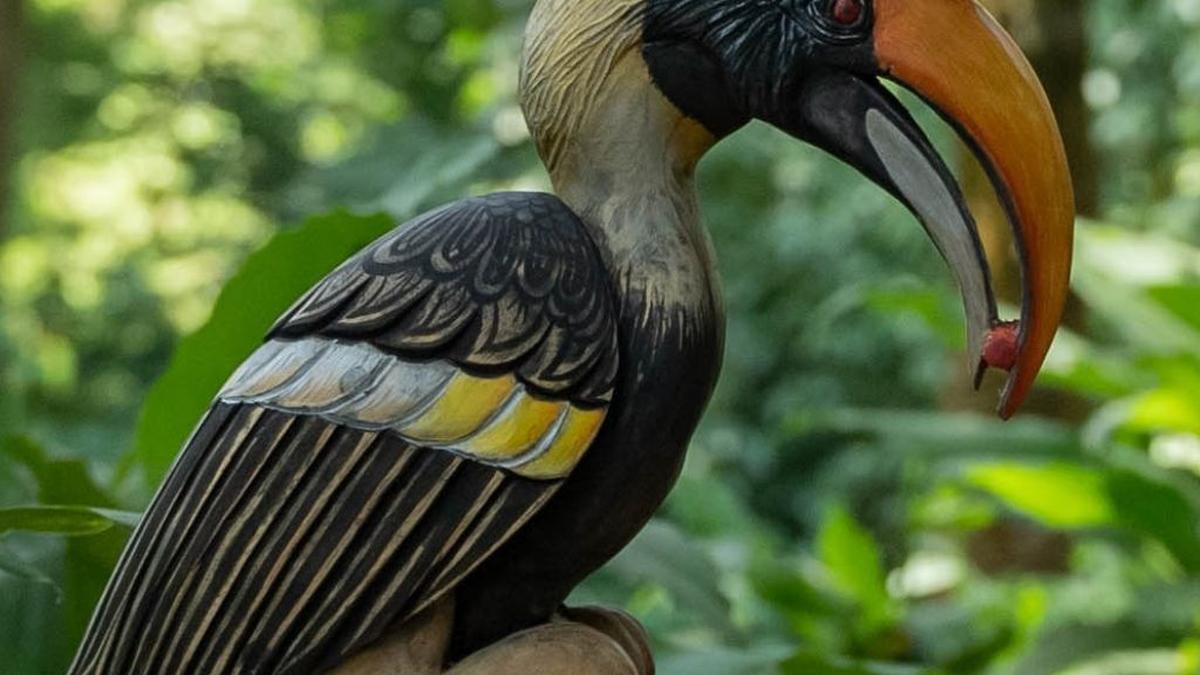
What if the plants choking the forests of the Nilgiris could be given a second life as works of art?An ongoing exhibition in Gudalur hopes to tell that story, bringing together conservation, craftsmanship and narratives of the intimate relationship between people and the natural world. “For all of us, sharing space with wildlife is part of everyday life,” says Rhea Antony, who takes care of storytelling and design at The Elephant People, a social enterprise based in Gudalur in the Nilgiris Biosphere Reserve that makes hand-carved wildlife sculptures, masks, and everyday objects from invasive plant species like Lantana camara and Senna spectabilis. Handcrafted objects made using invasive species vegetation | Photo Credit: Special Arrangement The exhibition is an attempt to draw attention to the changing landscapes of the Nilgiris Biosphere Reserve, where the invasive species have spread across native habitats. These fast-growing plants suppress native vegetation, particularly grasses, affecting the food sources of wildlife and sometimes pushing animals towards human settlements.The Elephant People collective works with Forest Departments of Tamil Nadu, Kerala and Karnataka in clearing these invasive species. Instead of treating the recovered vegetation as waste, they transform the wood into handcrafted objects and sculptures inspired by the region’s wildlife, people, and landscapes. The team includes over 50 makers across carving, painting, design, production, and operations | Photo Credit: Special Arrangement Titled Into the Forest, the first exhibition by The Elephant People features stories of wildlife, people, shared landscapes, and practices connected to the land. “These stories are brought to life through art and craft, with sculptures and installations created by a team of makers from the Nilgiris, for whom sharing space with wildlife is part of everyday life,” says Rhea. The exhibition features large-scale sculptures, smaller carved pieces, and interactive storytelling experiences. For children, there will be facilitated painting and story-building workshops, alongside interactive art installations that let them explore the forest through play. These installations offer opportunities to learn about different species, their habitats, and the sounds they make.“Over the last three years, we’ve been exploring the stories of the Nilgiris and finding ways to bring them to life through art and craft. The region has been central to this journey. It’s wildlife, landscapes, people and the many relationships between them have shaped the stories we are drawn to and the work we create,” says Rhea. While discovering stories of different species, they also learnt about encounters between people and wildlife, traditional practices, food cultures and ways of living that keep the forest at the centre. Some came from conversations with people, others from naturalists and researchers, and many from simply observing the fascinating relationships that exist within these landscapes. There are smaller objects like magnets and key-chains to large-scale sculptures and interactive installations | Photo Credit: Special Arrangement Each of these stories became a starting point. Over the years, they have experimented with different forms, from smaller objects like magnets and key-chains to large-scale sculptures and interactive installations.The use of invasive vegetation as a raw material also creates an opportunity to build livelihoods around craft, while taking the story of forest restoration to audiences beyond the region. The Elephant People’s work builds on the experience of The Real Elephant Collective, known for its life-size elephant sculptures made using lantana. The team comes from four different Adivasi communities as well as other non-tribal communities across the Nilgiris | Photo Credit: Special Arrangement “This journey has helped us develop our identity as a collective of makers and storytellers. Through our work, we want to share the stories of the region with a wider audience, encourage greater interest in wildlife and forests, and help people, particularly children, understand the connections between human lives and the natural world,” explains Rhea.The team includes over 50 makers across carving, painting, design, production, and operations. They come from four different Adivasi communities as well as other non-tribal communities across the Nilgiris. “Our team is diverse, and we don’t want to frame our work primarily through the identities or backgrounds of the people involved. Instead, our focus is on the collective work, the craft, and the stories we want to share about the forest,” she adds.The collective brings together different skills, experiences, and perspectives, and it is this collective understanding of the region that finds its way into the objects and sculptures.For example, the elephant portraits serve as a reminder of shared landscapes, where negotiating space with elephants is a part of everyday life. Says Rhea, “It’s quite normal to encounter an elephant on your way to work. Be late to school because an elephant is on the road, spot a Malabar giant squirrel gliding between trees outside your window. These are everyday realities for people who call the Nilgiris home.”The exhibition is open to everyone and entry is completely free. Open from 9.30am to 5pm everyday from November 20 to 30 at The Real Elephant Collective office, Thorapally, Gudalur, the Nilgiris. To register, visit intotheforest.in
Wildlife, forests, and culture in Gudalur: Sculptures, stories, and interactive workshops
Full Article
Original Source
Read the full article at Thehindu →KhanList aggregates and links to publicly available news content. We do not host full articles from third-party sources. Always verify important information with original sources.