
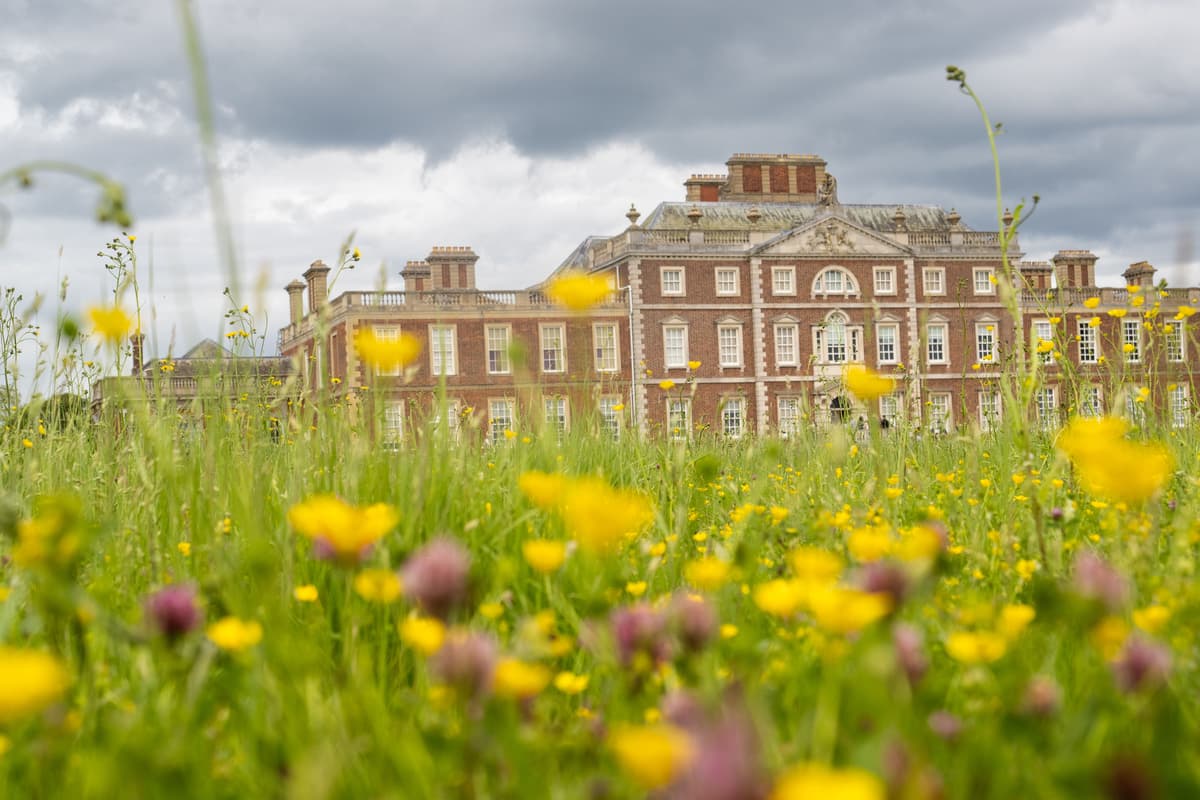
A country house and farming estate in one of the driest and most nature-depleted parts of the country has secured an “abundance” of wildlife with more than 5,000 species recorded, the National Trust said.Rare species from barbastelle bats to great crested newts and corn buntings as well as beetles, arable flowers and a pygmy ant found at only one other UK site have all been recorded at Wimpole, in Cambridgeshire, the charity said.The milestone of 5,242 species recorded in the landscape comes as the National Trust marks 50 years of caring for the 2,500-acre estate with a mansion, parklands, gardens, woodlands, wetlands and working organic farm.The team at Wimpole say the success stands out in what is one of England’s driest and most nature-depleted counties, and highlights how decades of conserving and restoring habitat such as wetlands, chalk grassland and woodlands alongside farming in nature-friendly ways, can boost wildlife.Corn buntings are doing well at Wimpole (Nick Upton/National Trust/PA)Since just 2021, the National Trust has planted 125,000 trees and created 35 hectares of woodland and 52 hectares of wood pasture, with another 77 hectares of tree planting currently being designed, the charity said.And the overall number of species has continued to grow at Wimpole even as East Anglia has experienced a succession of droughts in recent years as climate change creates increasingly hot, dry conditions.The National Trust says Wimpole shows how nature can recover if helped with the creation of habitat and wildlife-friendly management of land.The charity also says nature needs to be at the heart of the UK’s response to climate change, as extreme conditions puts increasing pressure on wildlife, landscapes and water resources.David Hassall, general manager for the National Trust at Wimpole, said: “Recording more than 5,000 species is remarkable in any landscape, but particularly here in Cambridgeshire, where wildlife is facing the combined pressures of habitat loss and increasingly hot, dry conditions.“But it isn’t just about reaching a number,” he said.“What makes Wimpole special is the abundance of wildlife people can experience here.Rusty red click-beetles are found at Wimpole (National Trust/Stuart Warrington/PA)“In some areas of the estate during the summer, visitors can see thousands of butterflies over the course of a short walk.“That richness of life is all the more encouraging because Wimpole is a working estate, producing food and welcoming visitors as well as caring for wildlife.Read More“It reflects five decades of careful stewardship and shows that nature can flourish alongside farming, public access and heritage conservation,” he said.Among the wildlife found at Wimpole are rare barbastelle bats, great crested newts whose presence signal clean water and well-managed habitat, and corn buntings which have vanished from much of the English countryside but breed in pesticide-free fields and wildlife-friendly margins full of seeds and insects.The organic fields are also home to the delicate violet-blue blooms of the arable flower Venus’s-looking-glass, which is a rarity in modern agriculture, while old, hollowing trees on the estate have proved to be home for rusty red click beetles – once thought close to extinction in Britain.The National Trust said Wimpole is home to 10 species of bumblebee, as well as notable butterflies including marbled white, silver-washed fritillaries and white-letter hairstreak, as well as aphids, plant hoppers, three newly-recorded dragonflies and 330 species of wildflower.Rusty red click-beetles are found at Wimpole (National Trust/Stuart Warrington/PA)Ben McCarthy, head of nature conservation at the National Trust, said: “Recording more than 5,000 species at Wimpole is a remarkable milestone, but its real significance lies in what it tells us about nature’s capacity to recover.“Across the UK, wildlife is under immense pressure from habitat loss and fragmentation as well as climate change, making the need to restore nature more urgent than ever.“Places like Wimpole demonstrate the value of taking a long-term approach to nature recovery.“By creating and restoring habitats across whole landscapes, we can provide more space for wildlife and help reverse decades of decline,” he said.Rangers at Wimpole are also collaborating with scientists from the Wellcome Sanger Institute as part of UK BIOSCAN, a project using DNA barcoding to study a million flying insects from across the UK, to help build a clearer picture of the natural world and how it is changing with nature loss and climate change.Lyndall Pereira da Conceicoa, Bioscan science lead, said: “Sites like Wimpole are valuable places to sample from as their insect communities add real depth to the national picture we’re building and help us understand how land management shapes insect life across the UK.”
Wildlife bucks challenges with 5,000 species recorded at National Trust estate
Full Article
Original Source
Read the full article at Standard →KhanList aggregates and links to publicly available news content. We do not host full articles from third-party sources. Always verify important information with original sources.