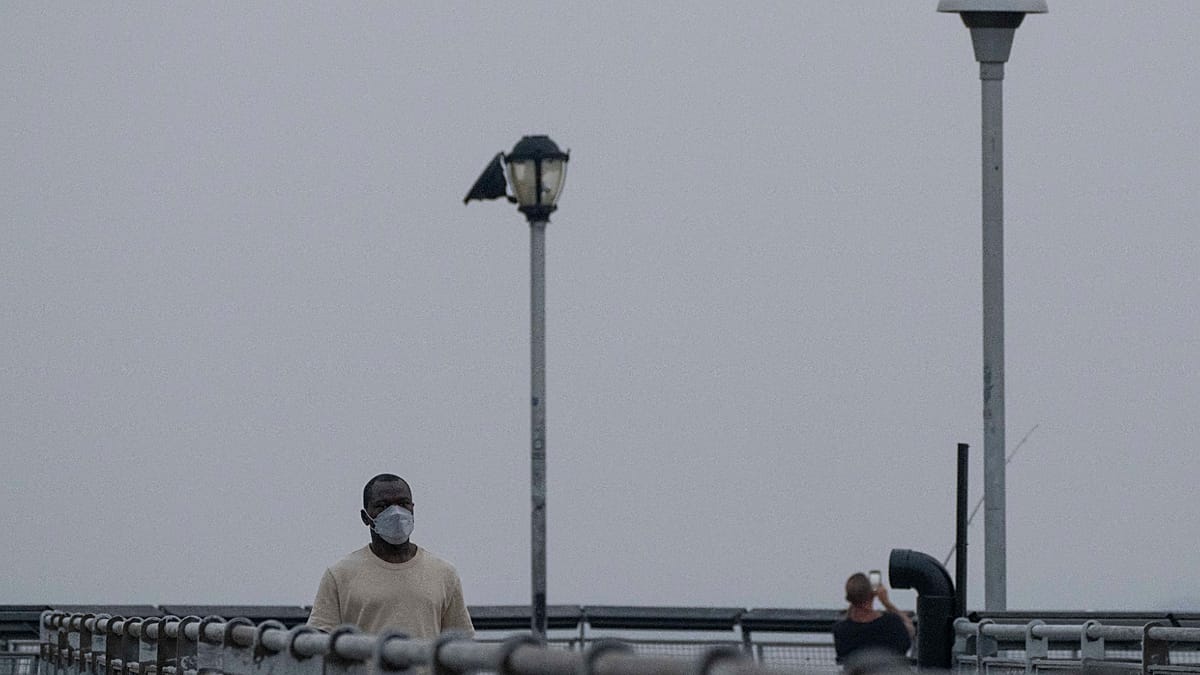
In Europe, there have been 1,083 fires detected since the start of the year, emitting over 7.01 million tonnes of CO₂. ADVERTISEMENT ADVERTISEMENT Wildfires have broken out in France, Germany, Greece, Spain and Portugal this summer, and most countries in western and central Europe are currently experiencing extreme fire danger conditions, according to the Fire Danger Forecast. But it is not only those areas that need to be concerned. Fires in one region can worsen air quality several hundred kilometres away, with smoke drifting into neighbouring cities across the border. Here's what to know about protecting yourself from poor air quality caused by wildfires. How is wildfire smoke different? Wildfire smoke is a mixture of hazardous air pollutants, such PM2.5, NO2, ozone, aromatic hydrocarbons and lead. When fires burn homes or buildings, they can also release toxic chemicals from electronics, furniture, plastics and paints. All of these released chemicals are harmful to human health. “After you breathe in the particles, they cause inflammation and oxidative stress, and they can move into the blood and spread throughout the body, affecting other organ systems,” wrote Colleen Reid from the University of Colorado Boulder in The Conversation. How do I know if the air I breathe is unhealthy? Sometimes the air is bad enough to see or smell the smoke, but even when the pollution is not visible, it can still be unhealthy to breathe. The European Environment Agency maintains a map with up-to-date, regional air quality information. The Copernicus Earth Observation Programme provides daily updates of four-day forecasts of pollutants, pollen and aerosol tracers. Most smartphones now show this air quality data in their weather app. The best way to get indoor air quality readings is to buy a monitor, said Joseph Allen, director of Harvard University's Healthy Buildings Program. “You can find these low-cost, indoor air quality monitors just about everywhere online now. They don’t cost all that much anymore,” he told the Associated Press. How can I protect myself if I need to go outside? “When wildfire smoke reaches unhealthy levels, stay indoors as much as possible, with doors and windows shut to keep the wildfire smoke out,” wrote Reid. If going outside, wearing a well-fitted N95, KN95 or KF94 mask, which became common during the coronavirus pandemic, will help filter out the pollution. “N95 is going to get rid of 90-95% of the particles,” said Jennifer Stowell, a research scientist at Boston University’s Center for Climate and Health. “If you have access to a mask that has a respirator-type attachment to it, then that’s the very best.” How do I make my air cleaner? Close the windows and, if possible, switch on the air conditioner, setting it to recirculate indoors. Use blankets or towels to block draughts that let outdoor air seep in, such as under doors. Finally, swapping the unit's standard filter for a MERV 13 one can help, but make sure it's fitted correctly. "If you happen to have access to an air purifier, even if it's just a room air purifier, try to keep it running and in the room that you're doing most of your activities in," she told AP.
Wildfires: how to protect your lungs from harmful smoke
Full Article
📰 Original Source
Read full article at Euronews →KhanList aggregates and links to publicly available news content. We do not host full articles from third-party sources. Always verify important information with original sources.