
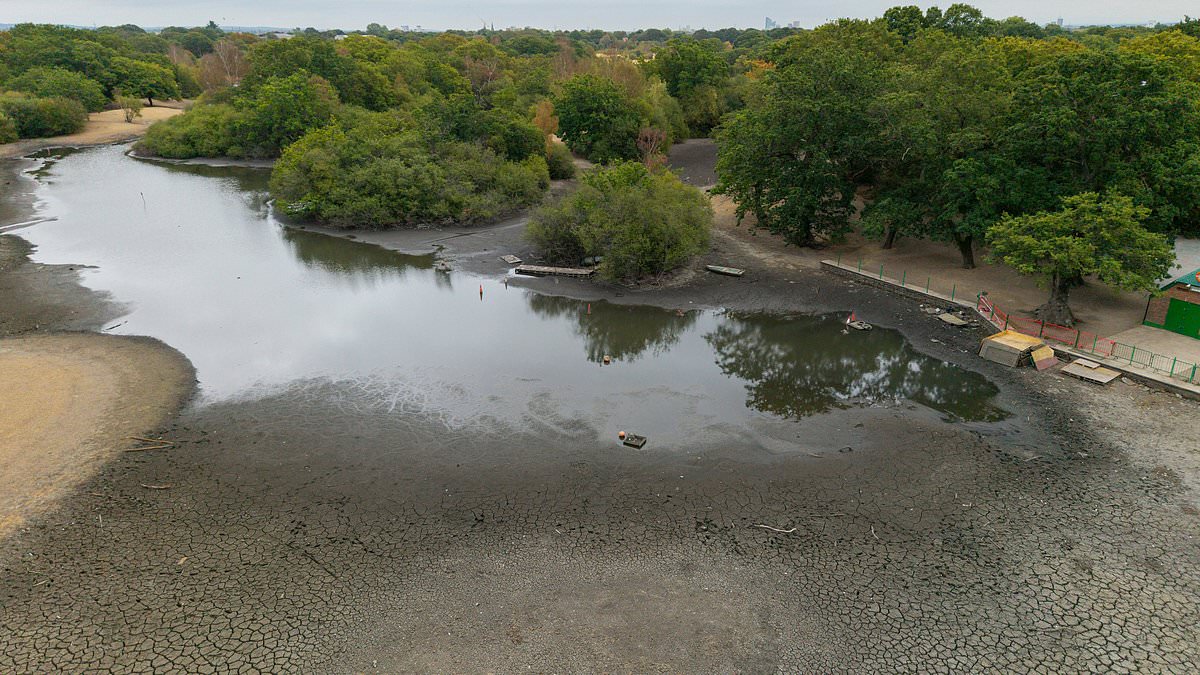
Wildfires continue to ravage Britain despite the first rain falling in two months in some areas, which could cause flooding but will not alleviate the drought.Kent was particularly badly hit by blazes last night, with six fire engines battling a huge wildfire on a farm in St Margaret's-at-Cliffe near Dover at 8pm.Grass also caught fire at Mote Park in Maidstone at 7pm, after a separate blaze on a field at Iwade near Sittingbourne sent black smoke billowing into the sky at 6pm.Meanwhile Kent Fire and Rescue Service used hose-reel jets and beaters to put out another fire in Gravesend after grass and bushes went up in flames at 4.30pm.Twenty miles away in Deptford, 100 firefighters from the London Fire Brigade battled a blaze involving 50 tonnes of household waste at a recycling facility overnight.Wildfires have swept across parts of the UK following the hot and dry summer, including in the West Midlands where a blaze in Stourbridge destroyed 19 homes.The National Fire Chiefs Council said England and Wales has had 1,132 wildfires in 2026 so far - a record high for the amount between January and this time of year.Several fire services have asked people in recent weeks to call 999 only to report a genuine emergency, and millions of people in England and Wales received an alert on mobile phones last Friday warning them of a 'very high risk of wildfires nationally'. A major fire burns at a recycling facility in Deptford, south-east London, last night Satellite images show how weather conditions have changed significantly over the past week Rain begins to fall yesterday over the drought-hit Hollow Pond in Leytonstone, east LondonOne of the biggest wildfires was near Aviemore in the Cairngorms, where crews completed work this week to tackle it nearly five weeks after it began on July 15.A summer of heatwaves and dry weather has left many areas facing an elevated wildfire risk as well as water shortages, with nearly three-quarters of England and the whole of Wales now in drought.But the Met Office said some areas of the country were finally seeing the 'first meaningful rain for a long time' this week.The UK will experience showers over the coming days, although a forecaster said the rain is 'not going to solve the drought situation overnight'.The rainfall is not expected to be a 'huge amount' and 'highly hit and miss from place to place', before conditions became drier again over the weekend.Met Office data showed up to 23mm of rain fell in parts of central southern Lancashire in the 12 hours to 6am today, with up to 13mm recorded in parts of Northern Ireland and between 6mm to 10mm across south-west England.It comes after parts of Hampshire, West Sussex and Surrey went more than 60 days without rain. Met Office meteorologist Aidan McGivern said today would be a 'very showery day' across the UK, with Northern Ireland and areas in western and central Scotland seeing 'frequent showers with heavy downpours, hail and thunder'.The showers would be 'fewer and further between' in southern areas, while central England and eastern Wales could still see some downpours, the forecaster added. He said: 'I suspect many people across England and Wales will at least enjoy the feel of some rain falling out of the sky during the next few days, but it's not going to solve the drought situation overnight because we're not expecting huge amounts and it will be highly variable because a lot of it will come in the form of showers.'Highs of 25C in London, 20C in Cardiff, 19C in Manchester and 16C in Glasgow are expected today. Tomorrow will begin with some 'very heavy rain' across parts of northern England and north and west Wales with frequent showers in the southwest, Mr McGivern said.That afternoon will bring a 'better chance' of showers further south and 'dumping a reasonable amount of rain in places', he added.'But again, because they're showers, it will be hit and miss, very speckled in nature,' he said.Temperatures will be below average for a large part of the UK tomorrow, which is 'something we've seen on only a handful of days this summer,' the forecaster continued.The Met Office also warned that 'localised flooding cannot be ruled out beneath the heaviest downpours', but added: 'Rainfall is expected to be variable in nature, with many places also experiencing drier interludes between showers.'Looking further ahead, its outlook said meteorologists were expecting a 'continuation of the more unsettled conditions that have developed this week'.Rain and showers are 'likely to remain a frequent feature through the remainder of August' and 'temperatures will generally be close to average but with occasional warmer spells'.Into early September, Met Office forecast guidance suggests 'wetter-than-average weather remains more likely, particularly across northwestern areas of the UK'.The weather service added: 'A northwest to southeast split appears the most probable pattern, with the northwest generally seeing more unsettled conditions and the southeast enjoying the greater chance of drier weather. 'The long-range outlook also indicates temperatures may trend above average later in the period, although confidence in any specific hot spell or heatwave remains low at this range.' A hosepipe ban began for all of Wessex Water's 1.4 million customers across areas in Bath, Somerset, Dorset and Wiltshire yesterday. It is the first ban the company has put in place for 50 years, since the summer of 1976.Meanwhile, Thames Water has urged its customers to continue to reduce water usage as it said household demand has fallen by 3 per cent across London and more than 6 per cent across the Thames Valley and home counties since it introduced a hosepipe ban on July 23.In an update yesterday, the utility said London reservoir storage was at 74 per cent, which is lower than the firm would expect for this time of year but the Farmoor Reservoir in Oxfordshire was 92 per cent full.According to the company, rainfall in the Thames catchment area during July was less than 1mm, which is just 2 per cent of the long-term average, while customers used about 100 million litres more water every day than normal, putting more pressure on rivers, reservoirs and the water network.More than 28million people across England have now had hosepipe use restricted in their area after months of hot and dry weather.The cooler and wetter conditions come after the UK's sixth heatwave of the summer last week, during which the hottest day of the year was recorded at Kew Gardens in London on Thursday when temperatures reached 38.1C.
Wildfires continue to hit Britain despite first rain in two months for some areas which 'won't solve drought overnight'
Full Article
Original Source
Read the full article at Dailymail →KhanList aggregates and links to publicly available news content. We do not host full articles from third-party sources. Always verify important information with original sources.