
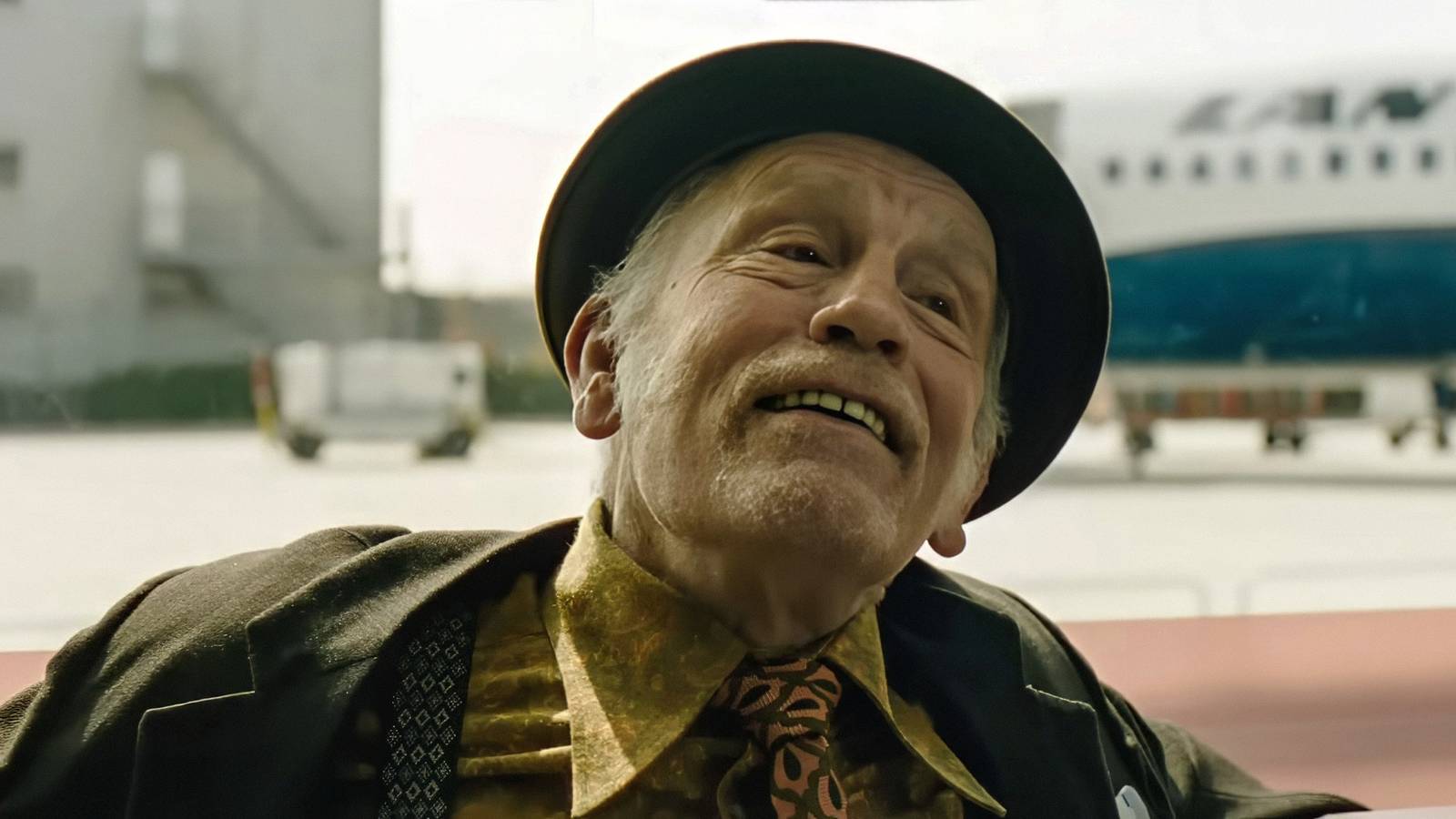
Published Nov 5, 2026, 3:39 PM EST Sign in to your ScreenRant account Wild Horse Nine is the latest project from acclaimed filmmaker Martin McDonagh, who is best known for his blend of biting humor and poignant contemplation. In this case, McDonagh takes audiences to Easter Island in the 1970s, where CIA agents Chris (John Malkovich) and Lee (Sam Rockwell) await the Chilean coup against President Salvador Allende. Lee is thinking hard about his legacy on their vacation, considering a memoir that it seems their boss MJ (Steve Buscemi) is very against. As Chris tries to deal with his odd colleague, he is also trying to handle his wife (Parker Posey) back home, and meeting Chilean travelers like Monica (Mariana di Girolamo). The movie is equal parts zany and bittersweet, earning rave reviews like much of McDonagh's previous work. ScreenRant's Liam Crowley interviewed the stars of Wild Horse Nine and McDonagh himself to discuss the salient themes of the film, the real-life political backstory that underscores the plot, and the director's casting choices. Wild Horse Nine Stars Reflect On The Importance Of Legacy Via MovieStillsDB ScreenRant: This film deals a lot with legacy, considering the fact that it is largely an epilogue story. Everything from Chris's career happened offscreen. As someone who has very famously shot a film that's going to release a hundred years from now, how has your perception of legacy changed? John Malkovich: I don't know that I really had a perception of legacy, especially in terms of my life or my work. All I think about is my family, both the family I was born into, who are mostly all gone now, except for one sister. We were seven at one time. The work legacy I think of really is my colleagues. I've always attempted to be a good colleague and be interested in the work of my colleagues. And for the vast, vast majority of my experiences, that wasn't difficult because I was blessed with some very singular and very gifted colleagues. That's all I think about legacy. In terms of this film, he's someone very much reflecting on his legacy. He's referred to as being the whole history of the CIA, which is true. It's just that that's not always a very good thing, really, especially in Chris's case, I would say. I mean, his involvement in Kennedy's assassination, in terms of this script. And not to mention Chile in 1973. So he has some things he'll have to answer for in another lifetime. ScreenRant: Mariana, your parents lived through the Chilean military coup. How did that influence your portrayal of Monica? Mariana di Girolamo: They were students. They were in school. My grandmother, Carmen, worked in a human rights organization that was very important during that time, called La Vicaría de la Solidaridad. They helped mothers find their sons, and they worked with lawyers also. The church was very important back then. My grandfather worked in the Ministry of Culture back then. They were all very active in that period of time. I was born in the first year of democracy, luckily, but I've heard a lot of stories about that time. Terrible stories. This is the first year after the return of democracy, when the president decided that September 11 was a normal day. That was a very violent decision. And it's been very interesting to have these conversations through this movie; it's also very entertaining. I think that people will love to see it. And I'm excited to show this work in Chile. ScreenRant: Parker, you wrote a memoir eight years ago, which Chris is trying to do in this film. How has your view on legacy evolved over the course of your career, but also in the eight years since you published your memoir? Parker Posey: My memoir was kind of like a book of monologues. I wasn't getting acting work, and I was like, "Maybe I'll just tell my stories like I'm sitting next to someone on an airplane." I was digging a little deeper to find these connections out of everyday life; the stories that I just tell people randomly that happen and that fall into place. I don't feel that as much as a legacy of something, as much as I do as my work as a storyteller and a story maker, gleaning things from a bigger picture into the smaller character part of me, and what I take from this. If I'm relating it to my work in Wild Horse Nine, it doesn't matter that I'm not carrying the big thing, or I don't have all the dialogue. There's something really fun in just happening to land on the right tone and in the right vibe, like I did with Wild Horse Nine or with Beau is Afraid. It's like you're just going to slide down the mountain and make sure you're prepared, you have your backpack packed, and you're there. I got to work with Sam Rockwell, who I love and who I've known for 30 years. I love good material. We all love what we do. So, it was great to be there. Martin McDonagh Takes Us Behind The Scenes Of Wild Horse Nine ScreenRant: I understand Mark Ruffalo was initially tapped to portray MJ. As someone who feels so specifically written for someone like Steve Buscemi, what was the character like on the page, and what did Steve bring to it to make it so distinct? Martin McDonagh: I'd wanted to work with Steve 20 years or something, even before Reservoir Dogs. I've loved him all that time. I think Steve brought some brilliant sort of comedy chops. He made every line funnier than it was on the page somehow without milking it or making it less dangerous. It was always dangerous, but I think that was it. And I've been in audiences, and almost every line he says gets a laugh. ScreenRant: Did you intentionally name the character Lee as a reference to Lee Harvey Oswald? Martin McDonagh: No, I just like typing short names. It saves a lot of time. ScreenRant: I saw Digger recently, and it really punches you in the face with the value of laughter through traumatic events and how it helps us process things. For you as a director, what is your perspective on absurdist dark comedy as a gateway for audiences to process these big events? Martin McDonagh: I think comedy gives the story everything - especially a story that goes to darker and sadder places by the end. Banshees was a similar thing. It was a seemingly sad story. But unless you've got levity and humor, it just doesn't work for me. I never want to make a film that's didactic or a history lesson or a lecture. So having fun with these two guys throughout takes you on a ride, and then you can bring in this other stuff underneath it. ScreenRant: You've worked with a lot of repeat actors over the course of your filmography. Sam has in a couple of your films already. Was there anyone else from this film you hope to collaborate with much more? Martin McDonagh: It would be hard not to work with John Malkovich again. Steve Buscemi too, but all of them. Parker and Mariana are amazing, but as I do mostly bloke films, it's probably Steve and John who are the likely culprits. Steve Buscemi Breaks Down MJ's Mysterious Role In The Story Screen Rant: Martin McDonagh is known for creating masterpieces. How early on did you know this would be yet another one? Steve Buscemi: I mean, you never really know. But I read the script in one sitting; I just dove into it. And what I loved about the script was that it really threw me. I was kind of like, "What's going on here?" There were so many different elements to it and so many surprises. Reading it, I wasn't sure if I was getting it. But by the end, I thought, "Wow, this is brilliant. I hope he can pull this off." And of course, it's Martin McDonough, so he does. Screen Rant: Did you create your own backstory for how MJ ended up in the CIA and became the person we meet in the film? Or how much did Martin McDonagh give you about MJ’s history with Chris and Lee that we don't actually see in the movie? Steve Buscemi: Yeah, I mean, I always look for my inspiration from the script. I'm so grateful when I work with a writer-director, because then you have the writer there to explain any questions that you have, and then it's easy to fill in the blanks when the characters are that well-drawn. Some things you discover while you're doing it, and most of my scenes are with Sam, who I've known for many years. For that relationship, I'm thinking to myself, "I love this guy. I love this guy, but I'm losing him to this other guy. " I'm jealous of Chris, but I also admire and revere him. "But I'm his boss, so why won't he listen to me?" All those things are great for character work. Screen Rant: A lot of those scenes are over the phone or at a distance. Does that feed into the jealousy narrative? You're the odd man out in this scenario. Steve Buscemi: Yeah, being on the phone and not being where it's happening. But the good thing that Martin did was that he brought me to Rapa Nui, Easter Island early so that I could, be right there with Sam when we did those calls. Martin loves actors, and I think he creates an atmosphere on set where actors can do their best work. Wild Horse Nine arrives in theaters on November 6. Release Date November 6, 2026 Runtime 118 Minutes Director Martin McDonagh Writers Martin McDonagh Producers Anita Overland, Graham Broadbent, Peter Czernin, Martin McDonagh
Wild Horse Nine Is A Meditation On Legacy For John Malkovitch
Full Article
Original Source
Read the full article at Screenrant →KhanList aggregates and links to publicly available news content. We do not host full articles from third-party sources. Always verify important information with original sources.