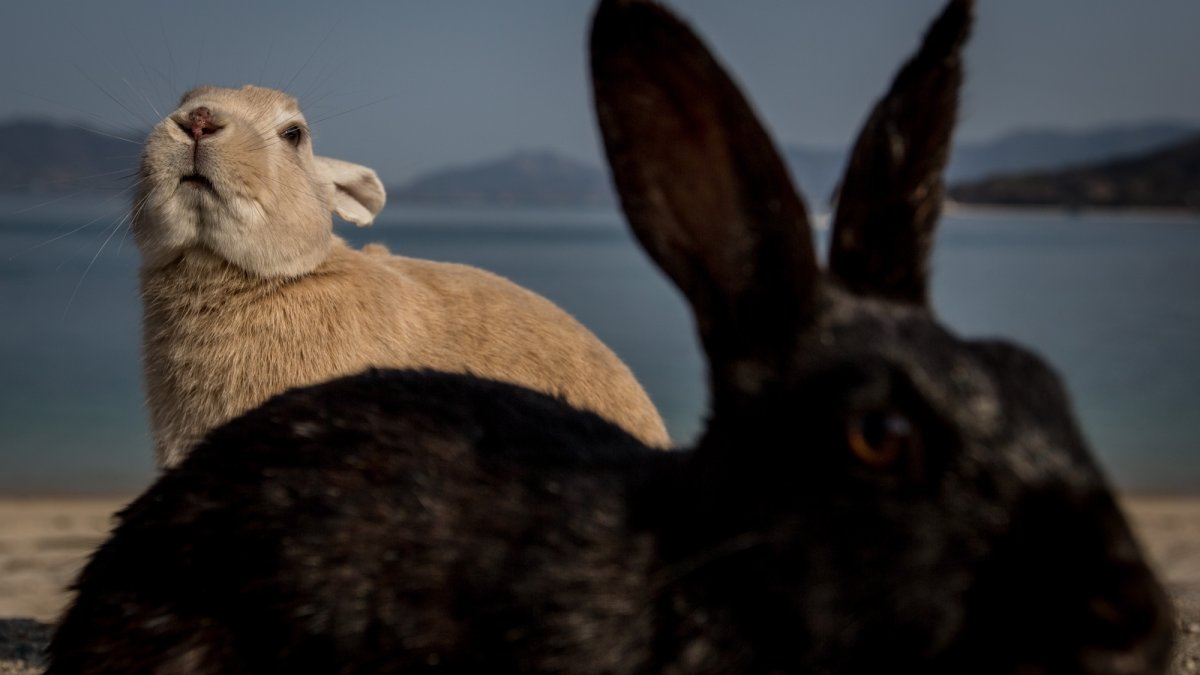
Tourist feedings have sustained more rabbits than the island's natural environment could otherwise support. Credit: Chris McGrath via Getty Images Get the Popular Science daily newsletter💡 Breakthroughs, discoveries, and DIY tips sent six days a week. By signing up, you confirm you are 16+, will receive newsletters and promotional content and agree to our Terms of Use and acknowledge the data practices in our Privacy Policy. You may unsubscribe at any time. Okunoshima Island in Japan’s Hiroshima Prefecture is famous for its huge population of free-range rabbits. Tourists travel to the island to meet and feed the giant bunnies, who were introduced to the island following World War II and its use as a poison weapons testing ground. While it’s only one of countless similar wildlife feeding spots around the world, a recent study published in the Journal of Ecotourism highlights how these seemingly casual human-animal interactions may restructure ecosystems more than scientists expected. In the case of the Okunoshima Island rabbits, it’s even possibly developing into a matter of life and death. But it’s not the visitors who are threatening them—it’s the wild boars. “When we first heard that a wild boar had preyed on a live rabbit, we were surprised,” Shingo Kaneko, a study co-author and Fukushima University ecologist, said in a statement. “Wild boars are known to scavenge animal carcasses, but they are not generally regarded as animals that actively hunt live prey.” So how are the boars developing a taste for rabbits? The local population isn’t native to the island; they’re European domestic rabbits previously introduced onto Okunoshima. There are so many rabbits now mostly due to tourists feeding them, which has actually allowed the rabbits to exceed what the natural ecosystem would otherwise support. The animals are such an influence on the island that much of the area features a clear “rabbit line” where low-growing tree branches and vegetation is almost completely eaten away. The illustration depicts an unusual event observed on Okunoshima Island, where wild boars have been seen capturing rabbits. Researchers suggest that tourist feeding, high rabbit densities, and the availability of leftover food and carcasses may be contributing to these novel interactions. Credit: Eri Kondo After examining the environment, Kaneko’s team observed how all these rabbits are also affecting other animal species. For example, wild boars, crows, and black kites are increasingly snacking on leftover rabbit food—and leftover rabbit carcasses. According to the researchers, some of the hogs have even started occasionally hunting rabbits as prey. “Food left by tourists may be attracting wild boars into the areas heavily populated by rabbits. High rabbit densities may increase the availability of rabbit carcasses and may also lead to frequent encounters between the two species,” explained Kaneko. The study’s authors made clear that new predators are not the central concern. Instead, they hope to highlight how wildlife tourism has the potential to alter otherwise natural and stable ecosystems. To combat the worst-case outcomes, Kaneko’s team suggests stricter feeding regulations, rabbit population monitoring, and vegetation analysis. Meanwhile, educating public officials and the tourists on the issue could lead to greater safeguards. “We were struck by how closely wild boars, rabbits, and humans were interacting on the island,” said Kaneko. “Within this isolated environment, events unlike those we usually observe elsewhere appeared to be occurring throughout the island.” 2026 Popular Science Home of the Future Awards 39 products that will improve your everyday life.
Wild boars develop taste for beloved rabbits on popular island in Japan
Full Article
Original Source
Read the full article at Popsci →KhanList aggregates and links to publicly available news content. We do not host full articles from third-party sources. Always verify important information with original sources.