
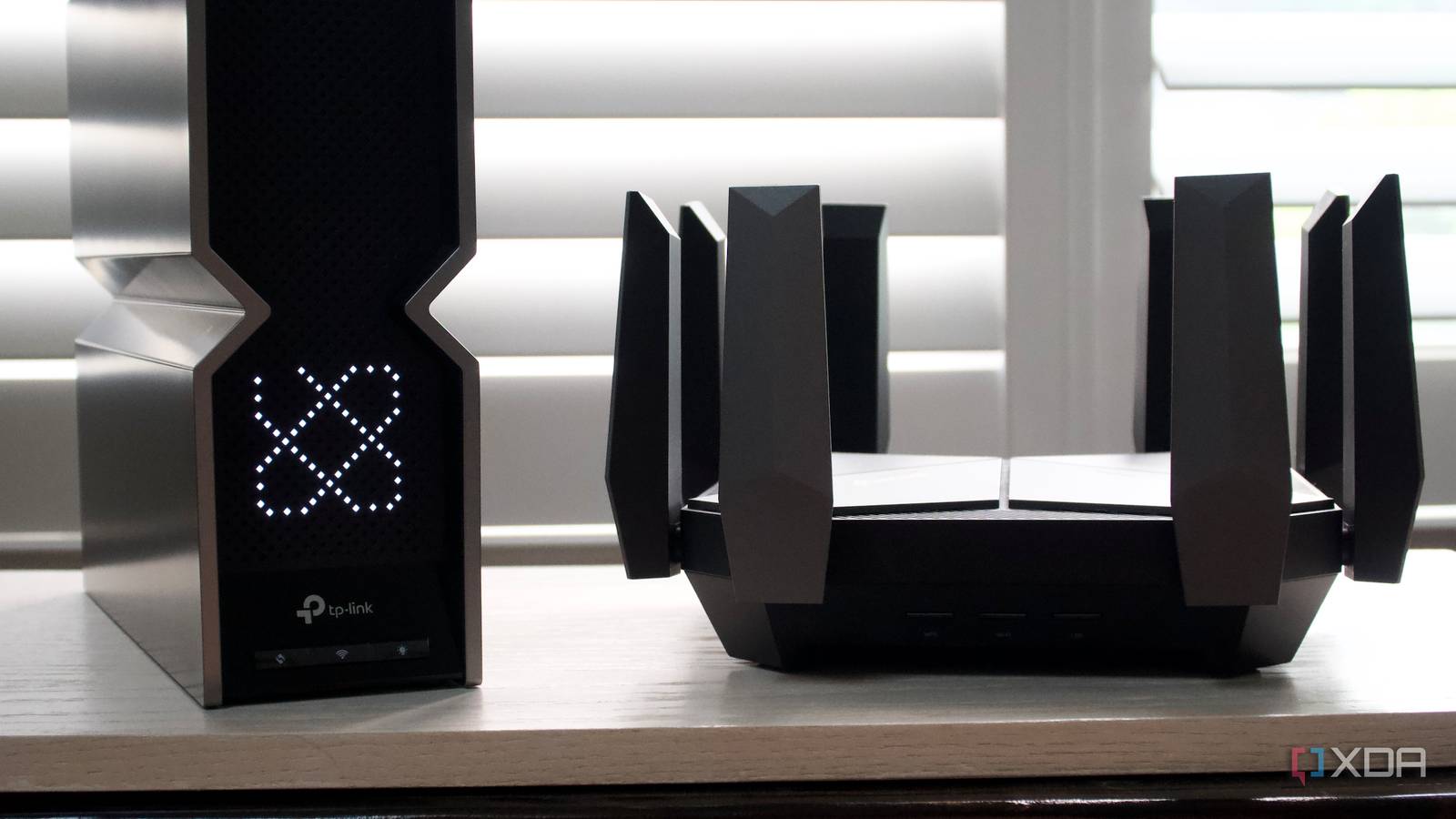
Published Aug 6, 2026, 1:30 PM EDT After a 7-year corporate stint, Tanveer found his love for writing and tech too much to resist. An MBA in Marketing and the owner of a PC building business, he writes on PC hardware, technology, and Windows. When not scouring the web for ideas, he can be found building PCs, watching anime, or playing Smash Karts on his RTX 3080 (sigh). Wi-Fi 7 has started seeing greater adoption only recently, but it seems its successor isn't too far away. Brands like TP-Link and Asus have already shown Wi-Fi 8 routers and plan to launch them in late 2026. To be clear, the IEEE Wi-Fi 8 standard will not be finalized until 2028, but these cutting-edge routers plan to serve as an introduction to the latest in wireless networking. Networking gear will start showing up with draft Wi-Fi 8 specifications as soon as next year, but you should contain your excitement. These devices won't guarantee full compatibility with the finalized Wi-Fi 8 standard, and will target enthusiasts alone. Besides, no client devices will support the bleeding-edge standard till 2028. Wi-Fi 8 promises a huge boost to reliability, but users should hold off on buying a Wi-Fi 8 router for at least two more years. Wi-Fi 7 isn't commonplace yet, but Wi-Fi 8 is already on the way It's probably just a year and a half away Credit: Source: Qualcomm The first commercial Wi-Fi 7 routers came out nearly four years ago, but they're far from being a common sight in homes around the world. The official Wi-Fi 7 spec was released in early 2024, so we're still in the early days of the technology. Even in the US, which dominates the global Wi-Fi 7 footprint, adoption remains at a mere 7.2%. Around 80% of the market is still saturated by Wi-Fi 6E, Wi-Fi 6, and Wi-Fi 5 routers combined. The official 802.11bn standard is still being developed by the Wi-Fi Alliance, and we won't see it till early 2028, at least. What we know is that Wi-Fi 8 will focus on Ultra High Reliability (UHR), a moniker the industry is using to refer to the broad range of technologies under the new standard. While Wi-Fi 8 will continue to use the 6 GHz band, 320 MHz channels, and Multi-Link Operation (MLO), it is set to introduce Multi-Access Point Coordination (MAPC), Coordinated Spatial Reuse (Co-SR), and Dynamic Sub-Channel Operation (DSO), in addition to many more new features. MAPC will allow multiple access points in your mesh network to talk to each other, reducing interference and increasing throughput. Co-SR will enable multiple APs to transmit on the same channel at the same time by adjusting the transmission power dynamically. DSO will enable your router to split 320 MHz channels into smaller channel widths, accommodating more devices on the same channel and utilizing otherwise wasted spectrum. Overall, Wi-Fi 8 promises to minimize jitter, latency, and dropped packets by around 25%, and reduce energy consumption by around 50%, bringing significant reliability and efficiency improvements over Wi-Fi 7. You might be able to buy a Wi-Fi 8 router this year, but you really shouldn't It'll be nothing more than an expensive prop The finalized Wi-Fi 8 specs won't be out till 2028, but that hasn't stopped manufacturers from showcasing prototype Wi-Fi 8 chips already. We saw Broadcom unveil its Wi-Fi 8 hardware in late 2025, and brands like Asus and TP-Link have router launches scheduled for late 2026 based on the draft Wi-Fi 8 specifications. If you're eagerly waiting for these routers, I'd suggest you reconsider. These pre-standard routers might implement many of the proposed Wi-Fi 8 features for an early look into the technology, but they may not fully support the finalized spec when it's released in 2028. Firmware updates can bridge the gap to some extent, but if a hardware change is required, you'll have to replace your Wi-Fi 8 router for 100% compatibility. These routers come with a hefty early adopter tax that most people should avoid paying. Even if your cutting-edge Wi-Fi 8 router supports most of the specs of the finalized standard, Wi-Fi 8 client devices don't exist at the moment. They won't be available till late 2027 or early 2028, and even that is an optimistic scenario. With nothing to make use of the brand-new Wi-Fi 8 features, you'll be stuck with a fancy new router running Wi-Fi 7 or Wi-Fi 6 in your home. Wi-Fi 8 is the future of high-speed and reliable wireless networks, but you don't need to jump on the hype train just yet. Waiting for another two years isn't that hard when Wi-Fi 7 is still in the early stages. Wi-Fi 7 is already overkill for most users You don't need to think about Wi-Fi 8 Even though Wi-Fi 7 adoption has quadrupled in the US since Q1 2025, the ecosystem around it hasn't grown enough. Wi-Fi 7 client devices are still rare outside of the latest smartphones, laptops, PCs, and a few consoles and tablets. The bandwidth required to truly benefit from Wi-Fi 7 is considerably more than what most US homes have access to. Most people still have a 300 Mbps or slower internet plan, which is well-supported by Wi-Fi 5. Your internal transfers between your NAS, home server, and other high-speed devices don't depend on your internet plan, but these are wired use cases anyway. You probably already have Ethernet set up on these devices with a 2.5 GbE or 5 GbE link, so upgrading to a Wi-Fi 7 router becomes redundant. Even your Ethernet cables may be an invisible bottleneck for a planned upgrade to Wi-Fi 7. Most homes still use Cat 5e cables, which can handle only up to 2.5 GbE over shorter runs. For longer runs and higher throughput, Cat 6a is recommended. Before thinking about a Wi-Fi 8 router, you need to think about whether even a Wi-Fi 7 router is justified for your home network. The fact is that most people will be fine with a Wi-Fi 6E router for years to come. TP-Link AXE5400 Tri-Band Router (Wi-Fi 6E) $99 $120 Save $21 If you want a great Wi-Fi 6e router but don't want to spend a whole lot of money, check out this one from TP-Link. Wi-Fi 8 will eventually be the standard, but Wi-Fi 7 needs to get there first We're still years from Wi-Fi 7 becoming the go-to standard for wireless networks, yet talk of Wi-Fi 8 is heating up. Manufacturers would love to sell you on cutting-edge Wi-Fi 8 features, but none of them will be useful before supported devices arrive on the market. Until 2028, there's no point investing in a Wi-Fi 8 router that will probably not support the full Wi-Fi 8 specification when it gets released.
Wi-Fi 8 routers are coming, but don't let anybody sell you one until 2028
Full Article
Original Source
Read the full article at Xda-developers →KhanList aggregates and links to publicly available news content. We do not host full articles from third-party sources. Always verify important information with original sources.