
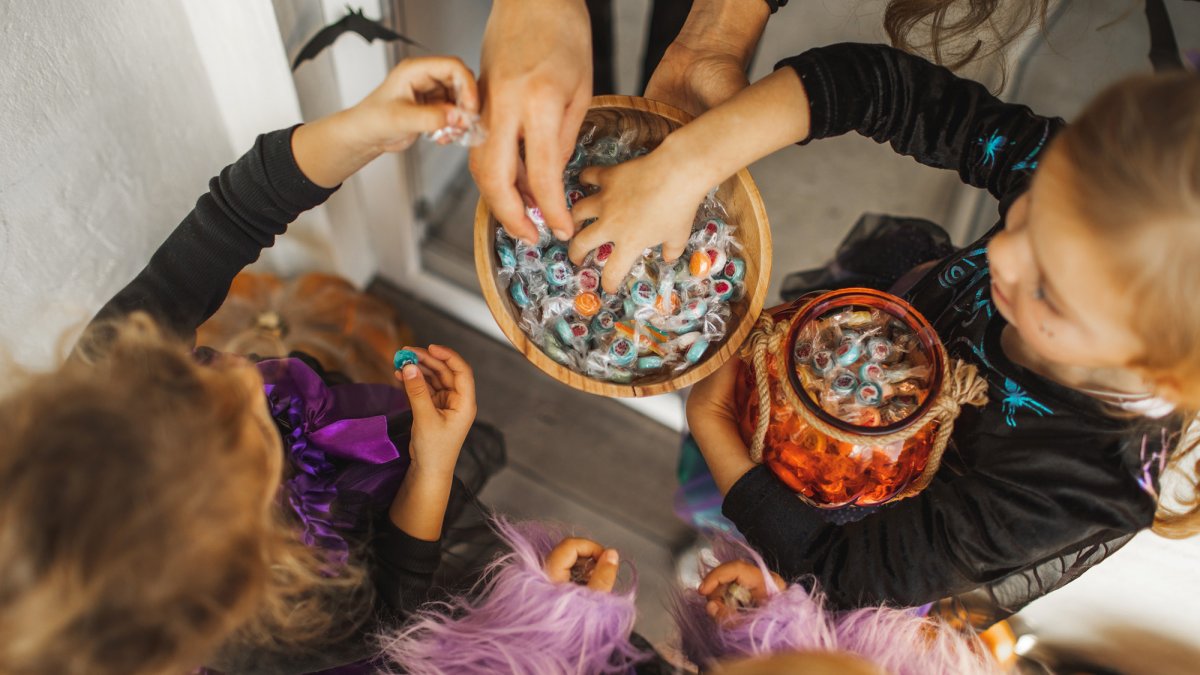
Candy companies really do change their recipes for their iconic candies. Image: Anastasiia Krivenok / Getty Images It’s candy—I mean, Halloween—season. But, I mean, let’s be real: The two are kind of interchangeable at this point. But have you ever bitten into your favorite candy bar only to think, “This really doesn’t taste the way it used to?” Well, it turns out, you might be onto something. Candy companies really do sneakily change their recipes. Our taste buds also change as we get older. So what’s really going on here? Are candy companies changing their recipes or do we just taste things differently now? To find out, Popular Science’s Ask Us Anything podcast took a deep dive into the surprisingly complicated science of candy. Ask Us Anything answers your most outlandish, mind-burning questions—from the everyday things you’ve always wondered to the bizarre things you never thought to ask. So, yes, you really should wear sunscreen every day and no, you don’t need to worry about Yellowstone blowing up. If you have a question for us, send us a note. Nothing is too silly or simple. This episode is based on the Popular Science article “Candy now tastes different. It’s not just you.” Subscribe to Ask Us Anything Listen and follow Ask Us Anything on your favorite podcast platform: Spotify | Apple Podcasts | YouTube | Or wherever you get your podcasts. Full Episode Transcript Sarah Durn: Halloween is right around the corner, and you know what that means: lots and lots of candy: Reese’s Peanut Butter Cups, Snickers, Kit Kats, Hershey’s chocolate bars. Whether you’re stocking up for trick-or-treaters or secretly buying a bag just for yourself, there’s something about Halloween that makes us crave our favorite childhood sweets. But have you ever unwrapped a piece of candy you used to love as a kid, taken a bite, and thought, “Wait a second, this doesn’t taste like I remember it.” Maybe the chocolate tastes a little different, maybe the peanut butter filling isn’t quite as creamy, or maybe that candy bar just doesn’t hit the way it used to. So what’s going on? Have candy companies been quietly changing the recipes of our childhood favorites, or is it possible that the candy hasn’t changed at all, and it’s actually our taste buds that are different? Welcome to Ask Us Anything from the editors of Popular Science, where we answer your questions about our weird world, from, “Why don’t humans have tails?” to, “Why do dogs tilt their heads?” No question is too strange or simple. I’m Sarah Durn, an editor at Popular Science. Laura Baisas: And I’m Laura Baisis, news editor at Popular Science. SD: Here at PopSci, we’re always pondering quirky questions. LB: And this week we’re wondering, why doesn’t candy taste as good as it used to? Sarah, is it really that companies are secretly changing the recipes for our favorite childhood treats? SD: Well, the short answer is yes. LB: No. SD: Candy, I know, candy companies really do change their recipes, and a lot of times they don’t even have to say so. LB: Seriously? So, like, my beloved Milky Way could be completely different from the one that I ate when I was nine? SD: Potentially. Companies can make tiny changes to their recipes that are almost impossible to notice, but over decades, those tiny little changes can really add up. LB: Okay, so we’re not just imagining things. SD: Not necessarily, but there’s another twist. Our taste buds also change as we get older, so the candy might be different, but so are we. LB: Okay. But so who’s really to blame here, Big Candy on one side or my ever-aging taste buds on the other? SD: That’s what we’re gonna find out. LB: Now, before we unwrap this mystery, we want to know, what questions are circling in your brain? If there’s something you’ve always wanted to know, submit your question by clicking the “Ask Us” link at popsci.com/ask. Again, that’s popsci.com/ask, and click the “Ask Us” link. SD: We can’t wait to hear your questions. LB: We’ll be right back after a quick break to find out what’s really happening to our favorite candy. SD: And stick around to the end, because we’re gonna be joined by a very special guest, Jack Bishop from America’s Test Kitchen. LB: Yes, America’s Test Kitchen. What are we gonna ask him? SD: Well, Jack has spent decades testing recipes and figuring out what makes food taste good, so we’re gonna put his taste buds to the test and find out what he thinks about his favorite childhood candies. LB: Okay, now I’m officially hungry and excited. SD: I know. Me too. And we’re back. Okay, Laura, before we get into whether our favorite candies have actually changed, I have a very important question for you: What was your favorite Halloween candy growing up? LB: Oh, okay, before I reveal my top choice, I will say I love Dots. SD: Ugh, yes. LB: …so much so that my, my little nextdoor neighbors will save any Dots that they get while trick-or-treating for me just because I mentioned liking them one day. SD: Aw, that’s, that’s really sweet, and I would never have shared my Halloween candy with you. LB: But honestly, if I have to pick an all-time favorite, I’m gonna go with what I hinted at earlier, the Milky Way. SD: Mm. LB: They’re just, like, that perfect combination of flavors, so they never really get boring. It’s not just one note. So what about you? SD: Okay. Yeah. So I was obsessed with all Halloween candy. Like, lost-several-teeth-in-Laffy-Taffy-level obsessed. I would go trick-or-treating, come home with this absolutely enormous haul of candy, and then keep it all in a pillowcase under my bed. LB: Under your bed? SD: Uh-huh. And I would ration it out over the course of a year. Sometimes I would still have Halloween candy left when the next Halloween rolled around. LB: Sarah, a year? SD: I know. I was basically running, like, a little candy warehouse under my bed. But devastatingly, once mice got into it, and that was… It was not, not the smartest hiding spot. But my brothers and sisters didn’t know where I had hid it, so I guess it evens out. Yeah. But my favorite candy was probably Nerds. And now as an adult, I recently discovered Nerds Gummy Clusters. LB: They are so good. SD: So good. LB: We’re actually gonna be handing those out this year. SD: Oh my God, you guys are gonna be so popular. LB: Yeah, I hope we have enough. SD: Oh my gosh. Okay. But all of this got me thinking about all the other candies I loved as a kid because there are definitely some that just don’t taste the way I remember. And as it turns out, there’s a pretty good reason for that. LB: Okay. Perfect. Let’s, let’s get into it. Are candy companies really messing with our childhood favorites? SD: They are, 1000 percent. And one of the biggest recent controversies actually involves one of the most iconic Halloween candies, Reese’s Peanut Butter Cups. LB: Oh, no. I also love Reese’s. SD: I know. Me too. So earlier this year, Brad Reese, the grandson of H.B. Reese, the inventor of Reese’s Peanut Butter Cups, publicly criticized Hershey, the company that makes the candy. LB: Oh, wow. So this is a family matter. SD: Yeah, it’s kinda wild that there are family candy empires, but, you know, of course there are. Anyhow, Brad was upset about changes to some of the company’s candy products. Specifically, he pointed to products that use things like compound coatings instead of milk chocolate or peanut butter-style cream instead of actual peanut butter. LB: So in candy making, what exactly is a compound coating? SD: It’s a chocolate-like coating that can use vegetable fats in place of some of the cocoa butter you’d find in traditional chocolate, and those substitutions can make a difference in how a candy tastes and feels in your mouth. LB: The phrase chocolate-like kind of raises a red flag there. SD: Oh, definitely. LB: Okay, but here’s the really important question. Did they actually change Reese’s Peanut Butter Cups? SD: According to Hershey, no. The company says the original Reese’s Peanut Butter Cup recipe hasn’t changed, but it acknowledges that some other Reese’s products, different shapes and sizes and newer varieties, can have different formulations. LB: Oh, so the classic peanut butter cup shape might be the same, but the other Reese’s candies, like the popular pumpkins or Christmas tree shapes, aren’t necessarily made the same way. SD: Yes, at least that’s the distinction the company is making. But this isn’t just about Reese’s. Candy companies have been adjusting their recipes for years, and to understand why, Popular Science spoke with Dr. Richard Hartel, a food scientist at the University of Wisconsin-Madison, and he explained that one of the biggest reasons companies change their recipes is pretty straightforward: money. LB: Makes the world go round. SD: Yep. Candy manufacturers are a business, and when the price of ingredients goes up, they have a pretty strong incentive to find cheaper alternatives. But those substitutions aren’t always obvious. Take caramel, for example. LB: Love caramel, hence the Milky Ways. SD: Yes, same. So traditionally, caramel might be made using whole milk and milk fat. But a manufacturer could decide to replace those ingredients with skim milk and a different kind of fat, like vegetable oil or coconut oil. They might also replace some milk proteins with whey proteins. LB: And that in turn saves money? SD: Potentially, but it can also change the flavor and texture of the final candy. Because even if two ingredients serve a similar purpose in a recipe, that doesn’t mean they’re gonna taste exactly the same. LB: Right, and I imagine butter and vegetable oil don’t produce exactly the same caramel just because of chemistry. You know, it’s like vegan or regular cooking. It’s similar, but different. SD: Yeah. No, exactly. And the same thing can happen with chocolate. A company might reduce the amount of cocoa in a product while still keeping enough to meet the legal requirement for calling it “chocolate.” LB: So there are legal requirements for calling it chocolate, kind of like with beer? SD: There are, yeah. The FDA has what’s called standards of identity for certain foods. Basically, these are rules that determine what ingredients a product needs to contain or how it needs to be made to legally use a particular name. So you can’t necessarily just throw some brown colored sugar and oil together and call it milk chocolate. LB: So it’s kind of similar to that question of if almond milk can really be called “milk.” Yes. Yeah, I guess it is kind of assuring that there are some sort of standards here. SD: Oh, yeah. No, those standards still leave manufacturers, though, room to adjust the recipes. And if a company changes its ingredients while staying within those legal requirements, it generally doesn’t have to make some big public announcement or even change their ingredient list. LB: Right, so there’s not gonna be a big press release saying, “Attention candy lovers, we’ve slightly reduced the cocoa content of your favorite chocolate bar.” SD: Exactly, and that’s part of what makes this whole thing so sneaky. Because according to Hartel, some of these recipe changes are so subtle that even trained testers might not notice them. LB: Really? So like even those lucky people whose job it is to literally taste things? SD: Yep. Imagine you have a candy bar, you know, you’ve eaten your whole life. One year the company makes a tiny adjustment to the recipe. You probably don’t notice. The next year they make another tiny adjustment. Again, you probably don’t notice. But if you keep doing that over 10 years or 20 years… LB: Okay, so that explains why a candy bar might taste different now. But here’s what I’m wondering. If people notice these changes and don’t like them, why don’t companies just go back to the original recipes? SD: Yeah, well that brings us to one of the most famous disasters in the history of food marketing: New Coke. LB: New Coke. Knew we were going there. SD: So back in 1985, Coca-Cola decided to change its signature soda formula, and the company had actually done taste testing beforehand. In blind taste tests, people often preferred sweeter Pepsi over Coke. So Coca-Cola introduced a new sweeter version of its drink. LB: Which as we now know, people famously hated. SD: Hated it. And it’s all because of something called the Pepsi paradox. Basically, there’s a difference between tasting a tiny sip of something and actually consuming an entire serving. A sweeter drink might win in a quick sip test, but that doesn’t necessarily mean people want to drink a whole can. LB: Right. That makes sense. Like if one bite of something is super sweet, it might be delicious— SD: Mm-hmm. LB: —but after 10 bites you might be completely over it. SD: Yeah, and that’s a big challenge for food companies because just because a new recipe performs well in a taste test doesn’t mean consumers will actually prefer it in their everyday lives. And with New Coke there was another huge factor. LB: Okay. If it’s not money, I’m gonna guess it’s nostalgia. SD: Nostalgia. People were attached to the original Coca-Cola. It wasn’t just about how the soda tasted. It was about the memories and feelings associated with it. LB: All right, and that brings us right back to Halloween candy. SD: Yeah. When you eat a Reese’s Peanut Butter Cup or a Hershey’s bar, you’re not necessarily just tasting chocolate and sugar and peanut butter. LB: You might also be remembering the fun of trick-or-treating as a kid, dumping your candy all over the living room floor and trading with your siblings. SD: Or in my case, hiding an entire year’s supply of candy under my bed. LB: Hey, I now think it’s very important to have a secret candy bunker. SD: Look, I concur. And that brings us to another important part of this mystery because even if a candy company hasn’t changed its recipe at all, there’s still something else that could be changing. LB: Us? SD: Us. Our sense of taste isn’t necessarily the same throughout our lives. As we get older, our ability to perceive flavors can change, and one reason is that our taste buds don’t regenerate quite as quickly as they used to. LB: So even if I’m eating a Milky Way, I might experience it differently now. SD: Right, even if it’s the same exact Milky Way. And it’s not just aging. Our environment and experiences also affect how we perceive taste. So the way you experience a Milky Way today might be different from the way you experienced it as a kid, even if the recipe is identical. LB: Okay, so with this mystery, we’ve now got two possible culprits: the candy companies are changing the recipes, and our taste buds are changing too. SD: And both things can be true at the same time, which makes it difficult to know whether your beloved Milky Way or addictive Nerds actually taste different or whether you just remember it tasting different. LB: So basically, no matter how much we want to, we’re never getting that exact childhood Halloween candy experience back, no matter how much we try. SD: Yes, probably not. LB: Kinda devastating. SD: I know, but there’s a little good news. Candy companies do sometimes listen when people complain about changes. In fact, Hershey has announced plans to bring back older recipes for some of its products, including certain miniature Easter candies. LB: Okay, that helps. So there’s some hope. SD: There is, but Hershey will still experiment with new formulas for other products, so I wouldn’t expect every candy to suddenly taste exactly the way it did in 1998. LB: Fair enough. SD: But here’s the big takeaway. If you’ve bitten into your favorite childhood candy and thought, “This isn’t as good as it used to be,” you might actually be onto something. Manufacturers really do change the recipes. Sometimes those changes are tiny, and sometimes they accumulate over decades, but our own taste perception changes too. So the answer to whether candy tastes different now is— LB: Complicated? SD: Complicated. LB: The most scientific answer of all. SD: It really is. But before we wrap up this very sweet episode, there’s one thing I want to get to the bottom of because we spent this whole episode talking about how our favorite childhood candies might be changing, but what would someone who tastes food for a living think? LB: I feel like we need to bring in the expert here. SD: Me too, and luckily, we got a pretty great one. After the break, we’re gonna be joined by Jack Bishop from America’s Test Kitchen. LB: Excellent. Love America’s Test Kitchen. SD: I know. Me too. And we’re back with Jack Bishop. Jack is the senior content advisor at America’s Test Kitchen, where he’s been part of the team since the very beginning, starting with the launch of Cook’s Illustrated in 1993. He’s also the tasting lab expert on America’s Test Kitchen and Cook’s Country, which means he’s spent decades putting food to the test. Jack, thank you so much for joining us on Popular Science’s Ask Us Anything podcast. Jack Bishop: It’s great to be here, Sarah. Thanks for asking me. SD: Oh, we’re so excited to have you. So Jack, throughout today’s episode, we’ve been investigating whether our favorite childhood candies really taste different than they used to, and I want to start with a personal question. Was there a candy you absolutely loved growing up that just doesn’t quite taste as good to you today? JB: Uh, I loved Snickers. SD: Mm. JB: And they’ve gotten smaller, so— SD: Yes JB: —that’s pretty much true for most candies, especially I was a child of the ’60s and ’70s, and so candies were bigger back then. In my mind, the biggest difference is the caramel isn’t as gooey as it used to be when I was a kid. SD: Mm. JB: When you would bite into a Snickers bar, it was almost like a cheese pull. You know, you’d get this great pull, and I feel like that doesn’t happen anymore. SD: And given your knowledge of food generally, why do you think Snickers taste different? JB: You know, it’s hard to say because you do the label reading, and it only gets you so far. I mean— SD: Yeah. JB: —you know, you can tell by the order of the ingredients. If that changes, that could be a real sign. You know, if something has gone up in the ingredient list, that likely means there’s more of it, because ingredients are listed in the order of sort of weight. You know, they’re just using lower quality ingredients in order to keep costs down. I mean, that’s the overall trend in what I would call supermarket candy. SD: Mm-hmm. JB: Is cost is such a big issue, and so many of the inputs have gotten so expensive. And so, you know, using less of the expensive ingredient, switching out, you know, a moderately priced ingredient for a really cheap ingredient. Those are all strategies that could be used to control cost, but they’re not necessarily gonna make something tastier. SD: Yeah. Yeah, and if, you know, a listener is listening to this and they feel like one of their favorite candies has changed since they were growing up, what would you suggest? How would they go about testing that? JB: I should start by saying I think taste memories are powerful but unreliable. SD: Mm. JB: So what I mean by that is I can make a certain recipe, and the house fills with an aroma, like I’m thinking of like my grandmother’s lasagna, and if like my brother or sister walks in, it’s like we’re back in my grandmother’s kitchen, and, you know, I’m eight, and my sister’s seven, and my brother’s five again. The food is really triggering powerful emotions. SD: Yes. JB: But, you know, we misremember stuff, and it’s really hard to remember, well, how sweet was this? SD: Mm-hmm. JB: Right? How chocolatey was this? Was this really peanut buttery, or have my tastes just changed? And I know for me, you know, I now like 85 percent cacao chocolate. Well, I didn’t like that as a kid. And so that will color perceptions of things I did eat when I was a kid, and is it not as good as it used to be, or do I not like that anymore? Unless you can get a time machine and somebody can send you a candy bar from, you know, 1972 or whatever year you’d like to go back to, you’re relying on your memory, and your memory’s a little fickle when it comes to food. SD: Yeah, and we’ve actually been talking a bit in this episode about Reese’s Peanut Butter Cups because they’ve been at the center of this whole conversation about changing candy recipes, and I know America’s Test Kitchen actually has its own recipe for homemade peanut butter cups. So I’m curious, what makes a really great peanut butter cup? Is there something the homemade version can get right that a store-bought candy might not? JB: Fewer ingredients and better ingredients. So, you know, if you read the label on a Reese’s Peanut Butter Cup, it’s a pretty long ingredient list. Our homemade version starts with milk chocolate and creamy peanut butter that you enrich with a little bit of butter, a little bit of salt, and a little bit of confectioner sugar ‘cause the confectioner sugar will incorporate into the sugar without giving you any sort of grittiness, and that’s it. It’s really just creamy peanut butter that’s a little sweeter and a little saltier and a little richer than it is straight out of the jar layered with melted chocolate, and you need, don’t need to anything more than put the chocolate in the microwave, 50 percent power to gently melt it, and then you can actually build them. The easiest way to do this is in a mini muffin tin. SD: Mm. JB: And you can get little liners, and you sort of pipe a layer of chocolate, pipe a layer of peanut butter, and then finish with a layer of chocolate. So the chocolate’s not completely enrobing the peanut butter, but it’s the neatest, easiest way to do it at home, and it eats like… Well, I won’t say it eats like a Reese’s Peanut Butter Cup ‘cause it’s so much better. SD: Well, Jack, thank you so much for joining us. I need to go make peanut butter cups apparently. And Jack, if listeners wanna know more about what you’re up to in America’s Test Kitchen, where should they go? JB: Sure. We’ve got, you know, tastings of milk chocolate, dark chocolate, white chocolate, and you can find all of those results at americastestkitchen.com. SD: Great. Thank you so much for making the time, Jack. JB: Great. Thanks, Sarah. LB: Wow, I love him so much. And even though I can’t cook to save my life, I kind of want to try that homemade peanut butter cup recipe. SD: I know, me too. We’ll link it in the show notes. LB: Good. And that’s it for this episode. But don’t worry, we’ve got more episodes of Ask Us Anything live in our feed right now. Follow or subscribe to Ask Us Anything by Popular Science wherever you enjoy your podcasts. And if you like our show, leave us a rating and a review. SD: What’s your favorite candy? Let us know in the comments. Our producer is Alan Haburchak, and this week’s episode was based on an article written for Popular Science by Andrew Coletti. LB: Thank you, team, thank you, candy, and thank you everyone for listening. SD: And one more time, if you want something you’ve always wondered about explained on a future episode, go to popsci.com/ask and click the “Ask Us” link. Until next time, keep the questions coming, and may your candy stay mice-free. LB: I’m still sad about Baby Sarah’s candy stash. SD: Ugh, not as sad as me. LB: Awful. 2026 Popular Science Home of the Future Awards 39 products that will improve your everyday life.
Why your favorite candy tastes different now
Full Article
Original Source
Read the full article at Popsci →KhanList aggregates and links to publicly available news content. We do not host full articles from third-party sources. Always verify important information with original sources.