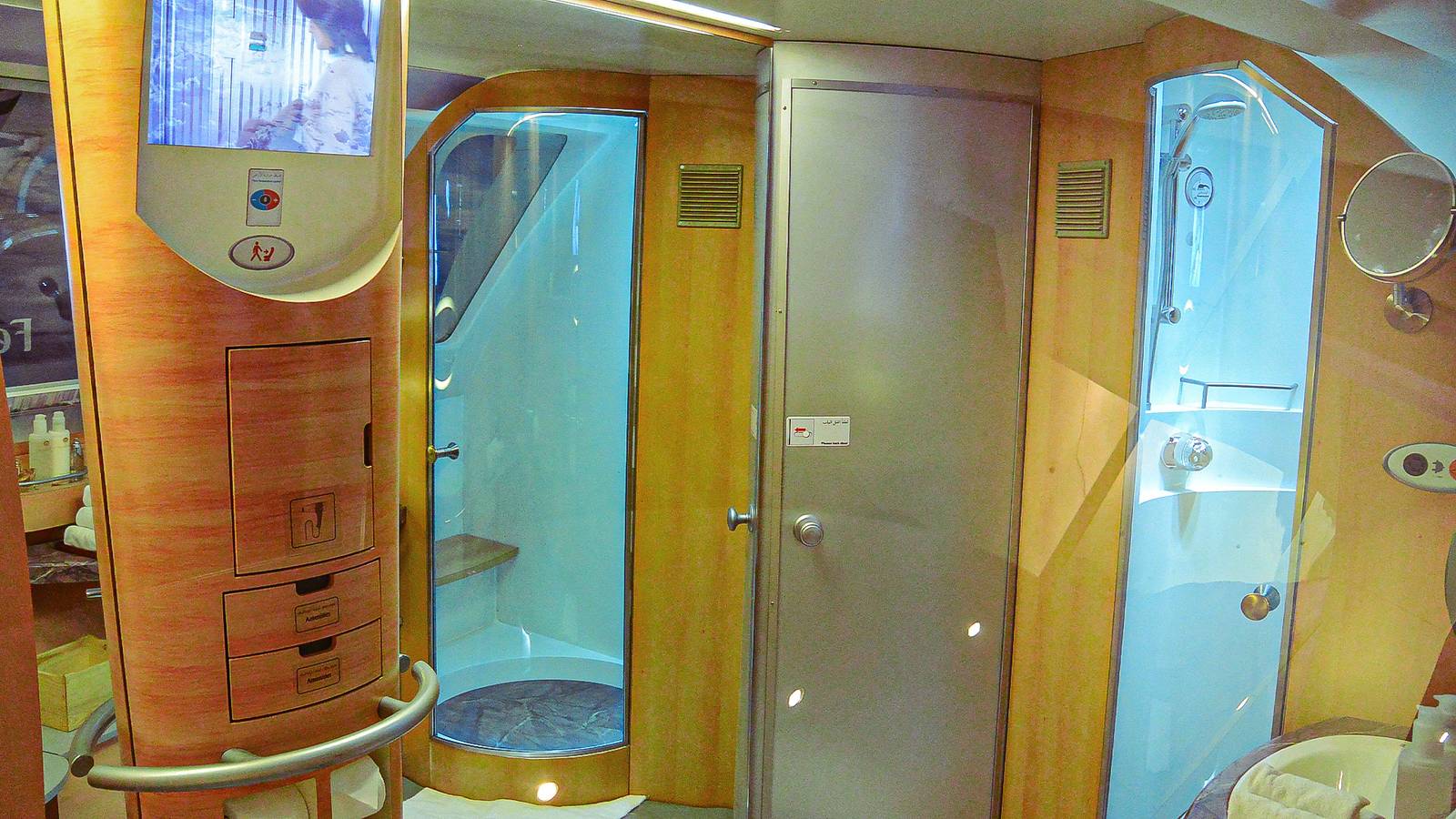
Published Jul 29, 2026, 10:00 AM EDT Daniel comes to Simple Flying with a business focused approach to the aviation world. Daniel enjoys analyzing strategy and how companies move against each other to gain a step ahead in the skies. Besides strategy, Daniel also has a passion for aircraft design and the history of aviation. Based in New York With the Airbus A380, airlines began reintroducing onboard amenities for premium passengers. In the 20th century, most carriers installed lounges on their long-range aircraft, but then removed them post-deregulation because they simply didn't earn revenue. For decades, aircraft cabins became dominated by seats and more seats, with passenger innovations focused on improving premium seats. The exception is the Airbus A380, as several operators have installed lounges and social areas. Two airlines, however, have gone a step further. Emirates and Etihad Airways both offer onboard lounges for first and business class passengers on their A380s, and they have also installed onboard showers for first class passengers. Historically, this feature hasn't been offered since the days of the airship, and reviewers have described the shower as possibly the most insane feature on an airliner. To date, these are the only two carriers that have installed onboard showers, and only on the A380. In all likelihood, the A380 will remain the only aircraft type where this is feasible. Onboard Showers On The Airbus A380 Credit: Shutterstock Emirates was the first airline to ever install an onboard shower on a commercial airplane operating scheduled flights, as the last time that this had been offered in commercial aviation had been on airships in the 1930s. There are two 'shower suites' located on the upper deck of the A380, which also function as bathrooms, and they are among the most luxurious bathrooms you'll find on an airliner. In addition to the showers, you'll also see features like heated floors, a wide variety of toiletries, and a stunning visual design. Emirates began flying the A380 in 2008, and it was the only carrier with onboard showers until 2014, when Etihad Airways took delivery of its first A380. Whereas Emirates has two shower suites and a third lavatory for 14 first class passengers, Etihad installs two lavatories for nine passengers, only one of which includes a shower. In addition, the carrier installs a separate shower suite in the Residence, its opulent three-room suite that includes a living room, shower suite, and bedroom. Both airlines allow passengers to reserve a time to use the shower, and guests are limited to five minutes of running water. While the experience of using the shower is fairly similar, Emirates' shower suites are significantly larger with a more distinctive visual design. Etihad's first class shower suite, while still offering an undoubtedly cool experience, is about half the size of the Emirates' suites, and they lack a heated floor. The shower suite in the Residence, however, does have a heated floor, but is otherwise very similar to the suite for first class passengers. Why These Airlines Installed Onboard Showers Credit: Shutterstock Emirates and Etihad Airways do not operate like a typical publicly-owned company. Both are owned by their respective governments, and serve a greater purpose than making money; they're also used as tools to bring awareness to Dubai and Abu Dhabi, respectively. While both companies are more than profitable, their popularity with passengers increases visits to these cities, resulting in higher spending within the economy while also boosting business traffic. This works because the excellent onboard experience creates a positive impression with passengers of the airline, which reflects positively on the city. Given that the onboard experience and publicity are key to these airlines' success, they need to keep innovating to remain leaders in the airline industry. In 2008 and 2014, the answer came partially from installing onboard showers, while also innovating in other premium cabins. Etihad installed the Residence, a single-aisle first class cabin, while both airlines configured their A380s with lounges and new business class seats. Most passengers will never experience the showers, but they attract significant publicity due to how unique the amenity is in commercial aviation. Combined with how these two airlines have generally configured their A380s, it creates a halo effect that elevates the brand as a whole, further boosting visibility to their home cities. Qatar Airways also operates similarly to Emirates and Etihad, but it has deemphasized first class in favor of focusing on the business class experience. The Interior Layout Of The A380 Credit: Shutterstock Emirates and Etihad are the only two airlines to have ever installed onboard showers on commercial airliners due to their business strategies, and they only offer this amenity on the A380. On paper, the A380 makes this work because of its size and floor space, but the answer is more detailed. For one, both Emirates and Etihad install their shower suites in a space ahead of the first class cabin on the upper deck called the 'crown area'. Every airliner has a crown area, where the fuselage begins sloping down to the nose, but it's unusually large on the A380. The forward staircase connecting the main and upper decks is located in this area, while there are large open spaces located to the left and right of it. These spaces cannot be legally used for seats, and some airlines have used them for lounges, while Air France installed a digital art galley on one side of the crown area. Airbus A380 Customers Usage Of The Crown Area Air France Larger lavatory on left side, art gallery on right side All Nippon Airways Larger lavatories Asiana Airlines Two lavatories on left side, lounge on right side British Airways Larger lavatories China Southern Larger lavatory on left side, closets on right side Emirates Shower suites (only on first class-equipped aircraft) Etihad Airways Residence shower suite/bedroom on left side, two lavatories on right side (one with shower) Korean Air Two lavatories on left side, lounge on right side Lufthansa Larger lavatories Malaysia Airlines Larger lavatories Qantas Lounge Qatar Airways Larger lavatories Singapore Airlines Larger lavatories Thai Airways Larger lavatory on left side, lounge on right side Meanwhile, most carriers install larger lavatories. This is the location where Emirates installed one shower suite on both sides. Etihad installs a lavatory and shower suite on one side, while the other side features the Residence's shower suite and bedroom. A shower suite has to be physically larger than a typical lavatory, even if it isn't by much, and seats take priority in any case because they earn money, unlike onboard amenities. Designing aircraft layouts is a game of inches even on the largest single-deck airliners, but the crown area on the A380 can't be used for revenue seating. Despite this, the space is quite large, which allows airlines to get creative. For Emirates and Etihad, the shower became a point of differentiation without compromising capacity. The Payload Capacity Of The A380 Credit: Shutterstock It's estimated that the added water for 14 passengers to use the showers typically adds over half a ton of weight on Emirates' A380s. Etihad's A380s have fewer passengers, but the water will still weigh close to this figure. In addition, the added plumbing for the shower adds weight and complexity. This weight cuts into payload or fuel capacity on long-distance flights. Even on routes that don't use the aircraft's full capabilities, the water and systems add empty weight, which increases fuel burn. However, a Boeing 777-300ER could be specced with a 351.5-ton Maximum Takeoff Weight, while an Airbus A350-900 is available with an MTOW of 283 tons today. The Airbus A380-800, on the other hand, was available with an MTOW of 575 tons. The weight of the water and plumbing systems still cuts into payload capacity, but barely so because the aircraft is so massive and its rated MTOW is so high. Similarly, the showers impact fuel burn, but only slightly. The weight associated with the showers would be the same whether they're on an A380, A350, or 777, but the smaller size and lower weights of the latter two planes mean that the showers have more of an impact. No other airlines have installed showers because the plumbing is expensive and complicated, but the A380 is the only aircraft with enough weight margin in its design where the systems essentially don't impact performance. The Future Of Onboard Amenities Credit: Emirates Today, Virgin Atlantic is the only airline offering onboard social spaces on an aircraft that isn't an Airbus A380, and it plans to remove its onboard bars with future aircraft retrofits. Qantas is planning a 'Wellness Zone' on its Airbus A350-1000ULRs for all passengers, but apart from that, lounges are reserved for the A380 and will go away once the A380 is retired from service. For Emirates, this represents a problem because so much of its brand image was built on its massive A380 fleet with showers and a lounge. The Boeing 777-9 will be Emirates' future flagship, and the carrier is investing heavily in the onboard experience on these planes. They will feature an updated version of the airline's 'Game Changer' first class suites, currently only available on nine 777-300ERs, along with a new business class suite based on the Safran Unity. Emirates Fleet Business Class Seat Model Airbus A350-900 Safran S-Lounge Airbus A380-800 Safran SkyLounge Boeing 777-200LR Collins Aerospace Minipods Boeing 777-300ER Collins Aerospace Minipods Safran S-Lounge Boeing 777-9 Safran Unity However, while the planes will feature an onboard social area, leaked renderings appear to show a space that's far smaller and less opulent than the staffed bars present on the A380s. Emirates' president Sir Tim Clark has teased that the carrier is working on in-suite bathrooms for first class, and is also working with Boeing on studying the feasibility of a stretched 777-10. Given how much more space in-suite bathrooms would take up, the 777-10 would be a more obvious application than the 777-9, given how much more floor space the aircraft would have. However, the jury is still out on whether a shower would work, and given Sir Tim Clark's comments, it's more likely than not that Emirates' first class showers will disappear with the A380.
Why You Can Only Shower In The Sky On An Airbus A380
Full Article
Original Source
Read the full article at Simpleflying →KhanList aggregates and links to publicly available news content. We do not host full articles from third-party sources. Always verify important information with original sources.