
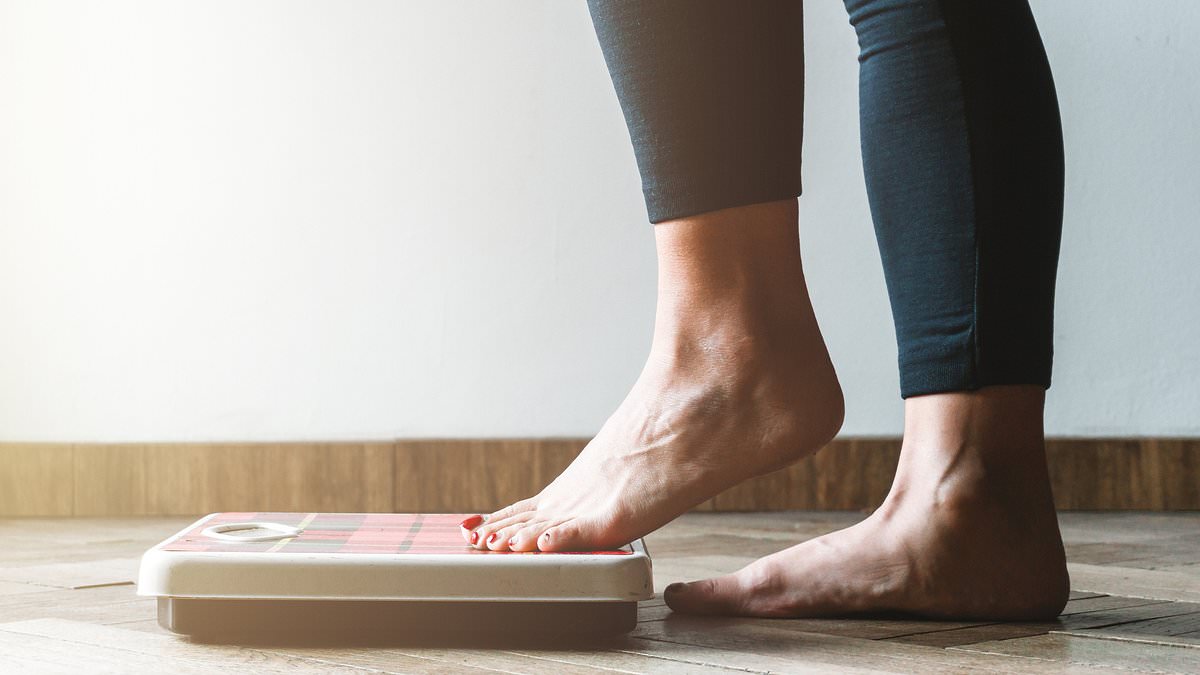
Shifting a few unwanted pounds in your twenties seemed as simple as ditching dessert or avoiding the pub for a couple of weeks.But try the same trick at 45 and you'll likely find the scales barely budge.A string of celebrities have, in recent years, spoken of the wretched phenomenon, claiming that their excess fat became impossible to shake when they hit their 40s. TV star Melissa Joan Hart, 50, admitted earlier this year that she feared her body was no longer able to shift weight due to the perimenopause, and was shocked to find herself a stone and a half lighter after cutting out sugar and booze.However, the common belief that metabolism slows with age - making calories harder to burn - is, according to a recent slew of evidence, nonsense.A comprehensive 2021 study, published in the journal Science, concluded that energy expenditure remains roughly the same between the ages of 20 and 60. So, what's the truth? Here, experts reveal the intriguing reasons why weight loss really is harder with age, how many calories you need in every decade - and how to kick midlife weight gain for good. Melissa Joan Hart is looking and feeling better than ever, with the actress marking her 50th birthday earlier this year after losing a stone and a half, despite thinking she wouldn't be able toExtra muscle in your 20s equals more calories to eatContrary to popular belief, your twenties aren't simply a period when your metabolic rate - the amount of energy or calories your body uses over a specific period to perform basic, life-sustaining functions - is racing so fast you can eat whatever you like.By around 20, adult energy expenditure has settled into what scientists now believe is an extraordinarily long plateau.'A common misconception is that metabolism steadily falls from our 20s onwards,' says Professor Leigh Breen, an expert in physiology at the University of Leicester and Myprotein’s healthy aging expert.'In reality, resting metabolic rate is remarkably stable through early and middle adulthood when differences in body size and composition are accounted for.'Body composition is key, however. By this, experts mean the ratio of body fat to muscle. In your 20s, individuals tend to have a higher proportion of muscle and lower body fat levels. As muscle requires more energy to retain itself, those with higher muscle mass burn more calories, meaning they can eat more without storing a surplus as extra fat. Experts say that body fat is usually at an all-time low in your 20s, before gradually increasing every decade afterwards, meaning most people can get away with around 200 extra calories a day (on top of the daily limit of 2,000-2500) without tipping the scales.But there's a practical reason shifting extra pounds was easier back then, too. Naveed Sattar, Professor of Metabolic Medicine at the Institute of Cardiovascular & Medical Sciences at the University of Glasgow, says most people don't realise the gradual decline in activity levels after their mid-20s. EAT FOR YOUR AGE * TWENTIES: Up your red meat quota to ensure that you're not iron deficient. You can also eat lots of legumes, lentils, soybeans, tofu, tempeh and fortified wholegrain products in order to boost your iron levels.* THIRTIES: For women, the thirties are often an important decade for child-bearing. In this case, you need to incorporate more wholegrains into your diet. For men, you may need to moderate your food intake as you might not be as active as you were in your twenties. Increase your vegetable intake and reduce carbohydrates.FORTIES AND FIFITES: As you approach midde age, the tendency for middle-aged spread comes into its own. Opt for a rainbow plate of different vegetables to up your antioxidants and follow a Mediterranean diet of fruit, veg, legumes and fish if possible. Even if you never went near a gym, you may have spent more of the day on your feet – walking to work, going out dancing, or simply sitting down less.You'll notice a big difference after 35 Adults also start losing muscle - the metabolically active tissue which burns calories even when resting - from about the age of 35. In the absence of strength or resistence training, studies show muscle mass declines by a rate of about one per cent a year.This explains why, at around this stage, extra pounds might appear faster - and prove unusually difficult to lose. Coupled with this, people are 'moving less than they realise and becoming more sedentary at work and home,' says Professor Breen. 'They may be experiencing subtle changes in eating habits and portion sizes too.'A 2018 study followed 963 people between the ages of 38 and 50 and tracked their activity levels over a 10 year period using wearable devices.The researchers, from the University of Texas, found that, on average, sedentary time increased by around 40 minutes a day, while even light physical activity fell by half an hour a day.Having children or longer working hours can leave less time for sport and eating dinner much later at night.What's more, another source of unplanned calories can be the food left behind by children. Studies have found mothers reporting that they eat children's leftovers rather than throw them away, sometimes specifically to avoid food waste.Together, experts say these changes can create a small calorie surplus which, accumulated over years, gradually pushes weight upwards.The perimenopause 'hides' weight loss You're eating exactly the same as you did at 25. You're even doing a couple of gym sessions a week. So why are you still big around the middle?For women, the answer lies partly with changes to the way in which our bodies store fat when we enter mid-life. After the menopause, a decline in the sex hormone oestrogen leads to a shift in fat cells, causing an accumulation around the middle, as opposed to in the hips and thighs. Curiously, studies show that this type of fat can in fact respond better to calorie-restricted diets than other kinds, however a lot of the benefit can be invisible as visceral fat is hidden around the organs. Experts say you'd likely get away with an extra few hundred calories a day in your 20s due to the increased proportion of muscle mass most people have, compared to after 35This means while you may be shrinking visceral fat cells with diet and exercise, the body you see in the mirror barely changes.Prof Sattar adds that sleep quality can deteriorate because of hot flushes, which raises cortisol levels, triggering the release of hunger hormones.However Prof Breen cautions against blaming hormones for everything, as changes in habits are also a common culprit. 'Menopause can influence body composition and fat distribution, but it is rarely the only explanation for weight gain,' he said. The intriguing nutritional 'catch' that strikes in our 60s There is a nutritional catch as we move into our 60s and beyond. We may be burning fewer calories due to increasing age, but our muscles actually become harder to feed -meaning Ioss of muscle mass accelerates considerably.Ageing muscle develops what scientists call anabolic resistance, meaning it becomes less responsive to the amino acids in protein that normally signal muscle tissue to repair and grow. This explains why experts increasingly emphasise protein-rich foods in later life, as well as strengthening exercises. 'Resistance exercise is vital as it helps preserve muscle and mobility,' says Prof Sattar.' However he adds: 'Cardiorespiratory activity is also important because many people still need to burn calories.'So, while the number of calories needed doesn't change hugely in older age, the amount of protein we need does. Experts think older adults should eat around 1.0–1.2g of protein per kg of body weight per day, compared with the standard adult reference intake of about 0.8g/kg. Needs may rise to around 1.5g/kg during illness.That's around 70–84g protein per day for a healthy older adult (roughly one and a half chicken breasts). Experts conclude that the aim in later life isn't necessarily to eat more, but to ensure that a smaller appetite doesn't translate into too little energy and protein to preserve strength and independence. The European Society for Clinical Nutrition and Metabolism (ESPEN) advises roughly 30 calories per kilogram of body weight per day as a guiding estimate for older people.In practical terms, that's about 2100 calories for a 70kg (11 stone) adult.
Why weight gets harder to shift as you get older: Experts reveal how your daily calorie needs change with age
Full Article
Original Source
Read the full article at Dailymail →KhanList aggregates and links to publicly available news content. We do not host full articles from third-party sources. Always verify important information with original sources.