
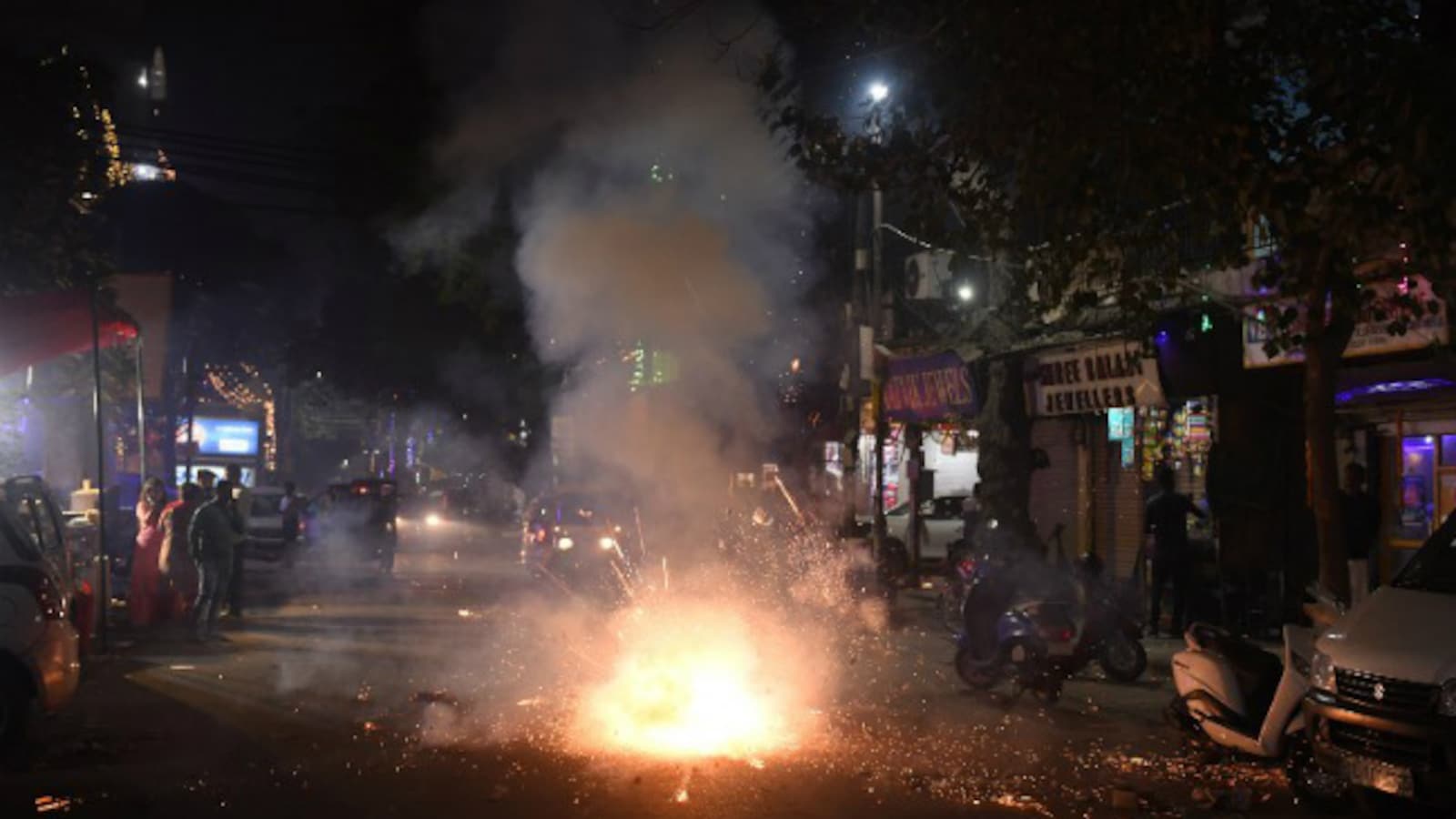
The Commission for Air Quality Management (CAQM) has enforced Stage 3 of the Graded Response Action Plan (GRAP) across Delhi-NCR. The measure has been invoked as the capital region enters its most hazardous environmental phase of the year. Ahead of Diwali, the air quality in Delhi dropped significantly, triggering low visibility and foggy conditions all across the national capital.Air quality worsening around the tail end of the year is not a new phenomenon. Historically, one has seen pollution levels spike and air quality dip during the festive season. The constant dip in air quality makes one question the efficiency of pollution control measures as well as the factors that contribute to it.While public attention during the festive season centres around firecrackers, a true public health disaster unfolds in the background – one created by a variety of factors. From vehicular and industrial pollution to stubble-burning-induced pollutants, a host of factors add up to choke the capital. Especially as temperatures drop in winter, a mix of stagnant meteorology, peak stubble burning, and baseline industrial pollution locks the National Capital Region into a prolonged, heavy smog phase.GRAP Stage 3: The Policy ParadoxThe invocation of GRAP Stage 3 brings sweeping emergency curbs across Delhi NCR districts: complete bans on non-essential construction and demolition, strict restrictions on BS-III petrol and BS-IV diesel four-wheelers, and continuous deployment of anti-smog guns. If post-Diwali AQI breaches the 450 mark, CAQM will be forced to escalate to GRAP Stage IV, triggering commercial truck entry bans and school closures.READ | Delhi Air Remains 'Very Poor' On Diwali Eve, Likely To Worsen TomorrowExperts argue that halting construction projects and restricting daily commuters while simultaneously easing firecracker bans creates a glaring governance contradiction. As environmentalist Bhavreen Kandhari points out, this regulatory shift represents a fundamental problem in precautionary public health policy:Kandhari explains, "Why, after a decade of worsening air pollution, is toxic air being normalised instead of addressing its sources? We have gone from a total ban on firecrackers to allowing so-called 'green' crackers. This is not progress; it is a dilution of precaution when public health demands stronger protection. Green crackers are not pollution-free, nor do they make the cumulative burden of toxic emissions disappear. For that matter, we cannot afford to add any emissions in these meteorological conditions."Kandhari, who has been working on the issue for decades, talks about the approach that the authorities have adopted: "To launch a winter action plan, ban construction, and restrict vehicles, but permit emissions that are totally avoidable, is an unpragmatic approach. At a time when children, the elderly, and people with respiratory illnesses are already struggling to breathe, easing restrictions is a dangerous gamble."Expressing concern over pollution levels in the week after Diwali, she adds, "Delhi cannot afford another post-Diwali pollution emergency. How can governments keep experimenting with people's lungs and calling it a solution?"Post-Diwali Pollution: Festive Pollutants And MoreThe foundational problem with Delhi's winter air is that the city enters the festive week already breathing toxic air. Manoj Kumar, analyst at the Centre for Research on Energy and Clean Air (CREA), stresses that focusing exclusively on festive fireworks misses the core systemic failure:Kumar explains, "Post-Diwali pollution is the result of multiple factors coming together. Firecrackers add a sudden burst of emissions to an atmosphere that is already polluted due to year-round sources. When this coincides with stubble burning, low wind speeds, a shallow mixing layer, and unfavourable weather conditions, pollution can build up rapidly."Addressing the row regarding firecrackers, Kumar adds, "Firecrackers are an episodic source. Even with green crackers,we have seen that pollution does not necessarily subside, and a post-Diwali spike is likely every year. The bigger question is why Delhi's air quality is already in the 'very poor' AQI category even before Diwali."Kumar questions the state of air quality even before the festival has been celebrated: "These episodes may last a week, but emissions from industries, thermal power plants, vehicles, and residential cooking and heating fuels continue throughout the year. The priority should be consistent reduction of these emissions rather than focusing only on seasonal episodes."Seasonal FactorsSeasonal weather makes November pollution much worse. Cold winter air acts like a heavy blanket, trapping smoke and dust close to the ground instead of letting them lift away. When people burst fireworks during calm, windless weather, fine dust, and chemical smoke get trapped under this cold layer. This in turn creates a thick layer of toxic smog that clouds over the city for days.Farm FiresAnother factor that contributes immensely is farm fires. According to experts, this could very well be one of the leading factors behind the rising pollution. As per data made available by the agriculture ministry, a total of 6,226 burning events were detected in the six states between September 15, 2026, and November 6, 2026. These incidents are distributed as 3,144 in Punjab, 89 in Haryana, 479 in UP, 02 in Delhi, 1,097 in Rajasthan, 195 in Uttarakhand, and 1,220 in MP.In fact, satellite tracking reveals that paddy residue burning across Punjab and Haryana reaches its maximum intensity during early-to-mid November. Prevailing north-westerly winds carry heavy biomass smoke plumes straight into the NCR basin, merging with festive emissions at the exact moment atmospheric dispersion is at its lowest.Regulatory GapsExperts argue that post-Diwali air quality over the past few years has exposed the limits of reactive policies. Despite prohibitions on firecrackers on the ground, post-Diwali AQI spikes, raising serious questions about on-ground implementation. Questions have also been raised regarding CSIR-NEERI certified green crackers-promoted as offering a 30% reduction in particulate matter. Reports have flagged counterfeit packaging and unverified QR codes used to pass off normal firecrackers as 'green'. Reports argue that air quality in the week after Diwali relies more on wind speed than on policy shifts.The Way ForwardEvery year, the week after Diwali serves as a stark reminder that emergency frameworks like GRAP are reactive solutions applied to a long-term, repetitive crisis. As experts state, protecting public health requires not short-term solutions, but year-round structural interventions: from transitioning to cleaner vehicles and fuels to improving public transport and reducing reliance on private vehicles for commuting. The situation is only expected to see drastic improvement if solutions address year-round emissions rather than just the festive flare-up.
Why Week After Diwali Will Be Delhi's Biggest Pollution Test
Full Article
Original Source
Read the full article at Ndtv →KhanList aggregates and links to publicly available news content. We do not host full articles from third-party sources. Always verify important information with original sources.