
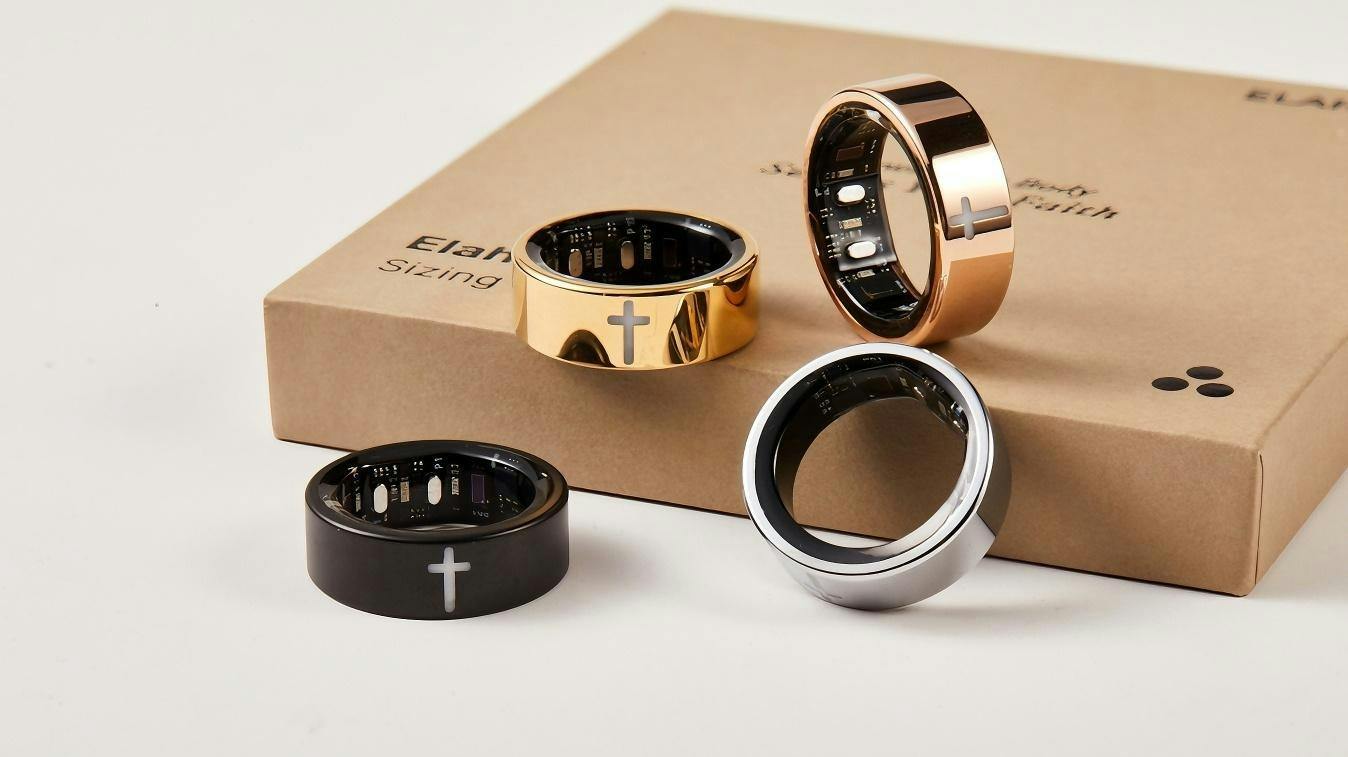
Building a Bible app taught us a fundamental product truth: pure software is passive—it waits for you to open it. But life, anxiety, and physiological stress happen in real time. Here is why we built a smart ring to bridge that gap. An app on its own is inherently passive: it has to wait for the user to open it. But when people are under pressure, busy, or driving, they often cannot attend to their phones. Designing around people's needs means using hardware to sense body signals and deliver a subtle prompt, while leaving complex analysis and deeper companionship to the app. That completes the shift from responding to a user's action to offering proactive care. We developed Elah Ring S1 and the dedicated Elah App around that division of responsibilities. The ring senses physical changes as it is worn and prompts the user through the Cross-Light and gentle vibration. The app provides prayer, reflection, reviews of trends, and optional companionship through FaithMate. We want support to reach people first, while leaving them to decide whether to open the app and how to respond. Why We Needed a Ring After Blessed Our Bible app, Blessed, has built a community of more than 10 million users. During development, we found that people often do not think to open an app when they are busy, under pressure, driving, or have their hands full. Faith-based content is available at any time, but users still have to think of it and actively seek it out. An app alone also cannot capture a user's physical state in real time during a sudden bout of stress. That was our reason for moving into hardware: a wearable can collect body data unobtrusively throughout the day and night, so the timing of support no longer depends entirely on when someone opens their phone. The S1 incorporates three sensor types: PPG, or photoplethysmography; an IMU, or inertial measurement unit; and an NTC, or negative temperature coefficient thermistor. It monitors seven health metrics: heart rate (HR), heart rate variability (HRV), blood oxygen saturation (SpO₂), sleep, stress, activity, and body temperature. Sensing the body provides a basis for proactive care, while the app connects those records with spiritual practice. Sensing and Prompts on the Ring Deeper Support in the App The ring's first job is to sense. While worn, it continuously monitors signals such as heart rate and HRV, watching for changes in the body's state. When the system senses elevated stress or a heart rate above the threshold the user has set, it can initiate a reminder. Its second job is to prompt quietly. The Cross-Light and gentle vibration provide a screen-free interaction, inviting the user to pause. There is no screen on the ring, and the prompt does not require anyone to pick up a phone immediately. We put body sensing and that subtle reminder on the hardware so support can arrive before the user actively opens the app. Complex analysis, content, and deeper companionship belong in the Elah App. Users can open it to pray, record reflections, read or listen to Scripture, review trends in body signals and daily practices, or talk with FaithMate by text or voice. FaithMate helps users put their feelings into words and offers encouragement grounded in faith. That is a deliberate trade-off between hardware and software: the ring handles unobtrusive sensing and prompts; the app holds the content, trends, and optional companionship. Users do not have to turn every prompt into an app session. They can choose to open the app when they need more support. We call this experience Proactive Faith Support. Letting the User Choose What Happens When Stress Arrives Imagine someone occupied with work or driving when physiological signals such as heart rate or HRV change—for example, a sudden drop in HRV. The ring watches those signals. When the system identifies elevated stress or a heart rate above the set threshold, and the relevant reminders are enabled, it sends a prompt through the Cross-Light on the ring and a gentle vibration. It does not ask the user to deal with a phone pop-up on the spot. The user receives a quiet reminder first. Later, once they feel calmer and want further support, they can choose to open the Elah App, tell FaithMate what happened, or begin a guided devotional, prayer, and reflection. Sensing, a quiet prompt, and the user's choice form the sequence of this interaction. Proactive care can be turned off at any time. It supports everyday awareness and reflection, does not diagnose stress or medical conditions, and is not a medical alert or emergency monitoring service. FaithMate is a companion for a life of faith, not a replacement for a pastor, prayer, Scripture, church, or meaningful relationships. Keeping Basic Habit Reminders on the Hardware Alongside proactive care, the ring also handles basic scheduled reminders. After setting devotional or habit Anchors in the Elah App, users can store up to five reminders on the ring for offline use. Even when the phone is not nearby, the Cross-Light and vibration can still prompt them at the preset time. Additional Anchors require a connection to the app. Storing basic reminders on the hardware reduces dependence on a live connection to the phone. The ring can remind users of a planned time for prayer, while sensing sudden stress-related changes creates another opportunity for support. The two types of reminders address established routines and the user's current state, respectively. Connecting Body Records With a Life of Faith The Whole Person model brings together physical data (Body), anchors for spiritual practice (Anchor), and emotional and spiritual states (Spirit). We want the collection of physiological data to connect with Proactive Faith Support, while also helping users see the relationships between body signals, daily practices, and their spiritual lives when they review their records. Users can record thoughts, prayers, and reflections by voice, and the app processes the recordings into Journal entries. As they engage with Anchors and record moments from their lives, a plant in the app grows to represent those recorded moments. Journey Reports help users look back over a day, a week, or a month and observe their daily rhythms. The essential Elah experience is included with every ring, with no subscription required. The optional Elah Plus membership adds personalized insights and daily, weekly, and monthly reports, helping users review rest, stress, prayer, and daily practices and consider what comes next. To support wear during the day and at night, the S1 combines Grade 5 aerospace-grade titanium with medical-grade resin. It carries an IP68 water-resistance rating with support for depths of 30 meters. Battery life is four to six days per full charge, with a maximum of six days. A full charge via USB-C takes approximately 1.5 hours, and the ring is compatible with iOS and Android. In moving from Blessed to Elah, we brought the product's response a step earlier. The ring senses the body and delivers a subtle prompt first; the app then provides analysis, content, and companionship, while the user decides when to continue. The Whole Person model connects those body records with spiritual practice, making proactive care part of the everyday experience. This story was distributed as a release by Jon Stojan under HackerNoon’s Business Blogging Program.
Why We Built a Screen-Free Smart Ring After Reaching 10M+ Users with a Bible App
Full Article
Original Source
Read the full article at Hackernoon →KhanList aggregates and links to publicly available news content. We do not host full articles from third-party sources. Always verify important information with original sources.