
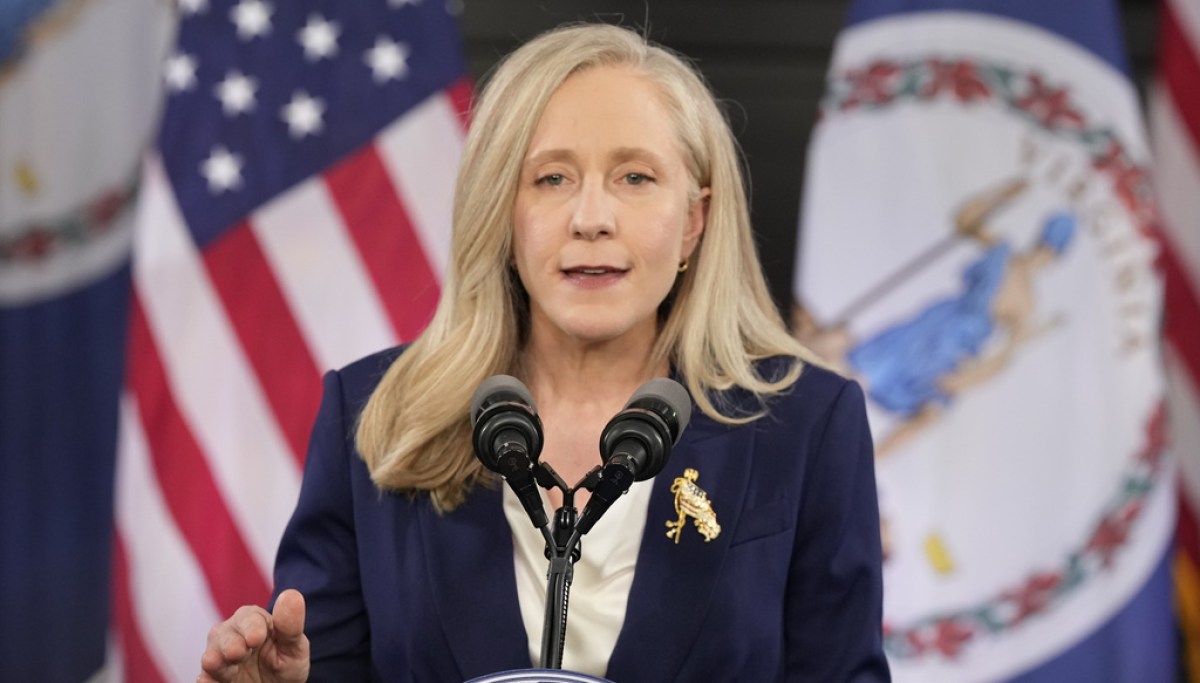
“I’m not going to leave money on the table when it could help our kids,” New York Gov. Kathy Hochul (D-NY) declared while reiterating that her state will participate in the new federal scholarship tax credit. Her confident commitment to expanding educational opportunities for Empire State children contrasts sharply with Virginia Gov. Abigail Spanberger’s (D-VA) waffling. It is time for Spanberger to prioritize Virginia’s students by confirming the state’s participation in the tax credit.Starting on Jan. 1, taxpayers who donate to an approved scholarship-granting organization can receive a dollar-for-dollar federal tax credit of up to $1,700 annually. Any federal taxpayer in any state can donate. But for students to receive scholarships funded by the new Education Freedom Tax Credit, the state in which the student lives must opt in by notifying the Treasury Department.Hochul’s announcement brings the total number of participating states up to 31. Former Virginia Gov. Glenn Youngkin ensured that Virginia was the first state to file an opt-in form. But Spanberger’s inaction is leaving Virginia’s students in limbo. Under the Treasury Department’s temporary rules implementing the tax credit, states must submit a list of participating SGOs by Feb. 15. Spanberger and her staff should stop dilly-dallying and start compiling the SGO list now. Instead of identifying SGOs that will benefit students, the governor is questioning whether Virginia students deserve EFTC-funded scholarships at all. “I think the current status of where we are remains in question,” Spanberger informed reporters earlier this month. There is no justification for her indecision. EFTC-funded scholarships can help families cover tuition and fees, tutoring and academic support services, technology, special education services and therapies, curriculum, books, and educational materials. The Treasury Department estimates that 96% of K-12 students nationwide fall within the income eligibility thresholds to participate. If virtually all students can benefit from an initiative with broad bipartisan support, why does the governor need to “continue to evaluate the program”?Only 31% of Virginia fourth-grade students are proficient in reading, and 40% are proficient in math, according to 2024 National Educational Assessment Program results. NAEP, also known as the Nation’s Report Card, found that 42% of Virginia’s fourth-graders are not capable of reading at the basic level. The state’s NAEP scores have been declining for years. Only 26% were below basic readers in 2017. To reverse this alarming trend, these struggling readers deserve access to tutoring and support services. The EFTC will provide those much-needed supports to Virginia’s students — only if Spanberger fully participates.Virginia’s fourth graders suffered the steepest drop in reading scores in the country during the pandemic. In 2017, only 43% of fourth graders could read proficiently. By 2022, this number dropped to 32%. Low state standards misled parents into thinking their students were on track.Our state has one of the widest “honesty gaps” in the country, meaning that state standards have languished far below proficiency levels established by NAEP. As a result, countless Virginia parents were told their children were proficient readers even though they actually were reading at a below-basic level.State leaders who should have been ashamed of our state’s race to the bottom instead voted to make it worse. In 2017, the Virginia Board of Education lowered school accreditation requirements. In 2019 and 2020, the state board further abandoned academic expectations by lowering the minimum passing scores necessary for the statewide annual assessments. Students could answer more questions incorrectly and still pass the state exams.BLUE STATE TAXPAYERS ARE FUNDING RED STATE SCHOLARSHIPS — AND THEIR GOVERNORS DON’T CAREYoungkin prioritized raising academic standards and transparency. He also recognized that opting into the Education Freedom Tax Credit was another logical step in improving educational outcomes for Virginia’s students. By opting in, 1.4 million Virginia students attending public, private, and home schools can receive scholarships at no cost to the state budget after the tax credit launches. Almost 3.3 million Virginia residents will be eligible to donate to SGOs in Virginia. According to an analysis released by the American Federation for Children, if just 10% of Virginia’s eligible donors contribute, $731 million could be generated for scholarships. If Spanberger refuses to embrace the EFTC and blocks Virginia students from receiving scholarships, however, Virginia donors can and will send those funds to SGOs in other participating states.Virginia parents were kept in the dark as the state and schools left our children behind. We were ignored when we pleaded for schools to reopen after COVID. Our concerns were dismissed by arrogant leaders like my school district’s superintendent, who proclaimed, “let’s get away from the concept of learning loss.” In stark contrast to that grim era, the Education Freedom Tax Credit has the potential to prioritize students, empower parents, and bring millions of dollars to expanding educational support and opportunities.Ginny Gentles is director of Education Freedom and Parental Rights at the Defense of Freedom Institute for Policy Students. She lives in Arlington, Virginia, with her two daughters.
Why Virginia needs the federal scholarship tax credit
Full Article
Original Source
Read the full article at Washingtonexaminer →KhanList aggregates and links to publicly available news content. We do not host full articles from third-party sources. Always verify important information with original sources.