
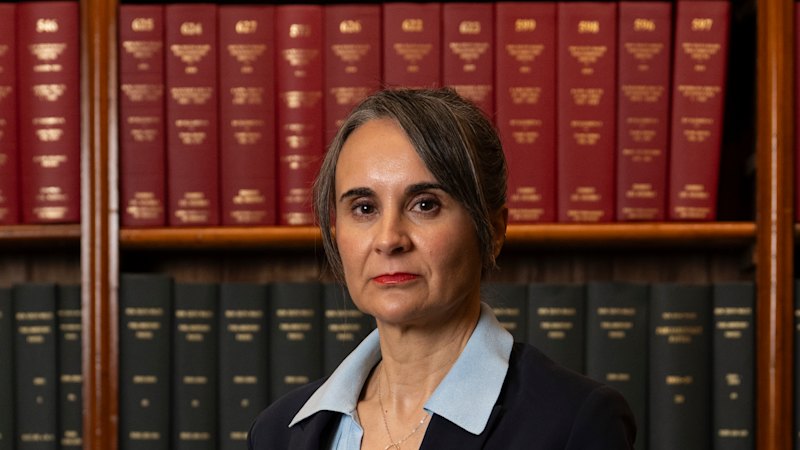
Christopher harrisSeptember 21, 2026 — 4:38pmThe state’s universities have “swung too far towards corporatisation” at the expense of education, research and serving communities, a NSW parliamentary inquiry has found.Universities across NSW have embarked on controversial cost-cutting in the face of financial pressure, with many axing jobs, restructuring courses and spending big on external consultants.Labor’s Dr Sarah Kaine said the report provided a road map for the government to restore public confidence in universities.Janie BarrettThe final upper house report into NSW university governance noted power over such decisions was often concentrated in a small group of managers and council members, with limited transparency over how decisions were reached.It made 23 recommendations to boost transparency, including that universities justify vice chancellor’s pay packets, and disclose bonuses, incentive arrangements and spending on consultants.“The governance structures for NSW universities are not fit for purpose, nor implemented in such a way as to enable public confidence,” it said.It noted how universities’ governing councils have become dominated by figures from the corporate world at the expense of academics with in-depth knowledge of the institutions.The report called for legislative change so elected academic staff, professional staff and students represent a minimum of 50 per cent of governing councils.Federal Education Minister Jason Clare earlier this year announced a suite of transparency measures including requirements to disclose the outcomes of governing body meetings and decisions, and consultancy spending.Selected key recommendationsRecommendation 2 That the NSW government, as part of its review of university enabling acts, consider amendments to the legislation to require university governing bodies to have regard to the wellbeing, health and safety of staff and students when exercising their functions and making significant strategic, organisational and operational decisions.Recommendation 3 That, in order to better protect the psychosocial safety of staff and address fears of reprisal, the NSW government, as part of its review of the enabling acts, consider how the legislation can provide checks and balances on the very significant power held by heads of school, deans and other senior leaders. Recommendation 7 That the NSW government consider establishing an independent external mechanism through which university staff can confidentially raise governance, integrity and maladministration concerns, with appropriate whistleblower protections. Recommendation 8 That the NSW government amend the enabling acts for all NSW universities to strengthen representative governance by increasing minimum requirements for 50 per cent elected academic staff, professional staff and student representation on university councils. Recommendation 11That the NSW government amend the enabling legislation for each NSW university to require the establishment of an independent university council secretariat at each university, accountable to and operating under the direction of the university’s governing body rather than university management. Recommendation 14 That, to improve transparency in university council decision-making, the NSW government require NSW universities to publish the minutes of university council meetings, including the rationale for major decisions affecting staff and students, subject to appropriate confidentiality requirements.Recommendation 15That the NSW government improve legislative provisions for transparency and accountability in university executive decision-making. Recommendation 16 That the NSW government: require universities to disclose in their annual reports in a standardised format the process and considerations by which remuneration for their vice chancellors and senior executives is determined, including key performance indicators, bonuses, incentive arrangements, allowances, loan arrangements, reimbursements and other material non-salary benefits.Recommendation 18That the NSW government prohibit NSW universities from providing staff or student data to private third-party organisations for sector-wide benchmarking, analytics or comparative performance products unless the explicit informed consent of affected staff and students has first been obtained, in line with the National Health and Medical Research Council’s Statement on Ethical Conduct in Human Research.Note: Recommendations have been edited for brevity.Academics told the inquiry that mass redundancies and restructures had created psychosocial risks. At the University of New England, staff said the previous vice chancellor’s restructure in 2022 had created institutional disruption and a governance crisis.When a staff member died by suicide, many colleagues linked it directly to the dysfunctional work environment, the report said.Another told the inquiry of the work environment: “It was like being in an abusive relationship. We couldn’t leave because we needed our jobs.”The report also called for an overhaul of NSW legislation governing universities to provide “checks and balances” on the very significant power held by heads of school, deans and other senior leaders.The chair of the inquiry, Labor upper house MP Sarah Kaine, said she believed the report was a road map for change. “If governments and universities fail to act, we risk further erosion of trust in institutions that are fundamental to our state’s future,” she said.Universities Australia chair Professor Carolyn Evans last month acknowledged there had been instances of bullying, underpayment and conflicts of interests but rejected claims that all universities were in the middle of what had been termed a governance “crisis”.“Most ordinary understandings of good governance [are] now beginning to be held against universities as a sign of poor governance,” she said.“And in particular, it is governance 101 to say that when revenue goes backwards, you have to do something to cut costs.”Regarding board representation, she said they were a spectrum of the community with a wide range of skills and ideas “so that universities didn’t become too insular”.More:UniversityFor subscribersCampus NSWNSW State ParliamentFrom our partners
Why vice chancellors may be forced to justify their pay packets
Full Article
Original Source
Read the full article at Smh →KhanList aggregates and links to publicly available news content. We do not host full articles from third-party sources. Always verify important information with original sources.