
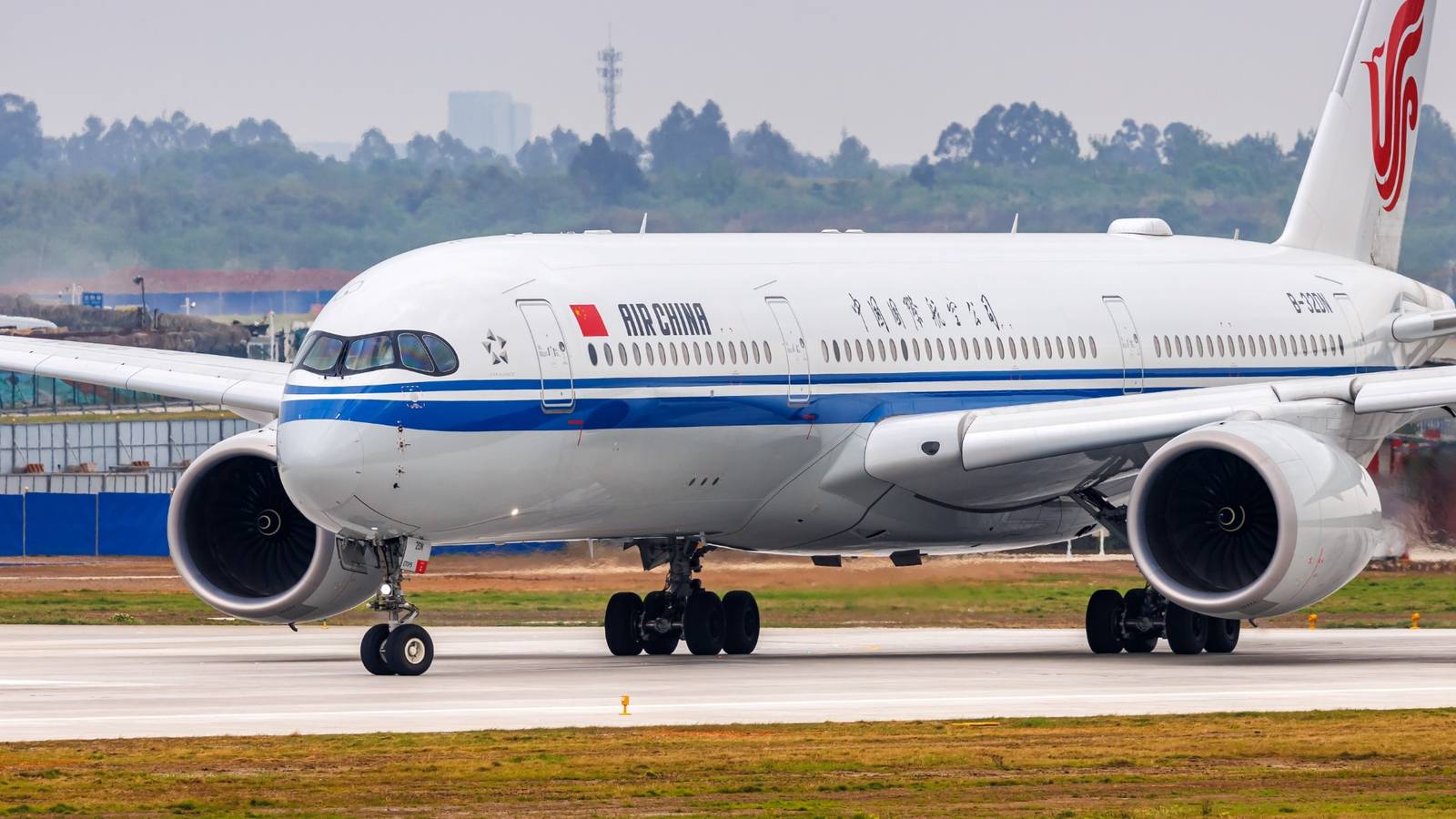
Published Sep 19, 2026, 2:57 AM EDT Journalist – Aaron is an aviation and travel journalist with 14 years of experience in the travel and tourism industry. His background spans airport operations, aviation infrastructure, and travel consulting, having worked with global organizations across New Zealand, Europe, and North America. Combining industry expertise with firsthand travel experience across more than 52 countries and five continents, Aaron covers airlines, airports, aviation policy, and the wider travel sector. He is based in Canterbury, New Zealand. His work has been published in Simple Flying and featured by MSN, SAM CHUI Aviation & Travel, EIN News, Pakistan Defence, and Climate Depot. A group of US airlines has opposed the additional flight requests by Air China due to the fear of creating a precedent for regular flights to the United States via Russian airspace. While before the COVID-19 Pandemic more than 300 weekly flights operated between the two countries, now each side is only permitted to fly around 50 weekly flights shared amongst carriers. The Beijing based airline had requested to operate two additional flights this week and next, in connection with the Chinese President Xi's state visit to both Washington DC and New York. These proposed Air China flights were to operate to both Washington Dulles International Airport (IAD) and New York JFK Airport (JFK). Additional Flights And Capacity For The President's State Visit To The US Credit: kamilpetran | Shutterstock The Chinese carrier had sought additional flights for this week and next; however, facing strong opposition from US agencies, this shelved plans for the Star Alliance partner to be able to operate. This comes as US airlines were afraid that this would set a precedent for additional flights through Russian airspace and future requests for more flights. US airlines have said that the only way that these flights could proceed was if they were classified as charter flights. Back in October 2025, the United States Department of Transportation had proposed a ban on Chinese airlines flying to and from the United States via Russian airspace, due to the reduced flight time and operational costs putting American carriers (who cannot fly through Russian airspace) at a disadvantage to their Chinese counterparts. The Russian airspace proposal faced fierce opposition from a number of other US agencies, and the restriction was axed ahead of ongoing trade talks with China. Chinese Airlines Can Still Fly Over Russia, While American Carriers Have To Fly Elsewhere Credit: Allora Empire Art | Shutterstock As reported by Reuters, all major US airlines, American, Delta, and United, have criticized the decision to allow Chinese airlines to continue flying through Russian airspace, and as a result, they see US carriers forced to fly for longer, burn extra fuel, and otherwise shoulder higher operational costs. The United States, among several other nations, has seen its airlines banned from flying over Russian airspace, likely in retaliation for Washington banning Russian flights over the United States following the invasion of Ukraine. Since the spat, this has seen Chinese airlines use Russian airspace to their advantage and increase market share when compared to non-Chinese carriers on these international routes. Pre-pandemic, higher capacity frequently exceeded demand, which saw lower airfare; however, compared to today, lower capacity has kept the price of airfares relatively high. The strict 50-flight cap is imposed by the US DOT, backed by the aggressive pushback seen from major US airlines. This has seen Air China's request for additional flight frequencies to Washington and New York dismissed, despite the high-level diplomatic meetings for the President. The China and US bilateral rules strictly limit each side to 50 round trips per week, with Air China already maintaining five weekly flights to both the destinations in question, New York and Washington. American Carriers Can't Compete On East Coast Routes Credit: James Kirkikis | Shutterstock The intense US airline lobbying means that US carriers have been unable to competitively match flights to China from the East Coast, and airline trade groups including Airlines for America have actively lobbied to deny Air China's request. They have argued that should Air China add extra flights to its regular schedule, despite President Xi's visit, it would provide a backdoor mechanism to bypass the 50-flight limit. American carriers have insisted that, should DOT permit the extra flights, even at a diplomatic level, they must be classified as charter flights, instead of additions to the permanent commercial flight schedule. Below are current flights from US East Coast cities to Mainland China: Airline US Gateway Air China Beijing (PEK) to New York (JFK) Beijing (PEK) to Washington (IAD) China Eastern Airlines Shanghai (PVG) to New York (JFK) China Southern Airlines Guangzhou (CAN) to New York (JFK) XiamenAir Fuzhou (FOC) to New York (JFK) Chinese President Xi Jinping is set to meet with Donald Trump at the White House on September 24, as part of a two-day state visit and the second summit between the two leaders this year. Trump visited Beijing in May.
Why US Airlines Are Fighting Air China's Bid For More US Flights
Full Article
Original Source
Read the full article at Simpleflying →KhanList aggregates and links to publicly available news content. We do not host full articles from third-party sources. Always verify important information with original sources.