
At Chicago O'Hare International Airport (ORD), a bitter turf war between United Airlines and American Airlines has escalated from lobbying into courtroom battles, aggressive schedule expansions, and federal intervention. Clashes over gate redistributions, including United's late-2025 gains and American's subsequent push to reclaim ground, have turned the airport's concourses into a tense contest between two legacy rivals. At the same time, soaring flight schedules have collided with airfield construction, prompting federal caps to head off gridlock. What makes this showdown more than a routine squabble over airport real estate is how O'Hare's departure-based gate formula, local traveler loyalty, and delayed terminal expansion reshape both carriers' economics. From maneuvering around Spirit Airlines' Concourse G gates to confronting Federal Aviation Administration (FAA) daily flight limits and broader credit-card loyalty stakes, the fight tests just how far two airlines will go to defend or expand their foothold in America's heartland. The Operational Score Unlike New York-JFK or LaGuardia airport, where FAA slot rules directly govern takeoffs and landings, gate access at Chicago O'Hare is governed by agreements between airlines and the City of Chicago under its airport use and lease framework. Across O'Hare's four terminals and nearly 200 total gates, airlines lease preferential-use gates alongside common-use facilities that support flights across the airfield. As coverage from Airways Magazine and Travel Weekly explains, holding more preferential gates directly supports larger flight banks, smoother turnarounds, and greater scheduling flexibility at a busy connecting hub. Under O'Hare's use-it-or-lose-it allocation mechanism, gate assignments are tied closely to departure share and prior-year flight activity and are not treated as permanent, untouchable real estate. Airlines submit schedules and usage data, allowing the city's Department of Aviation to review activity and redistribute gates annually when utilization shifts. That formula creates a clear mathematical link between flying more flights and expanding or defending concourse space. Departure volume carries so much weight in periodic gate redetermination, so the rulebook naturally rewards aggressive scheduling and penalizes carriers that let gates sit idle or pull back capacity. Even small single-digit shifts in gate counts across concourses such as Terminal 3 or Concourse G can alter how tightly an airline packs its banks. In practice, that structure makes every year an overall score marker where schedule discipline and flight volume directly shape future gate real estate. Holding On To Its Stronghold Supported by its downtown Chicago headquarters and a leading gate footprint around 95 to 99 gates across O'Hare, United Airlines has treated the hub fight as a line-in-the-sand defense of its Midwestern stronghold, as noted by Reuters. Following late-2025 gate reallocation gains and CEO Scott Kirby's pledge not to lose a single gate at United's expense, the carrier has leaned hard into schedule growth to protect its departure share. Coverage from The Points Guy and CBS Chicago highlights how United rolled out a major 2026 expansion, adding new routes and increasing frequencies across dozens of existing markets, to lock in operational scale. That schedule offensive has been paired with an aggressive push to match or fend off rival moves on the ground, including United stepping in to acquire Spirit Airlines' preferential-use gates G12 and G14 for $30.2 million during Spirit's restructuring. As Travel Weekly and Half as Interesting note, snapping up those Concourse G gates gave United extra room to support added flying while keeping rivals from capturing every available opening. Even when federal caps later trimmed peak-hour schedules from initial plans, United's sheer departure base and hub connectivity kept it positioned as O'Hare's dominant carrier. For United, defending O'Hare also means holding off challengers on high-value domestic and international connecting flows until long-term terminal capacity comes online. The hope is that through pairing route expansion with targeted gate acquisitions and vocal executive messaging, United can accept and manage near-term scheduling friction rather than cede ground in its home city. American's Counterattack Facing a gate redetermination that shifted space toward United ahead of the October 2025 handover, American Airlines took the fight to court in May 2025, accusing the city of mishandling the redistribution process under the airport's use-and-lease framework. As documented in federal and state court filings from Justia, American challenged the reallocation only to see its efforts to halt the transfer fall short in federal court and later in Cook County Chancery Court. Even with its Terminal 3 footprint squeezed, standing at 66 gates per Chicago Department of Aviation facility data as of April 1, 2026, following reallocation adjustments that varied across reporting snapshots, American pressed ahead with schedule additions rather than conceding relevance in Chicago. To claw back concourse space outside the city's annual formula, American, like United, moved quickly in Spirit Airlines' bankruptcy proceedings to acquire two preferential-use gates, G8 and G10, on Concourse G for $30 million. Based on information from Culture Guru, it is clear how strategic that purchase was for American: gates G8 and G10 sit right next to an existing Admirals Club lounge, giving ground crews and connecting passengers closer proximity and easier operations. Adding those two gates helped offset part of American's redetermination loss while reinforcing its push to build up departures across domestic and regional markets. For American CEO Robert Isom, holding firm at O'Hare is a deliberate statement that American will not be pushed aside or treated as a secondary afterthought in Chicago. As Chicago Magazine highlights, Isom has framed O'Hare as a vital hub for local and connecting travelers while rolling out added flights to defend share. That combination of courtroom pushback, opportunistic gate buying, and schedule investment shows American fighting to keep its Midwestern hub intact despite steep headwinds. In The Midst Of Major Construction Aggressive schedule padding collided directly with airfield construction constraints in spring 2026, prompting the Federal Aviation Administration to issue a scheduling limits order on April 20, 2026, capping daily operations at 2,708 flights between 6:00 AM and 11:59 PM Central Time, as per Forbes. After published peak schedules pushed past 3,038 to 3,080 daily operations, well beyond what taxiway rehabilitation, ramp work, and staffing could reliably handle, the agency intervened under Section 41722 to curb congestion and later extended the order through October 30, 2027. Enforcing half-hour limits ranging from 30 to 84 operations pushed carriers to trim excess frequencies, delay seasonal route starts, or upgauge aircraft rather than fly schedules that could not clear the ground cleanly. That federal ceiling exposes how tightly the gate fight is bound to O'Hare's buildout, where the ORDNext expansion has seen its price tag climb from an initial $8.5 billion estimate to $12 billion while major milestones stretch toward 2034 and 2035. Some pieces have moved ahead, including Terminal 5's 10-gate addition, Concourse L's three-gate expansion, and a $1.455 billion contract for the 19-gate Concourse D, but the wider Global Terminal is not slated to open until 2034, as reported by The Points Guy. With new gates arriving slowly and taxiway work narrowing surface margins, airlines cannot just build their way out of the issue in the near term. Instead, every incremental concourse opening or construction adjustment carries heightened stakes because overall capacity is constrained by active building zones and long taxi times. Multi-year phased delivery means carriers need to put schedule ambition against real-world ramp and runway throughput. In a constrained environment, regulatory flight caps and phased construction make every available gate a scarce asset. The Ultimate Goal Co-branded credit cards and frequent-flyer loyalty ecosystems that generate billions of dollars in high-margin partner revenue for major US carriers have a lot to do with this story. As Half as Interesting explains, airlines rely on card issuers and loyalty partnerships for lucrative non-ticket cash flows that help underpin overall profitability. In a major metropolitan market like Chicago, home to deep corporate travel accounts and high-spending cardholders, winning local flyer preference means capturing everyday card spend and repeat mileage redemptions, not just filling seats. That loyalty dynamic helps explain why Chicago carries outsized strategic weight compared with markets where American previously lost ground. American ceded shares in New York and Los Angeles and began to lean more on hubs in Philadelphia and Phoenix, leaving Chicago as a critical battleground if it wants to stay top-of-wallet among big-spending coastal and Midwestern flyers. Conversely, Travel Weekly highlights how hub scale and schedule breadth reinforce card acquisition, because travelers who cannot conveniently fly or connect on an airline tend to shift both their trips and their credit card spend elsewhere. At the same time, executive debates over loyalty economics show just how fiercely both carriers guard their Chicago customer base. Even as United executives have pushed back against oversimplified narratives that airline profits come effortlessly from credit cards alone, pointing to the real operational cost of carrying award travelers, both United and American treat Chicago loyalty as too valuable to surrender lightly. In this light, concourse gates are the door to a much bigger prize: long-term brand security among Chicago's flyers. Leaving The Past Behind What began as a dispute over departure-share gate formulas has become a test of endurance where courtroom rulings, federal scheduling caps, and loyalty economics converge at Chicago O'Hare. United and American are each fighting to protect a hub that anchors regional connectivity and high-value cardholder engagement, even as aggressive schedule padding runs headlong into physical runway and construction limits. Neither carrier can afford to treat O'Hare as expendable territory when hub scale directly shapes both flight reliability and long-term customer retention. The FAA scheduling limits extension runs through October 30, 2027; subsequent appellate and trial proceedings following the Illinois Appellate Court's November 19, order in American Airlines v. City of Chicago (Illinois Courts), and phased ORDNext milestones such as Concourse D, Concourse E, and the Global Terminal stretching into the 2030s are landmark turning points that are upcoming. How both airlines balance disciplined schedule growth against those regulatory and construction guardrails will decide once and for all who is at the helm of O'Hare's next era.
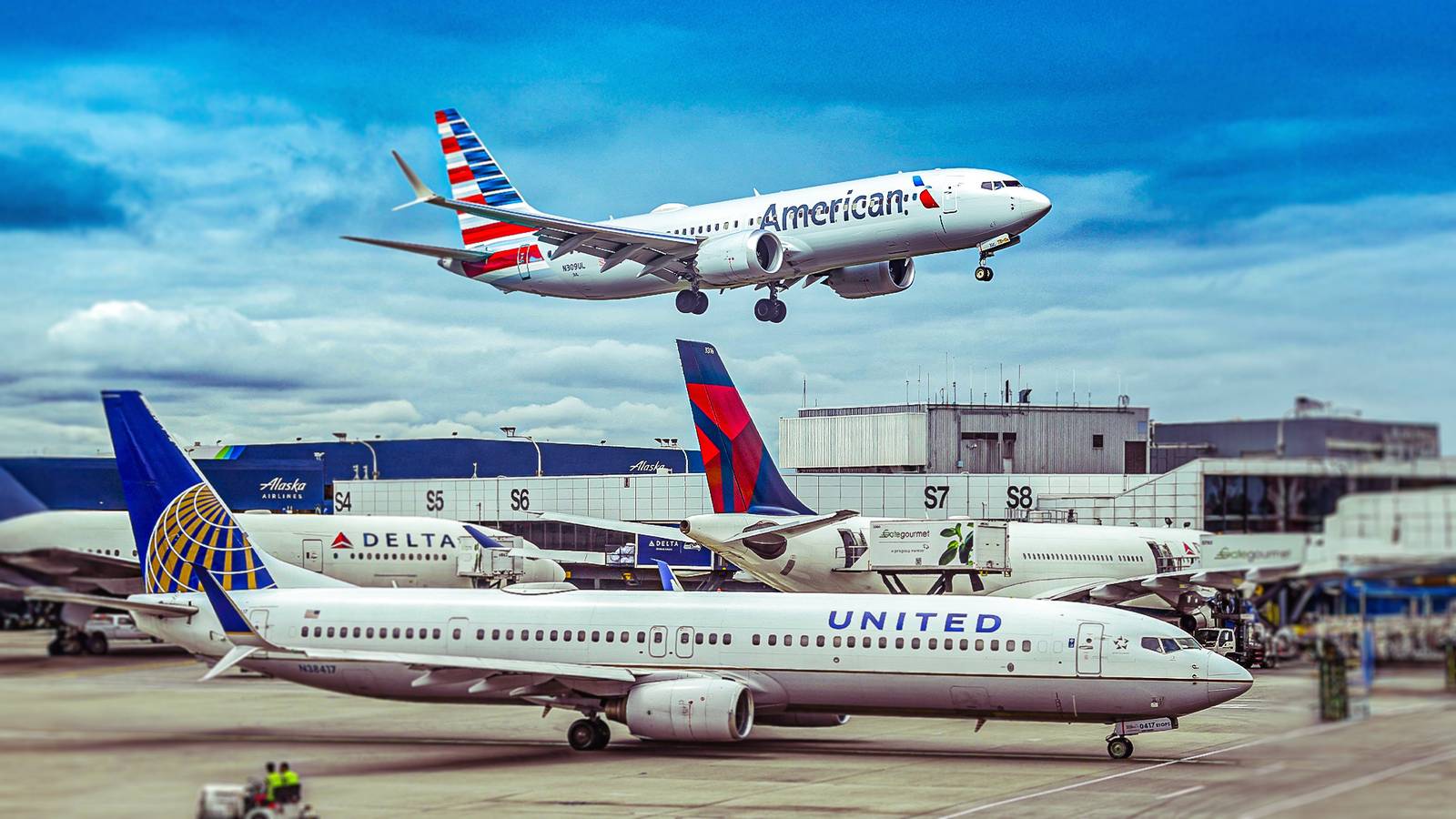
Why United & American Airlines Are Fighting Over The Future Of Chicago O’Hare
Full Article
Original Source
Read the full article at Simpleflying →KhanList aggregates and links to publicly available news content. We do not host full articles from third-party sources. Always verify important information with original sources.