
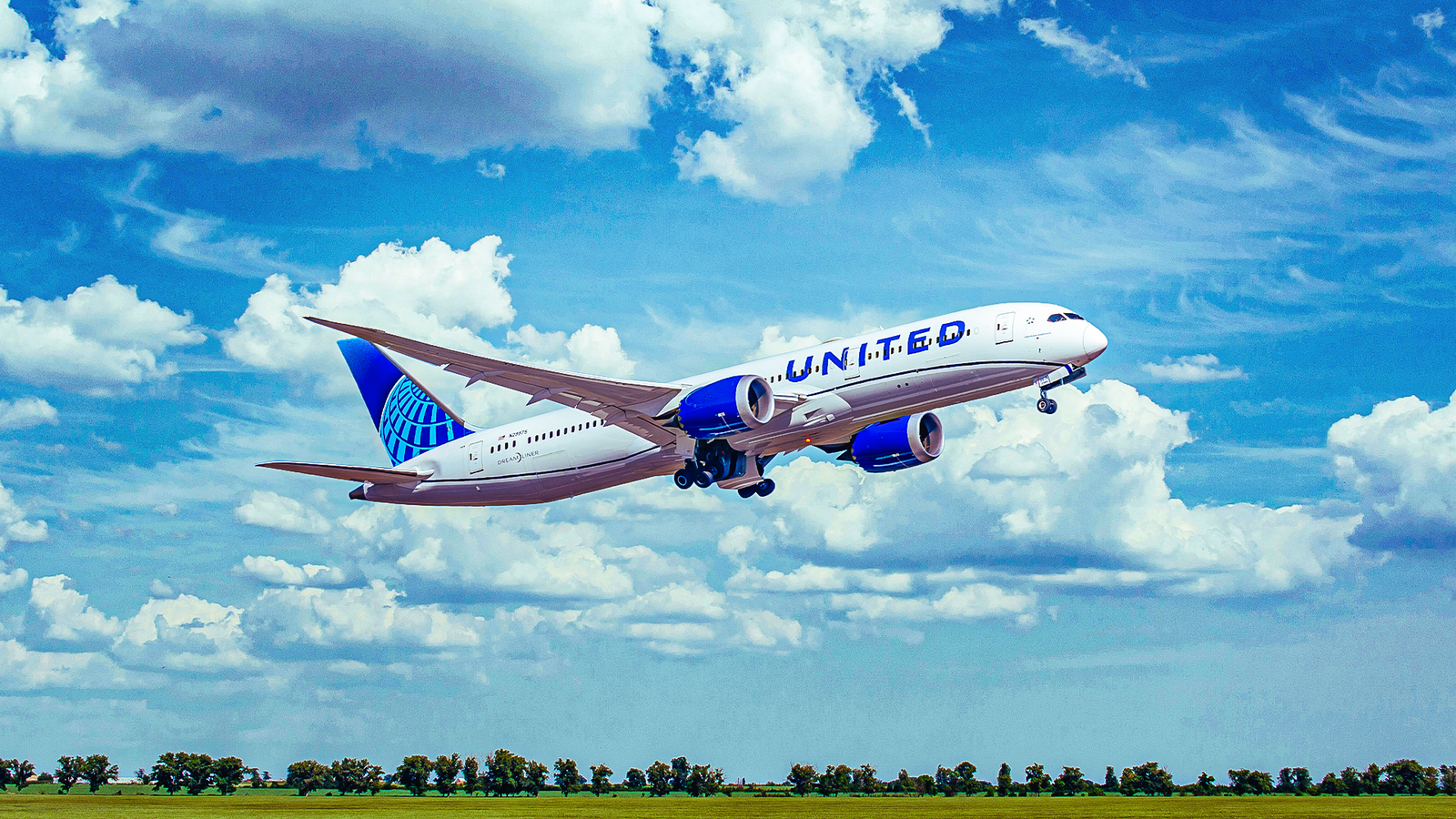
Published Nov 15, 2026, 6:01 AM EST Airline and Airport Management Graduate, Student Commercial Pilot and Commercial Aviation Writer. Based in London & Nagoya The Boeing 787-9 Dreamliner is engineered and purpose-built to conquer vast oceanic expanses, connecting distant continents on ultra-long-range intercontinental missions. In actuality, travelers booking domestic flights across the United States frequently encounter this twin-aisle flagship operating high-density trunk routes between major domestic hubs. Far from being an anomaly, widebody deployment on domestic sectors is a sophisticated operational strategy network carriers use to maximize asset utilization and manage peak passenger flows. Why does United Airlines schedule its premier widebodies on domestic legs? This article explores the core commercial, logistical, and operational drivers behind domestic widebody flying, looking closely at how aircraft positioning, premium cabin introductions, cargo yields, and schedule flexibility converge to put the Dreamliner on domestic routes. Why Fly Domestic? Airline networks operate on tightly synchronized banking structures where widebody aircraft cannot afford to sit idle for hours between international arrivals and departures. When a 787-9 touches down from an overnight intercontinental flight at a hub like San Francisco International Airport (SFO), its scheduled transoceanic departure might not occur until late evening. Leaving a multi-million-dollar asset parked on the tarmac is a real economic waste, making high-volume domestic trunk routes ideal operational bridges to keep the airframe generating revenue. Network planners schedule the 787-9 onto high-demand domestic legs connecting key hubs, such as flights linking San Francisco to Houston George Bush Intercontinental Airport (IAH) or Newark Liberty International Airport (EWR). These high-volume corridors experience heavy passenger flows throughout the day, providing an ideal passenger volume to fill a widebody cabin. The idea is to keep the aircraft active on a domestic rotation, ensuring continuous asset utilization and minimal disruption to its overarching international schedule. This hub-to-hub positioning also ensures that aircraft arrive precisely where they are needed for outbound international banks without requiring empty ferry flights. Operating a revenue-generating flight between domestic hubs while repositioning the airframe achieves double operational efficiency, covering fuel and crew costs while satisfying heavy regional passenger demand. Consequently, a widebody on a domestic sector is often the visible outcome of a complex, highly synchronized global aircraft-routing puzzle. Chance To Prove Its Worth Beyond routine scheduling mechanics, network airlines often deploy newly delivered widebodies on domestic sectors as a controlled proving ground for upgraded interior products. When United Airlines introduced its latest batch of 787-9 aircraft featuring premium-heavy Elevated cabins and advanced Polaris business class configurations, the carrier did not immediately thrust them into intercontinental service. Instead, management scheduled initial revenue flights across domestic trunk routes as a live integration phase, helping to show that the hardware performed flawlessly under real-world operating conditions before committing the jets to remote international stations. The domestic deployment plan is an invaluable training environment for both flight deck and cabin crew members experiencing newly certified cabin layouts for the first time. Operating a widebody packed with hundreds of passengers means flight attendants must master unfamiliar galley layouts, complex emergency equipment stowage, and multi-zone inflight entertainment systems. Running these systems on shorter domestic hops lets crews build operational familiarity and troubleshoot minor cabin discrepancies near major domestic maintenance bases, avoiding costly delays thousands of miles from home hubs. For instance, United used select domestic rotations, such as high-profile flights connecting San Francisco (SFO) to Houston (IAH), as direct introductory lanes ahead of pushing the new 787-9s across the Atlantic to London Heathrow Airport (LHR) or deep into Asia-Pacific markets, as noted by AeroExplorer. By vetting the passenger experience, Wi-Fi connectivity, and seat performance on domestic sectors, the airline ensures that when the aircraft finally enters long-haul rotation, the product is fully polished. Scheduling widebody aircraft on domestic trunk routes provides powerful commercial advantages in premium passenger revenue and belly-cargo capacity. Major domestic connectors, such as transcontinental paths or high-frequency hub links, regularly attract heavy concentrations of corporate travelers, high-net-worth flyers, and priority freight forwarders. Deploying a widebody like the 787-9 on these high-density domestic corridors allows carriers to capture exceptional ticket yields from business class and premium economy seats that consistently outperform standard narrowbody capacity. Premium revenue generation is especially critical as airlines see sustained corporate demand for lie-flat comfort on longer domestic hops, as noted by Getaway. A single 787-9 equipped with high-density premium configurations can house dozens of business-class suites and make a routine domestic flight become a high-margin revenue generator. Passengers booking connecting itineraries appreciate the continuity of flying in a flagship long-haul suite right from their initial domestic departure, creating a seamless premium travel experience that builds brand loyalty early on. At the same time, widebody deployment provides substantial under-floor cargo capacity that narrowbody aircraft lack. High-volume domestic sectors frequently move valuable commercial freight, express parcels, and time-sensitive cargo that feeds international widebody departures waiting at the hub. With air cargo markets demonstrating robust yields, using the massive belly-hold space of a 787-9 on domestic legs adds an extra layer of financial success, which can be vital to a route's profitability. Combatting Slot Scarcity When passenger demand surges past what standard narrowbody frequencies can accommodate, major network hubs face rigid operational delays and gate limitations. Adding extra daily narrowbody departures to handle rising volume is often impossible at congested airports constrained by hourly arrival caps or limited gate availability. Instead of increasing flight frequency, network planners turn to aircraft gauge optimization, utilizing widebody capacity to scale passenger volume within existing slot allocations. Upgrading a high-density domestic rotation from a single-aisle jet to a 787-9 Dreamliner increases seat capacity by over 100 passengers per departure without consuming an additional scarce takeoff or landing slot. At mega-hubs where slot controls and ramp congestion restrict extra movements, upgauging is the most efficient mathematical solution to handle heavy passenger flows. This is because it maximizes the passenger throughput of a single movement, avoiding constraints that limit frequency expansion. Of course, operating smaller narrowbody aircraft multiple times a day provides a varied schedule for business travelers, but it quickly overwhelms crowded terminal concourses and ramp space during peak hours. Deploying a widebody on these heavy domestic corridors lets carriers consolidate passenger loads into fewer departures while optimizing ground infrastructure use. Best Of Both Worlds Domestic widebody deployments are inherently fluid and are not so much considered permanent fixtures. Instead, these deployments shift dynamically in response to seasonal international travel demand. During shoulder seasons or troughs in transatlantic and transpacific travel, long-haul aircraft availability fluctuates, creating strategic windows for network planners to route widebodies onto domestic trunk lines. This flexibility allows carriers to maximize asset productivity year-round, importantly ensuring that expensive multi-million-dollar airframes continue generating revenue when international route demand contracts. Sometimes, equipment swaps and tactical network adjustments place the 787-9 onto domestic schedules to solve short-term operational hurdles. If unexpected passenger surges or maintenance schedule revisions occur at a primary hub, airlines can rapidly upgauge domestic rotations without disrupting long-term fleet allocations. Ultimately, the ability to weave long-range widebodies into domestic loops highlights the sophisticated adaptability needed to manage modern airline networks. When global travel patterns shift or maintenance routing needs to be near major engineering bases, domestic widebody operations provide the operational elasticity needed to keep fleets balanced. By treating these aircraft as versatile assets rather than rigid intercontinental specialists, carriers like United can achieve both strong financial performance and network resilience. Widebodies Are Not Just For Long Haul Flights The presence of a long-haul flagship like the 787-9 on domestic routes highlights the complex operational and commercial calculus governing modern network airlines. Far from an accidental routing choice, deploying twin-aisle widebodies across high-density domestic corridors lets carriers optimize asset rotation, test advanced premium cabin hardware, capture lucrative business yields, and relieve slot congestion that limits so many airlines worldwide. Turning highly valued intercontinental aircraft into flexible domestic workhorses during turnaround windows means that airlines like United can extract maximum value from every airframe in the fleet. United Airlines is just one of many carriers that are refining their domestic hub connectivity and introducing next-generation cabin configurations. What this means is that flexible widebody utilization will still be an indispensable strategic lever well into the future. Whether balancing seasonal international demand shifts or scaling passenger capacity without consuming scarce airport slots, domestic widebody operations are a clear example of how aircraft versatility is as vital as raw range. As aviation networks evolve, mastering this balance between long-haul capability and domestic synergy can offer real competitive advantages for airlines.
Why United Airlines Flies Its Boeing 787-9 Dreamliners On Domestic Routes
Full Article
Original Source
Read the full article at Simpleflying →KhanList aggregates and links to publicly available news content. We do not host full articles from third-party sources. Always verify important information with original sources.