
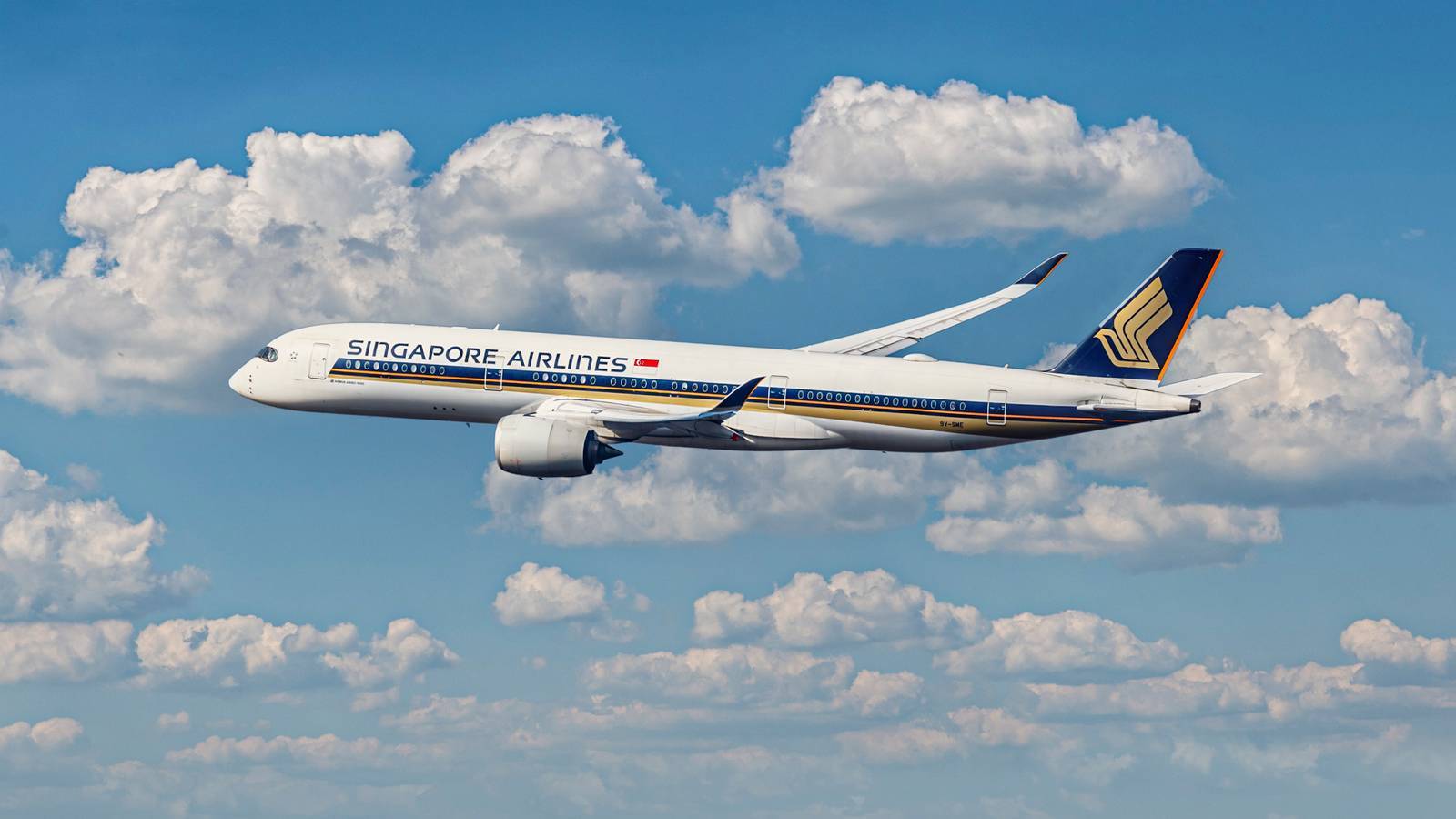
Published Nov 23, 2026, 6:01 PM EST Daniel comes to Simple Flying with a business focused approach to the aviation world. Daniel enjoys analyzing strategy and how companies move against each other to gain a step ahead in the skies. Besides strategy, Daniel also has a passion for aircraft design and the history of aviation. Based in New York Services like Qatar Airways' flight from Doha to Auckland and Singapore Airlines' route from Singapore to New York are among the most challenging flights in the world. They push modern aircraft to their limits, testing their range, performance, and fuel burn like no other. There's been a noticeable increase in ultra-long-haul flights in recent years, driven by the arrival of new aircraft like the Airbus A350 and Boeing 787 Dreamliner, which are more capable and efficient than earlier widebodies. However, while these flights push planes to their technical limits, they aren't particularly physically demanding on the aircraft. Longer flights are actually much less stressful on the airframe and the engines than operating multiple shorter services in a given day with few breaks in between. Naturally, multiple factors go into how stressed an aircraft is during a flight, and time between flights also matters. How Aircraft Life Is Determined Credit: Wenjie Zheng I Shutterstock The lifespan of large transport aircraft is really determined by two measurements: cycles and hours. The hours metric is as the word implies, while cycles measure the number of times an aircraft is pressurized and depressurized. This roughly corresponds to the number of flights the aircraft takes, although airliners do occasionally operate flights without fully pressurizing the cabin (these are almost always ferry flights flown when the aircraft has a pressurization issue). Widebody aircraft operating long-haul and ultra-long-haul flights tend to rack up hours very quickly, while short-haul airliners rack up cycles quickly. However, while hours are one measure of an airframe's lifespan, the number of cycles/flights operated is a more important metric for determining how stressed the aircraft is overall. Operating multiple flights means the landing gear and brakes are used for multiple landings, while the fuel and hydraulic systems also wear with each flight. In addition, each flight involves the engines being pushed to takeoff power and, typically, the reverse thrusters being activated upon landing (this doesn't occur with every landing, but it occurs onalmost every landing). This puts strain on the engines, whereas an aircraft operating a long-haul or ultra-long-haul flight only performs one takeoff and one landing. The number of hours an aircraft flies certainly stresses the airframe, but its cycles and the number of flights it takes physically stress the plane even more. An Example Of How The Number Of Flights Stresses Planes Credit: Wangkun Jia I Shutterstock Hawaiian Airlines currently operates 19 717-200s. These planes are used exclusively to operate between the Hawaiian islands, which means that they routinely operate eight, nine, 10, or even 11 flights per day. Most of these flights last under 40 minutes, so they're not racking up hours as quickly as a typical widebody. However, despite the short length of these routes, the Hawaiian interisland operations are considered some of the most demanding in the world. The aircraft's engines are routinely pushed to takeoff power, then reverse thrust is used on the runway, and then this process is repeated multiple times per day. The engines are constantly being used and rarely have time to cool down. The landing gear and brakes are used frequently, and short turnaround times mean the plane rarely rests. What's more, the environment exposes the aircraft to salt particles in the air, raising corrosion concerns and increasing stress on the airframe. Aircraft Variants Engines Boeing 717 717-200 2x Rolls-Royce BR715 Airbus A220 A220-100, A220-300 2x Pratt & Whitney PW1500G Airbus A320 A318, A319, A320, A321 2x CFM56-5 or IAE V2500 Airbus A320neo A319neo, A320neo, A321neo 2x CFM LEAP-1A or Pratt & Whitney PW1100G Boeing 737NG 737-600, 737-700, 737-800, 737-900/900ER 2x CFM56-7 Boeing 737 MAX 737 MAX 7, 737 MAX 8, 737 MAX 9, 737 MAX 10 2x CFM LEAP-1B Embraer E2 E190-E2, E195-E2 2x Pratt & Whitney PW1900G One of Hawaiian's biggest challenges was determining how these aging planes would be replaced. The engines on newer types like the A321neo and 737 MAX would not take kindly to the constant stress, while their fuel efficiency would provide little benefit. Ultimately, Alaska Air Group (which now owns the Hawaiian brand) opted to use older 737-800s from Alaska's fleet to replace the 717s, presumably scheduling extra downtime due to the aircraft's size and to allow the planes to rest more. The Impact Of Pressurization Credit: Habanero Pixel I Shutterstock Hour and cycle limits are mainly used for pressurized aircraft because of the stresses pressurization introduces on the airframe. While other components of the aircraft also get stressed, pressurization is one of the largest stress factors. Each time the aircraft is pressurized, the fuselage expands slightly as the high pressure air inside the cabin pushes the fuselage against the low-pressure air outside. Over time, this can fatigue the fuselage, potentially resulting in microscopic cracks. Regularly scheduled maintenance inspections uncover any potential fatigue cracks before they become a safety issue, but the pressurization cycle nonetheless puts significant stress on the fuselage. The pressurization cycle and these stress forces were a major factor in two mid-flight breakups of the de Havilland Comet in the 1950s, the world's first jet airliner. While it was not the first pressurized aircraft, no other airliner flew so high, and the intense forces from pressurization cycles fatigued the fuselage far faster than anticipated. Metallic fuselages are particularly susceptible to the stress forces caused by pressurization, while newer carbon-composite designs are much stronger. This has allowed manufacturers to lower cabin altitudes by using higher-pressure air, which would ordinarily require a much heavier metal fuselage due to the added strengthening needed. Meanwhile, some business jets have even lower cabin altitudes while flying higher than airliners, which is justifiable as weight and fuel burn are less of a concern in private aviation. Aircraft Hour & Cycle Limits Credit: odecam I Shutterstock Aircraft are designed to serve for upwards of 30 or even 35 years, so aircraft engineers design them with a specific service life in mind that covers typical usage across multiple decades. Manufacturers perform fatigue analysis to establish safe limits and inspection intervals for the aircraft, while working with regulators to determine the aircraft's lifespan. This is designed around the plane's intended mission, with widebodies and narrowbodies having vastly different hours-to-cycles ratios. In addition to the aircraft's overall lifespan, various components may have their own maintenance intervals, with engines in particular largely on their own schedules. Overall, aircraft designers set goals for the expected service life of the aircraft and its components, and then work diligently to achieve them. In addition, the original limits set for an aircraft are often increased by the manufacturer later in the type's service life, usually via an upgrade that can be retrofitted onto pre-existing examples. The A320 was originally designed with a service limit of 60,000 flight hours or 48,000 cycles, whichever occurs first. Later on, Airbus was able to increase these limits to 120,000 hours or 60,000 cycles, whichever occurs first. The 767, meanwhile, is designed with a limit of 50,000 cycles, fewer than the A320, but more hours. In addition, some aircraft types are converted to freighters later in their lives, and these projects often come with post-conversion limits as well. How Aircraft Age Out Of Service Credit: Wileydoc I Shutterstock An aircraft's age is often quoted in terms of years, but this doesn't have much of an impact on its actual remaining lifespan. While age can determine factors such as reliability and which parts need to be used, planes can easily operate for upwards of 40 years if they don't exceed their hour and cycle limits. Instead, however, planes are largely retired for economic reasons, as maintaining an old aircraft that has operated for decades is possible but rarely cheap. As aircraft become older, they become less reliable, and maintenance costs tend to rise. In addition, airliners require multiple types of maintenance overhauls, including what are often dubbed 'D checks', where basically the entire aircraft is taken apart, which come at a huge cost. Older aircraft also burn more fuel than newer ones, which makes it much more expensive to operate aging planes. Oftentimes, airlines will retire their oldest planes right before their next major overhaul, and then they get sent for scrapping. Because aircraft are retired for economic reasons, it's actually rare to see them near their service limitations. What's more, aging planes tend to be used less often towards the end of their lives due to their high operating costs, which further slows the pace at which the aircraft approaches its service limits. As such, some aircraft remain in service for upwards of 40 years with small cargo operators and in nations such as Iran, as well as older 737s and A320s that are nearly 40 years old, since they remain within their hour and cycle limits.
Why Ultra-Long-Haul Flights Are Easier On An Aircraft Than Short Hops
Full Article
Original Source
Read the full article at Simpleflying →KhanList aggregates and links to publicly available news content. We do not host full articles from third-party sources. Always verify important information with original sources.