
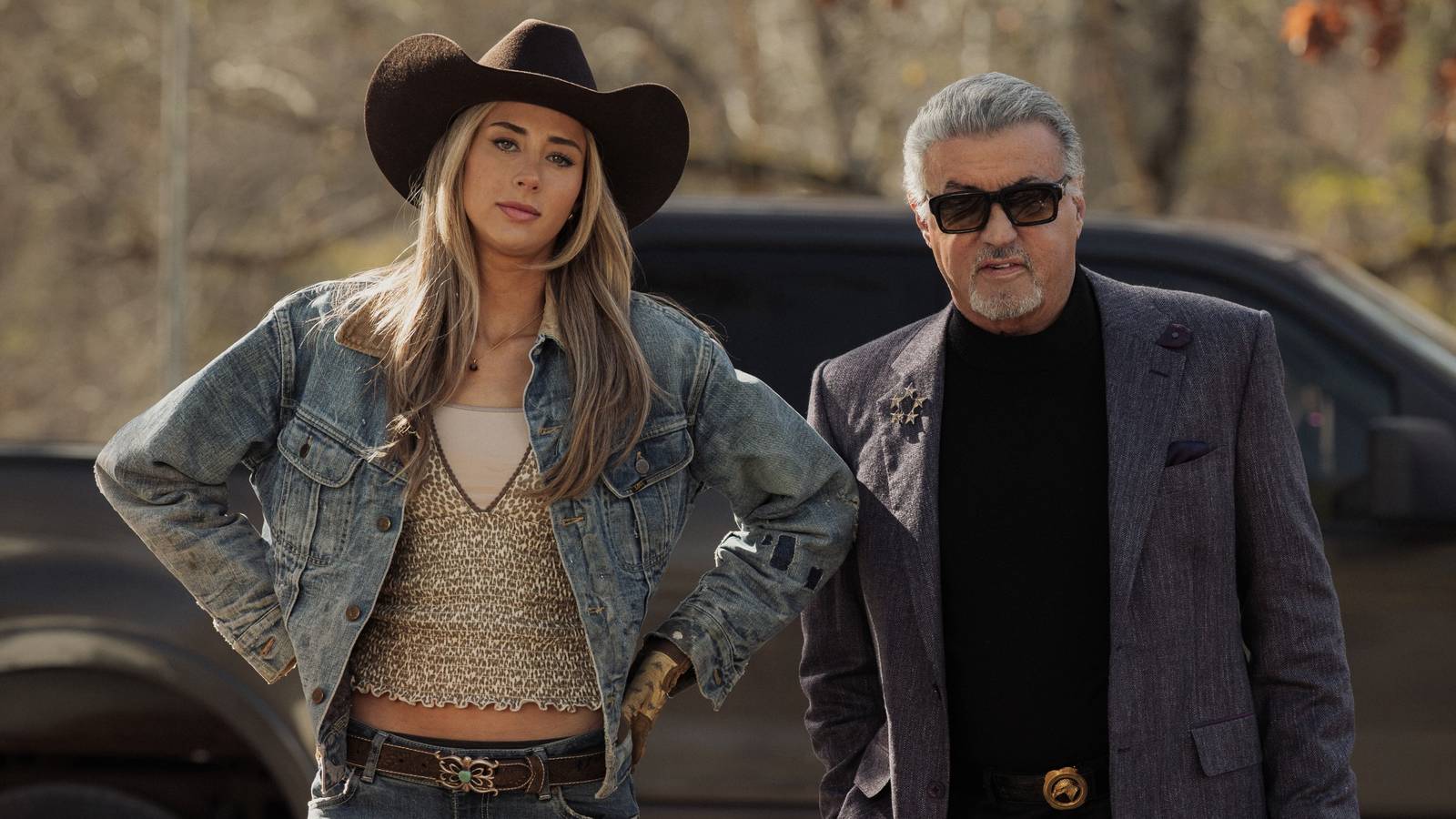
Published Nov 26, 2026, 1:14 PM EST Cathal Gunning has been writing about movies, television, culture, and politics online and in print since 2017. He worked as a Senior Editor in Adbusters Media Foundation from 2018-2019 and wrote for WhatCulture in early 2020. He has been a Senior Features Writer for ScreenRant since 2020. Even though the critical reception of Tulsa King season 4 has been relatively positive, the show’s audience reception on Rotten Tomatoes is a lot more mixed, and there’s plenty of justification among the fan base for the disparity. The low audience rating of South Park season 29 is a testament to the flaws of the site’s rating system. Shows that upset certain viewers can end up with drastically worse audience ratings than critical ratings, regardless of their relative quality. That said, this doesn’t mean that Rotten Tomatoes is completely meaningless as a way to gauge the relative critical merit of a series. Taylor Sheridan’s Yellowstone sequel Marshals has a far lower audience rating on the site than its already-weak critical rating, and this illustrates the striking, undeniable dissonance between the CBS procedural’s reception and the reaction to Sheridan’s other Yellowstone sequel. Since Yellowstone’s true successor, Dutton Ranch, held onto the original show’s TV-MA rating, Beth’s spinoff was rewarded with a superb critical rating and audience rating. In contrast, the poor critical rating of Marshals, taken in tandem with its even worse audience rating, proves just how unpopular the format shift to network procedural was for the franchise. Similarly, Tulsa King season 4’s weak audience rating highlights its flaws. Tulsa King Season 4’s Low Rotten Tomatoes Score Is Reflected In Mixed Reviews Debuting in 2022 to an audience rating of 87%, but a less impressive critical rating of 78%, Tulsa King represented a minor rebrand for writer/director Taylor Sheridan. Although he was best known for the Neo-Western Yellowstone franchise and its prequels 1883 and 1923 in 2022, admittedly, Sheridan’s best movie Sicario proves that he did have a background in action thrillers about organized crime. That said, Tulsa King’s biggest change wasn’t a new genre or subject matter for the prolific writer/director so much as it was a drastic tonal shift. Before Tulsa King, Sheridan’s shows Yellowstone, 1883, Mayor of Kingstown, and 1923 had one thing in common with his movies Sicario, Hell or High Water, and Wind River. Namely, these projects all took themselves very, very seriously. In contrast, Tulsa King was a goofier, more outlandish Sylvester Stallone vehicle that arrived on the small screen with its tongue planted firmly in cheek. Tulsa King followed Stallone’s stoic New York mafia don, Dwight "The General" Manfredi, who, after serving 25 years in prison for the mob, is unceremoniously exiled to Tulsa. Ostensibly sent to the sleepy city to set up a local crime syndicate, Dwight slowly starts to realize he has actually been quietly retired by his former associates. Soon, Dwight starts to defeat the odds and set up a ramshackle criminal empire in Tulsa, only for the very New York mob associates who instructed him to do so to then get angry about this. While Ethan Hawke’s The Lowdown is a more tonally cohesive action comedy, Tulsa King did eventually win over critics with its weird blend of bloody action, dark mob movie plotting, and jarringly funny, goofy character comedy. However, the show never fully found its tonal identity, and every season saw viewers voice this same issue. Essentially, Tulsa King’s messy tone impacts the show’s storylines and character arcs, as the series can never decide whether it is a straightforward crime thriller with moments of deadpan comic relief, like The Sopranos or Breaking Bad, or a more heightened, openly comedic affair. Tulsa King’s Messy Tonal Imbalance Is Still The Show’s Biggest Problem Image courtesy of MovieStillsDb This isn’t helped by the fact that many of Sheridan’s shows skirt this same line, but less self-consciously. Yellowstone and its sequels include assassination by rattlesnake and characters using cattle to smuggle fentanyl, but Sheridan’s most famous franchise pulls off these ludicrous twists by never winking or acknowledging the show’s silliness. Yellowstone is, objectively, as trashy and absurd as Dallas or Dynasty, but crucially, the show presents itself as a serious prestige drama. While its plot summary makes the series sound like Desperate Housewives on a ranch, Yellowstone’s tone resembles a more dour and humorless Succession. Similarly, Tulsa King has character deaths and moments of brutal violence that call to mind classic unsparing mob movies like Donnie Brasco or The King of New York, but these rub up uneasily against broadly comedic beats that belong in an outright parodic mafia movie like Analyze This or The Freshman. This lack of a cohesive, consistent tone has always plagued the series, but Tulsa King season 4’s Rotten Tomatoes season 4 audience reviews highlight it as the show’s defining problem in its fourth outing. Viewers questioned subplots like Tyson’s musical ambitions and Dwight’s sudden character shift, saying that these twists feel forced and inauthentic, and often accused Tulsa King season 4 of manufacturing both thin comedy and unlikely conflict. Tulsa King’s Lack of Realism Has Caught Up With Taylor Sheridan’s Show In Season 4 Steve Swisher/Paramount+ Since Tulsa King began, the show has occupied a strange space in the rapidly expanding Sheridan canon. While Marshals turning Yellowstone into a procedural makes the show the most jarring exception to Sheridan’s usual heavily serialized storytelling style, the comedy of Tulsa King is almost as divisive. According to season 4’s mixed response, this controversial tonal choice has finally caught up with Tulsa King four years later. Tulsa King is a more heightened, silly series, so the show should arguably be able to get away with wacky, zany plot twists that could feel comparatively out of place in relatively grounded Sheridan shows like The Madison. However, this doesn’t seem to be the case for fans on Rotten Tomatoes, who argue that Tulsa King already stretched credulity to breaking point in its earlier seasons and had nowhere to go by season 4’s story. Tulsa King Season 4’s Bad Audience Reception Bodes Surprisingly Well For Its Spinoff Pompo Bresciani/Paramount+ All of this sounds like terrible news for Tulsa King’s upcoming spinoff Frisco King, since the Samuel L. Jackson show hasn’t even debuted and, already, even loyal fans of Tulsa King are seemingly sick of the original show. However, this might instead be a surprisingly positive development for Frisco King, as it proves the show’s profound preemptive tonal change is a wise one. Frisco King sees Jackson reprise his role as Tulsa King supporting star Russell Lee Washington Jr, a mob hitman who refuses to kill Dwight on behalf of the mob in the original show. Unable to return to his hometown of New York, this unstoppable killer must instead learn to hide out in the titular suburban city of Frisco, Texas in the spinoff. Thus, the stage is set for a far more openly, unabashedly comedic series than Tulsa King, that can sidestep the unclear tone of Sheridan’s divisive series. Release Date November 13, 2022 Network Paramount+ Showrunner Dave Erickson, Terence Winter Cast Dwight 'The General' Manfredi Martin Starr Lawrence 'Bodhi' Geigerman Directors Allen Coulter, Benjamin Semanoff, David Semel, Guy Ferland, Joshua Marston, Kevin Dowling, Lodge Kerrigan, Jim McKay Writers Joseph Riccobene, David Flebotte, William Schmidt, Taylor Elmore, Tom Sierchio, Regina Corrado, Stephen Scaia, Terence Winter Creator(s) Taylor Sheridan
Why Tulsa King Season 4's RT Audience Score Is The Show's Second-Lowest
Full Article
Original Source
Read the full article at Screenrant →KhanList aggregates and links to publicly available news content. We do not host full articles from third-party sources. Always verify important information with original sources.