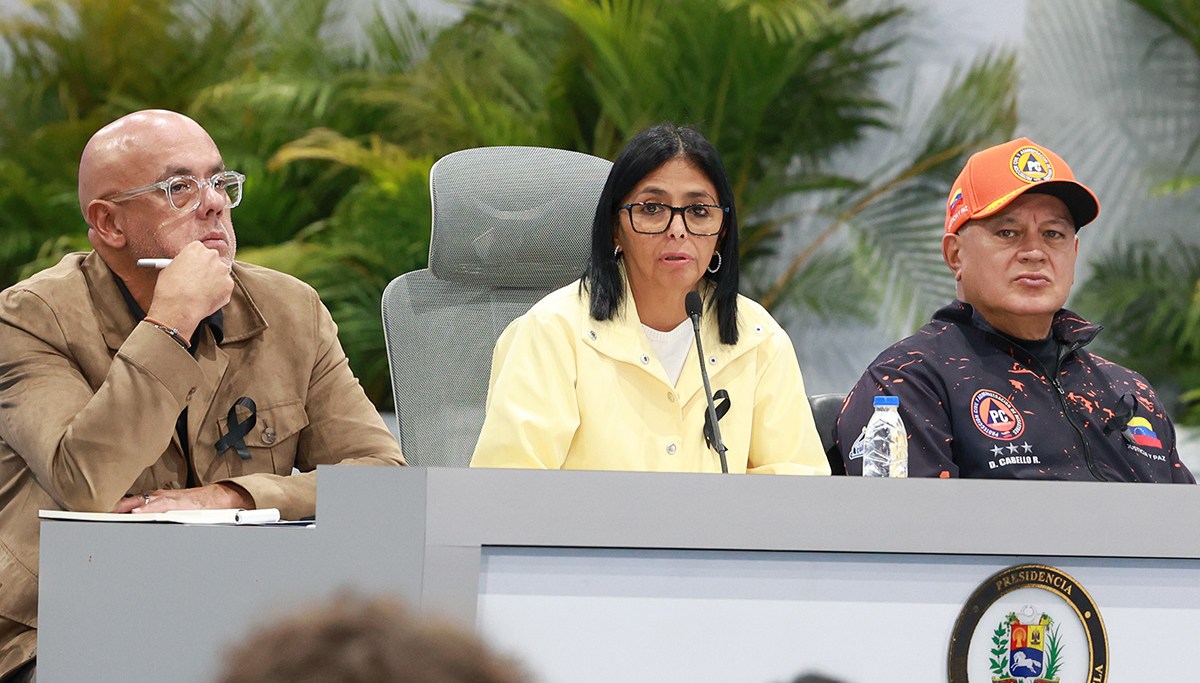
In Focus delivers deeper coverage of the political, cultural, and ideological issues shaping America. Published daily by senior writers and experts, these in-depth pieces go beyond the headlines to give readers the full picture. You can find our full list of In Focus pieces here.On Saturday, representatives of Venezuela’s interim government and opposition will sit down for negotiations aimed at rebuilding the country’s democratic institutions. The announcement comes six months after former dictator Nicolas Maduro’s removal in a U.S. military operation in January, and it has been met with the same reflexive skepticism that has accompanied every previous attempt at Venezuelan dialogue.That skepticism is understandable: Over the past decade, nearly every negotiation has collapsed after the government used the process to buy time, consolidate power, and avoid meaningful concessions. The talks that preceded the stolen July 2024 presidential election are the clearest example. Washington backed a negotiation process between government and opposition that appeared to open the door to a competitive election — only to watch the ruling party abandon its commitments the moment it became clear it would lose. But there are real reasons to think this time is structured differently, even if the outcome is far from guaranteed.Three reasons this round looks different First, the United States holds real leverage over the regime for the first time since Chavismo took power. Maduro is detained in New York and faces criminal charges. Washington has demonstrated a willingness to intervene militarily when it perceives a regional security threat. And the interim government understands that economic recovery — made even more urgent by the devastating June earthquakes that killed thousands and caused tens of billions of dollars in damage — depends on continued access to U.S. markets and investment. This combination of pressure and dependency simply did not exist during earlier rounds of dialogue.Secretary of State Marco Rubio’s involvement reinforces that leverage. Rubio has followed Venezuela’s negotiation history closely and understands how past talks were used as stalling tactics. His direct engagement, including publicly confirming that talks would begin in early August, narrows the regime’s ability to treat this round as political theater.Jorge Rodriguez, president of the National Assembly and brother of interim leader Delcy Rodriguez, will represent the interim government. Across from him is Dinorah Figuera, who led the 2015 National Assembly — the last legislature Washington recognizes as having been elected freely. Her presence is not symbolic. It reflects a deliberate effort to anchor the talks in an institution with democratic legitimacy. Figuera spent years in exile in Spain, and her return to Caracas earlier this year, facilitated by the U.S. State Department, was a turning point. It signaled both Washington’s willingness to invest political capital in a negotiated process and the interim government’s recognition that it must engage with figures who carry credibility inside Venezuela. Her early meeting with Rodriguez laid the groundwork for the current negotiations and helped create a channel that both sides now view as viable. Second, hardliners inside the regime have not disappeared, but their posture has shifted. For years, figures like Diosdado Cabello — Venezuela’s interior minister, ruling-party secretary general, and long the regime’s most feared enforcer — pushed an uncompromising line against the opposition and blocked any real accommodation. Cabello is named in the same U.S. drug-trafficking indictment used to justify Maduro’s capture, and Washington has a $25 million bounty on him. By any normal reading of the situation, he should be the last person cooperating with the Americans.Yet in the six months since Maduro’s capture, Cabello has presented a notably cooperative face to U.S. officials now working in Caracas. Reuters has reported that American officials were quietly in contact with him for months before the raid and have stayed in touch since, warning, through intermediaries, that defiance could put him on the same trajectory Maduro faced, while cooperation could shape his political future. Photos of senior U.S. officials shaking hands with Cabello during post-earthquake coordination efforts triggered outrage among opposition supporters, but they also underscore a larger point: A figure who once embodied the regime’s most coercive instincts now sees open cooperation as the safer path.Venezuela’s interim president, Delcy Rodriguez, accompanied by the president of the National Assembly, Jorge Rodriguez, and Minister of the Interior, Justice, and Peace Diosdado Cabello, holds a press conference for national and international media in Caracas, Venezuela, on July 2, 2026. (Javier Campos/NurPhoto via Getty Images) That does not mean Cabello has changed his politics or that he is no longer a risk to any transition. But Washington now has enough leverage to make even Cabello choose accommodation over defiance — a dynamic that simply has not existed at any point in the last decade of Chavista rule. Third, U.S. officials have deliberately left the substance of a transition to Venezuelans themselves. That reflects a basic reality: No political transition will endure unless Venezuelans negotiate its terms. Washington has focused on creating the conditions for talks — facilitating Figuera’s return, applying diplomatic pressure over the interim government, and signaling that the path forward must be defined inside Venezuela. And this time, the opposition arrives with a clearer and more structured agenda. Their main objective is to prepare the country’s critical institutions for a free and fair election in the foreseeable future. Figuera has already outlined the core priorities: restoring legitimacy to political institutions, naming a new electoral authority and a new supreme court, and guaranteeing civil and political rights.The complication that cannot be ignored Any honest assessment must acknowledge a major gap: Maria Corina Machado, Venezuela’s most popular opposition figure and a Nobel Peace Prize laureate, is not participating. Before Figuera’s announcement, a coalition of opposition parties expected Machado to lead negotiations over new elections. Instead, the agenda released in mid-July excluded her. Some reports indicate the White House has discouraged her from returning to Venezuela, fearing her presence could spark unrest.Machado and President-elect Edmundo Gonzalez insist that any agreement must reflect the “popular mandate” Venezuelans delivered in the 2024 election. Machado has pushed for elections within 10 months — far shorter than timelines U.S. officials have privately suggested, with some estimates ranging from 18 months to two years.A deal without buy-in from Machado’s coalition, which commands the broadest popular support, risks producing an agreement that lacks legitimacy among Venezuelans. The Panama Manifesto, released by the Unitary Platform in May, outlined its own road map for democratic transition. For the August talks to produce lasting change, their outcomes must align with, or at least not undermine, that broader opposition consensus.RESTORING AMERICA: AMERICA KEEPS WINNING BATTLES WHILE LEAVING REGIMES STANDINGSkepticism is the rational starting point, given the track record. But skepticism should be paired with a clear understanding of what has changed: a jailed former dictator, a U.S. government willing to use real leverage, an interim leadership dependent on Washington for reconstruction financing, and hardliners who, for now, are choosing accommodation over confrontation.None of this guarantees success. The talks could still produce a cosmetic process that preserves Chavista structures while sidelining the opposition faction with the strongest popular mandate. Yet, if the U.S. uses its leverage effectively and maintains steady pressure on the interim government, this round of talks has a real chance of producing a genuine political transition.
Why this round of Venezuela talks could actually be different
Full Article
Original Source
Read the full article at Washingtonexaminer →KhanList aggregates and links to publicly available news content. We do not host full articles from third-party sources. Always verify important information with original sources.