
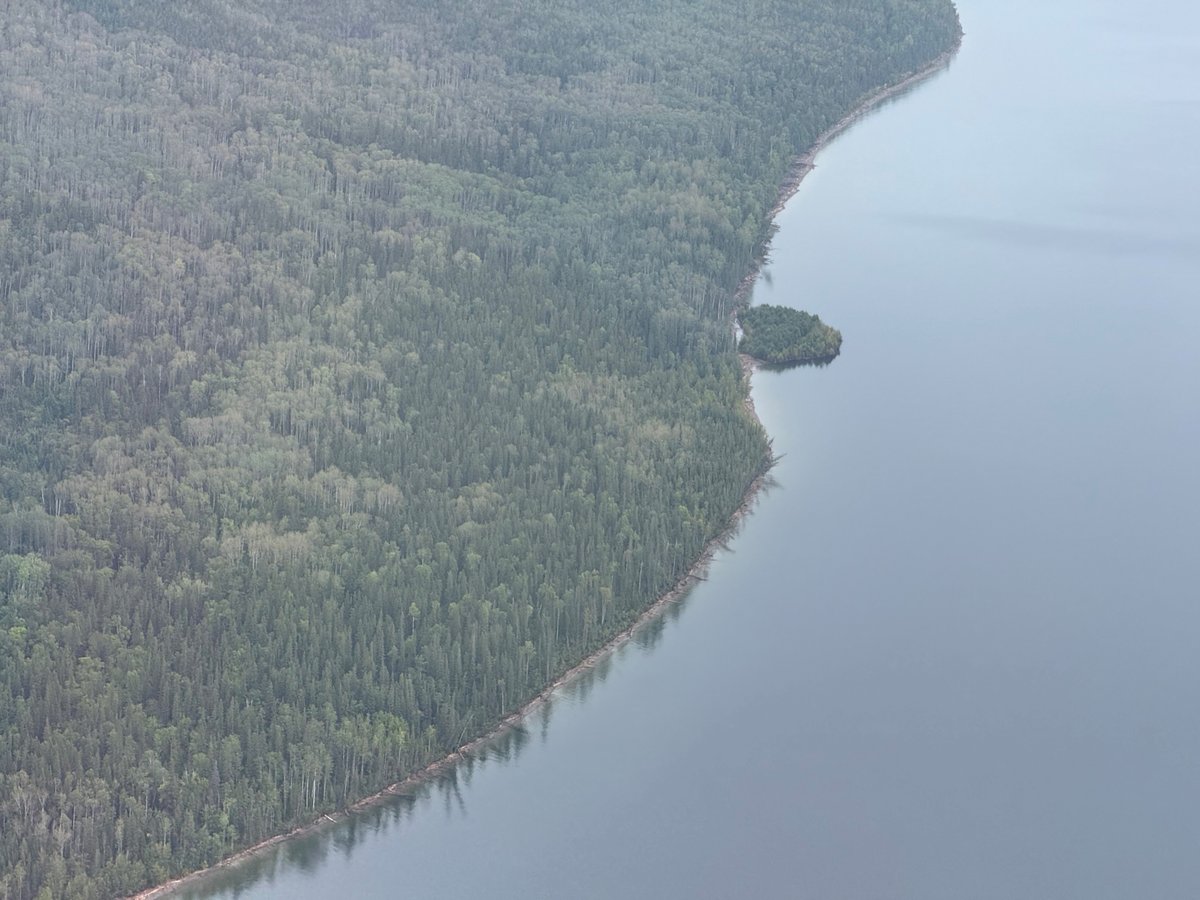
September 2, 20262 min read Add Us On GoogleAdd SciAmA floating island in a Canadian reservoir moved more than 30 kilometers across the water—here’s whyThis summer an island in Canada’s Williston Lake mysteriously appeared, vanished and then reappeared 30 kilometers away. As of August 31, the island, which likely broke off from land because of high water levels and winds, seemed to be resting against the shoreline. BC HydroJoin Our Community of Science Lovers!Magicians might pull a rabbit from a hat or a coin from behind an ear. But an island in Canada just pulled off its own ecological magic trick: it disappeared.Earlier this summer, boaters spotted an island in Williston Lake, an artificial reservoir and the largest body of fresh water in British Columbia. It was covered in mature trees and spanned thousands of square meters—yet nobody had ever seen it before.At first, officials thought it was an illusion or an artificial-intelligence-generated fake. But when they saw satellite images of the reservoir from July 21, they confirmed the lake indeed had a new island that was roughly the area of two American football fields.On supporting science journalismIf you're enjoying this article, consider supporting our award-winning journalism by subscribing. By purchasing a subscription you are helping to ensure the future of impactful stories about the discoveries and ideas shaping our world today.By August 5, however, the island had disappeared. Then, on August 15, new images captured the errant landmass resting against the shore more than 30 kilometers away from its original location. Ta-da!BC HydroThe mysterious glade is actually likely a piece of land that broke off from the reservoir’s shoreline as a result of record-high water levels this year. Rising water, plus shallow-rooted trees and strong winds, caused the mat of floating wood to set off on its journey."Floating vegetated islands of this size are rare, but they can occur in large reservoirs like Williston, particularly when water levels are higher than they have been for some time," says Bob Gammer, a spokesperson for BC Hydro, the company that oversees the reservoir. "Higher reservoir levels can lift material that may have been lodged along the shoreline or in a sheltered bay, allowing it to float free."This kind of stray landmass is not unique to Williston Lake. Floating islands exist all over the world in wetlands, where shards of shore often break off into the water. One famous example is Wisconsin’s Forty Acre Bog. Scientists believe it detached from the bottom of its lake and now floats around the surface, where it is covered with plants and trees.Gammer says the Williston Lake island seems to be intact and clinging to the shoreline—at least for now.It’s Time to Stand Up for ScienceIf you enjoyed this article, I’d like to ask for your support. Scientific American has served as an advocate for science and industry for 180 years, and right now may be the most critical moment in that two-century history.SciAm always educates and delights me, and inspires a sense of awe for our vast, beautiful universe. I hope it does that for you, too.If you subscribe to Scientific American, you help ensure that our coverage is centered on meaningful research and discovery; that we have the resources to report on the decisions that threaten labs across the U.S.; and that we support both budding and working scientists at a time when the value of science itself too often goes unrecognized.In return, you get essential news, captivating podcasts, brilliant infographics, can't-miss newsletters, must-watch videos, challenging games, and the science world's best writing and reporting. You can even gift someone a subscription.There has never been a more important time for us to stand up and show why science matters. I hope you’ll support us in that mission.
Why this Canadian island appeared to disappear
Full Article
Original Source
Read the full article at Scientificamerican →KhanList aggregates and links to publicly available news content. We do not host full articles from third-party sources. Always verify important information with original sources.