
Published Sep 12, 2026, 6:00 PM EDT Luke Diaz is a freelance military writer with experience with active duty experience in the US Navy as well as defense and industrial engineering. He is a former Naval Flight Officer who performed tactical air control on the carrier-based E-2 Hawkeye. Andersen Air Force Base is getting 20 acres of new concrete because the Pentagon has concluded that hiding in bunkers no longer works in the modern air conflict. China's satellites can already map every hangar on Guam, so the new plan is to scatter aircraft across so many locations that no single missile strike can catch enough of them at once. That plan needs somewhere to scatter to. Two key candidates quietly emerged to the United States Air Force, neither one announced as a full militarization project. The first is at Cesar Basa Air Base in the Philippines, which lies 1,500 miles west of Guam. This strategic site in the first island chain has received $66 million to transform a base that could only support a single Philippine Air Force fighter squadron into one that can share its runway with American fifth-generation stealth jets and the fleet of supporting aerial tankers. Saipan International Airport is the second strategic airstrip being overhauled to support agile combat employment, or ACE doctrine. It is situated 130 miles from Andersen, which makes it a valuable satellite field to operate Boeing KC-135 Stratotanker and KC-46 Pegasus tankers. Rather than depending solely on massive hubs like Okinawa or Guam, these projects transform smaller tactical airfields into robust sites capable of sustaining dispersed ops during a high-end conflict with near-peer adversaries like the People's Republic of China. Why Old Runways Can't Handle The Air Force's 'Heavies' Credit: US Air Force A fully loaded KC-46 can weigh up to 415,000 pounds at takeoff and needs a lot of tarmac to get that mass safely in the air or back down on the ground. Basa's rebuilt strip, after the 2023 rehabilitation, has been upgraded to handle virtually any US military aircraft, according to the Pentagon. Some accounts put its length at 10,000 feet (3,048 meters) after the overrun repairs, comparable to the runways at established stateside tanker bases like Fairchild AFB, whose 13,899-foot strip supports its KC-135 wing. Saipan's runway is shorter than Basa, at 8,700 feet, but serves the new Pegasus fleet all the same since Boeing advertises the KC-46 on its ability to operate from shorter, more austere strips than the KC-135 it is replacing. That doesn't mean that either Basa or Saipan will host a permanent tanker detachment, but it does mean both fields can now host American 'heavy' tankers anytime they are called upon. The Pegasus is increasingly the tanker of choice at Pacific exercises thanks to its purpose-built design, engineered from conception for dispersed, short-field ops. There remain a number of performance deficiencies with the Pegasus Fleet, which have made headlines for causing damage to' receiver' aircraft on at least three occasions. The Missile Threat The Buildup Is Designed Around Credit: US Air Force China's DF-26 ballistic missile, with a range of roughly 2,500 miles (4,000 kilometers), poses significant challenges to US missile defense due to its flexibility in warhead types and mobile capabilities. The Missile Defense Advocacy Alliance describes the primary counter-strategies as countering massed strikes rather than detecting launches. Based on this premise, the USAF is working toward a massive enhancement of its defenses at Andersen AFB. Meanwhile, it is optimizing the field in Guam as well as satellite fields across the first and second island chains to allow for rapid dispersal of aircraft that will mitigate damage during massive missile attacks. The expansion of Enhanced Defense Cooperation Agreement sites by the Philippines has prompted strong reactions from Beijing, which views it as a strategic threat and has accused the US of escalating tensions in the region. The Philippine government is caught in the middle of a diplomatic balancing act between China and US interests, which limits military infrastructure development but does not stop it. Similarly, protests from local groups in the Marianas against military expansion highlight community concerns over the environmental impact of the Airfield development at Saipan International. Still, these have not hindered infrastructure projects as the US military's focus on the Western Pacific has reached an all-time high in the 21st century. What $66 Million Buys At A Fighter Base In The Northern Philippines Credit: US Air Force The funding for Basa won't be a single upgrade but rather a long list of projects designed to benefit one another. The primary infrastructure improvement is the $24 million runway rehabilitation that was completed in November 2023. Construction teams scraped the existing asphalt off the 1.7-mile (2.8 km) strip and re-laid it. Then they repaired the runway overruns as well. The remaining $42 million of the $66 million total covered a humanitarian assistance warehouse, fuel storage tanks, and command facilities. In 2024, the Pentagon added a $33 million contract for a 625,000-square-foot (58,064-square-meter) parking apron sized for 20 aircraft, funded through the Pacific Deterrence Initiative. The congressional fund was specifically enacted to counter Chinese military expansion across the Indo-Pacific. All in, the project was the largest single project completed under the Enhanced Defense Cooperation Agreement to date, according to the USNI. Seventh Air Force commander Lieutenant General Scott Pleus, speaking at the runway's reopening, described the progress as a foundational component to power projection. Pleus frames the goal as encompassing much more than establishing one more airfield for tanker jets. Because the infrastructure meets modern, universal military standards, the USAF can seamlessly rotate any asset into Basa. Basa's new capability has already been demonstrated during exercise Cope Thunder, which saw Lockheed Martin F-22 Raptors deployed to the field. It is also slated to host the next evolution of the Philippine Air Force's fighter fleet as it looks to double its fleet of 12 Korean-made FA-50PH Fighting Eagles. The highly anticipated expansion of its multirole fighter force will allow the PAF to participate in joint operations at a higher level than ever before, directly enhancing the coalition force. The Plan To Reintegrate Saipan With American Air Power Credit: US Air Force In a contested scenario, large-body assets like the KC-46A Pegasus can disperse from Guam to Saipan International Airport's (SPN) reinforced civilian ramp space. The Commonwealth Ports Authority also secured a $9.7 million Federal Aviation Administration Airport Improvement Program. An additional $7.05 million FAA grant was allocated to replace over 26,000 linear feet of aging perimeter fencing. Rather than funding a permanent garrison or heavy base infrastructure, the Department of Defense's investments in Saipan rely heavily on cooperative operational agreements and mobile ACE equipment. The Pentagon funded the expansion of equipment and infrastructure serving expeditionary air operation at this dual-use civilian airport in order to make a more suitable location for ACE operations. The airport's taxiways and 8,700-foot (2,500-meter) runway have been upgraded to handle the high maximum weight of American aerial tanker Jets. Additionally, the DOD plans to upgrade Rota International Airport (ROP) nearby in the Northern Mariana Islands. Residents of the island have had mixed reactions, as reported by the Marianas press. There are ongoing environmental impact studies with a special focus on the noise pollution caused by increased military air traffic volume. How Tinian Is The Hub While Saipan And Basa Are Its Spokes Credit: US Air Force Eight decades after US Army Air Corps B-29 Superfortresses used its airfields to drop the only atomic weapons ever used in anger, it is now being rebuilt to serve the modern joint ACE strategy. The new and improved airstrip will bolster the shared defense of two nations that were once bitter enemies but are now the closest allies in the region. North Field sat essentially untouched for nearly 80 years, its four 8,500-foot runways swallowed by jungle after the US abandoned it following Imperial Japan's surrender. The military had done only modest patchwork in the 2000s and 2010s, using one runway area as a semi-improved strip for austere training. Airmen have now cleared 99% of the vegetation from more than 20 million square feet of degraded pavement, a joint effort by Navy Seabees. Two of the four runways are targeted for completion by 2027, and initial flight operations were scheduled to begin on May 31, 2026, with roughly 250 personnel set to support Army units at North Field during Exercise Valiant Shield 2026. Air Force and Marine Corps engineer teams accomplished what the Pacific Air Forces describes as one of the most extensive rehabilitation projects in Air Force history. There is also a separate $384 million expansion of Tinian International Airport along with new fuel storage facilities at Tinian's port, which round out roughly $1.5 billion in combined military construction on the island. Meanwhile, Saipan International sits a short hop from Tinian and already handles the passenger and fuel-logistics traffic that supports Tinian’s exercises. A resurfaced, debris-free 8,700-foot runway and new perimeter security fencing make Saipan a more reliable secondary node for that traffic without ever appearing on a Pentagon construction list. Basa performs the same role 1,500 miles (2,414 km) to the west. Together, the three fields outline a distributed refueling network stretching from Luzon to the Marianas, precisely the kind of geographically staggered basing that turns a single-salvo missile problem into a many-target search problem for the People's Liberation Army.
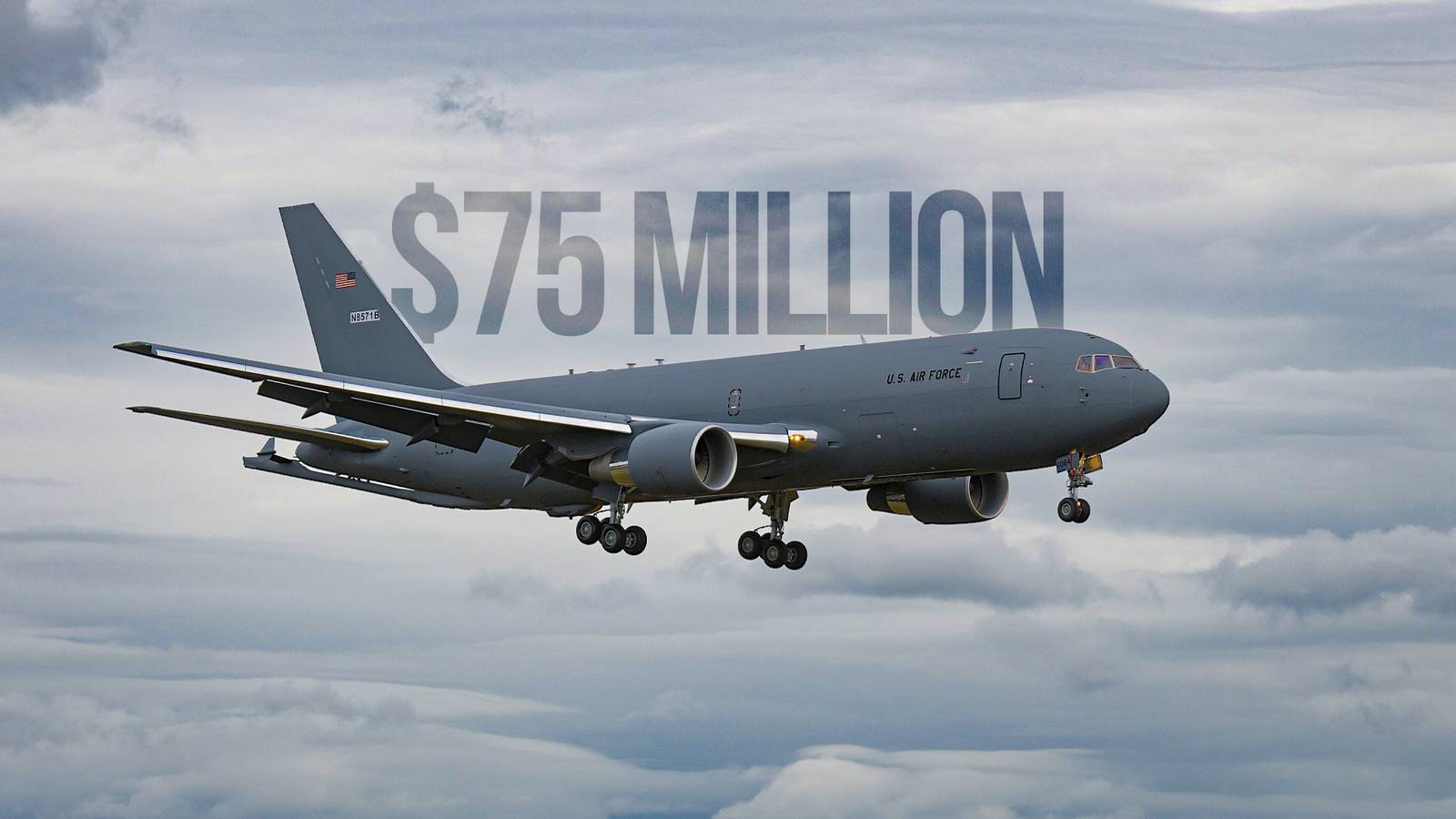
Why The US Is Pouring $75 Million Into 2 Pacific Runways Beyond Guam To Handle Fully-Loaded KC-46 Tankers
Full Article
Original Source
Read the full article at Simpleflying →KhanList aggregates and links to publicly available news content. We do not host full articles from third-party sources. Always verify important information with original sources.