
Just as Britain is stepping forward in the Middle East, Donald Trump is stepping back. On his flight to New York and his first face-to-face with Trump at the UN General Assembly, Andy Burnham said Britain would send an RAF A330 Voyager tanker aircraft to support Saudi Arabia’s air force against attacks by Yemen’s Houthi rebels. Trump has turned down flat the Saudi request for the US to bomb Houthi bases and shipping. So, Burnham has stepped in to answer the Saudi request for help by offering the temporary services of the tanker aircraft. Shorts In part, it will head off criticism of Britain’s lack of military commitment and capability on the international stage, especially in Nato. The gripe has become a common refrain of Trump, along with his Defence Secretary Pete Hegseth and Vice President JD Vance – but the inability to meet military commitments has also been criticised by Nato’s Secretary- General, Mark Rutte. The UK’s temporary commitment of a single Voyager looks like diplomatic gesture politics at its most minimalist. The aircraft, operating out of Cyprus, will be available for only three or four weeks. Yet it is still an embarrassment for Trump. Even if it is largely symbolic, the symbolism is plain for all to see. Britain is stepping up to help Saudi Arabia; America is not. Saudi Arabia is increasingly concerned about the expanding Houthi threat to outlets for its oil, as Trump’s war in Iran spills across the region. The Houthi militias in Yemen – Iranian allies – recently closed the Bab al-Mandeb at the neck of the Red Sea and seized the main port of Mocha and the strategic island of Perim, which guards the narrows. The Houthis have also mounted successful attacks on Saudi Arabia’s principal pipeline system crossing to the port of Yanbu, which had proved an alternative to shipping through the compromised Straits of Hormuz. Pipelines and switching stations had to be closed temporarily. Newly acquired munitions, drones and missiles from Iran have given the Houthis greater range and much greater tactical flexibility. The Saudis and their Egyptian allies now fear that access and the flow of ships through the Suez Canal could be compromised. Yet Trump has turned down flat the Saudi request for the US to bomb Houthi bases and shipping. Reportedly, Trump refused despite two phone calls from Saudi Arabia’s Crown Prince Mohammed bin Salman urging him to order air strikes. So, instead, it is Burnham who has stepped in to answer the Saudi request for help by offering the temporary services of the tanker aircraft. He said he was doing so after consulting his foreign and defence secretaries. Britain was coming to the aid of an ally, the government explained. Furthermore, British interests are at stake in ensuring the free flow of oil and gas from Saudi Arabia and the Gulf region. The commitment of the RAF Voyager is likely to be short-term because of the confusion and sense of muddle over US policies and strategy in the region – not least Washington’s policy over war with Iran. Allies from the region, led by Saudi Arabia, UAE and Egypt, will seek clarification from the White House and Congress after the midterm congressional elections on 3 November. A further complication to the Middle East cluster-crisis is the closely fought Israeli general elections, due the week before those in America. Not helping the optics of the US abandoning Riyadh, its long-time ally, the European Union has also echoed the UK in pledging to help the Saudis. The EU’s Foreign Affairs Commissioner, Kaja Kallas, who called on European states to boost patrols in the Red Sea in 2023 under Operation Aspides, requested that the Europeans prepare to put at least 10 frigates or destroyers into the area. There is a curious logic to Britain lending the tanker – which is a very capable plane, superior and more modern than most equivalents in the US Air Force. The refuelling system – known as a drogue and hose – is configured to fit the British-built Typhoon fighter-bombers of the Saudi Air Force. The joint venture building the first Tornado and Hawk and then Typhoon aircraft was run by BAE Systems. At around £40bn, the Al Yamamah deal – struck in 1985 – is considered one of the most lucrative defence sales in recent British history. By using refuelling from the tanker, the Typhoons, of which Saudi Arabia has three frontline squadrons, can stay in the air for up to seven hours at a time. They will be used to defend pipelines, ports, and principal cities like Riyadh, Jeddah, Mecca and Medina, from drone and missile attack – and in particular the oil terminal on the Red Sea at Yanbu. Burnham has insisted that the RAF Voyager is to be used for ostensibly defensive operations. The Al Yamamah deal has been dogged with controversy – about the sale of the aircraft themselves and their use in offensive operations by Saudi planes when the Houthis seized the Yemeni capital, Saana, in 2015, and in the subsequent civil war. It was claimed the Saudis bombed civilians and refugee camps, and used British-made cluster munitions, though this has always been subject to denial and controversy. Today, for Britain the extra and more urgent worry is the rundown state of British defence and its forces. Extra funding has been promised, but this becomes less likely as the public debt mountain grows. Chancellor John Healey seems to be betting on postponing the big decisions until the Comprehensive Spending Review next summer. Rutte has said that’s no good, and Britain must start delivering on promises to allies. The crises in the Middle East and Ukraine are each approaching a decision point – and the outcome will be sobering for Europe and Britain. The offer of the Voyager from Cyprus may be a gesture, but at least it’s a gesture in the right direction.
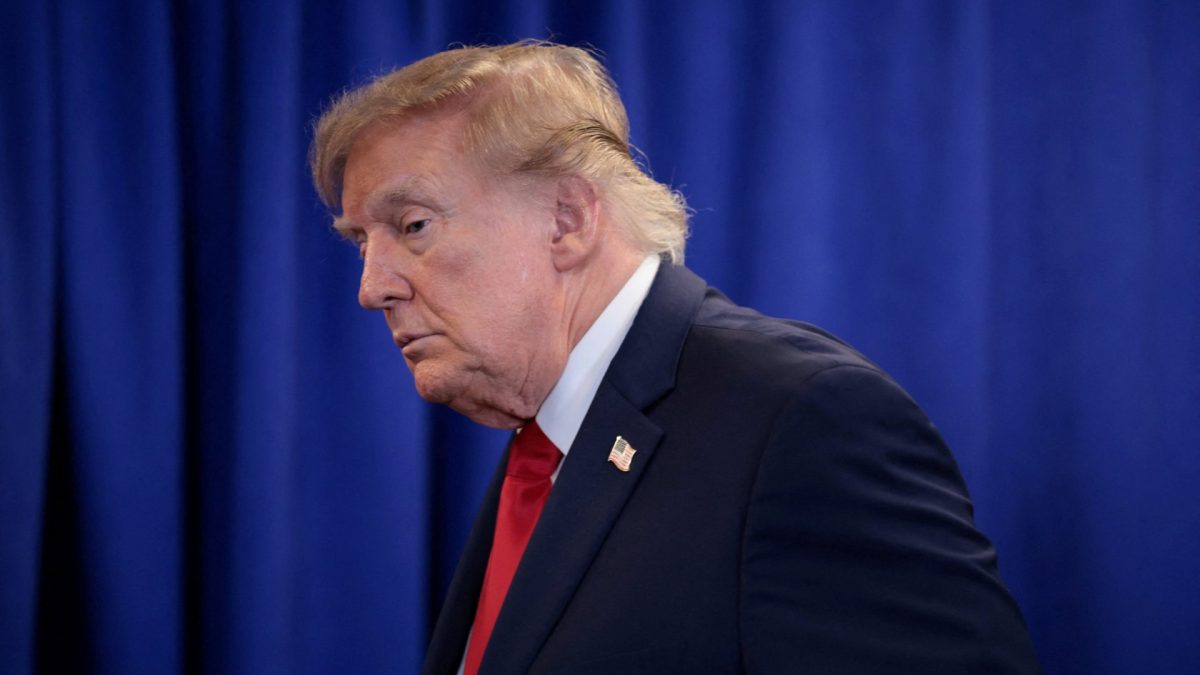
Why the UK’s move in the Middle East is so awkward for Trump
Full Article
Original Source
Read the full article at Inews →KhanList aggregates and links to publicly available news content. We do not host full articles from third-party sources. Always verify important information with original sources.