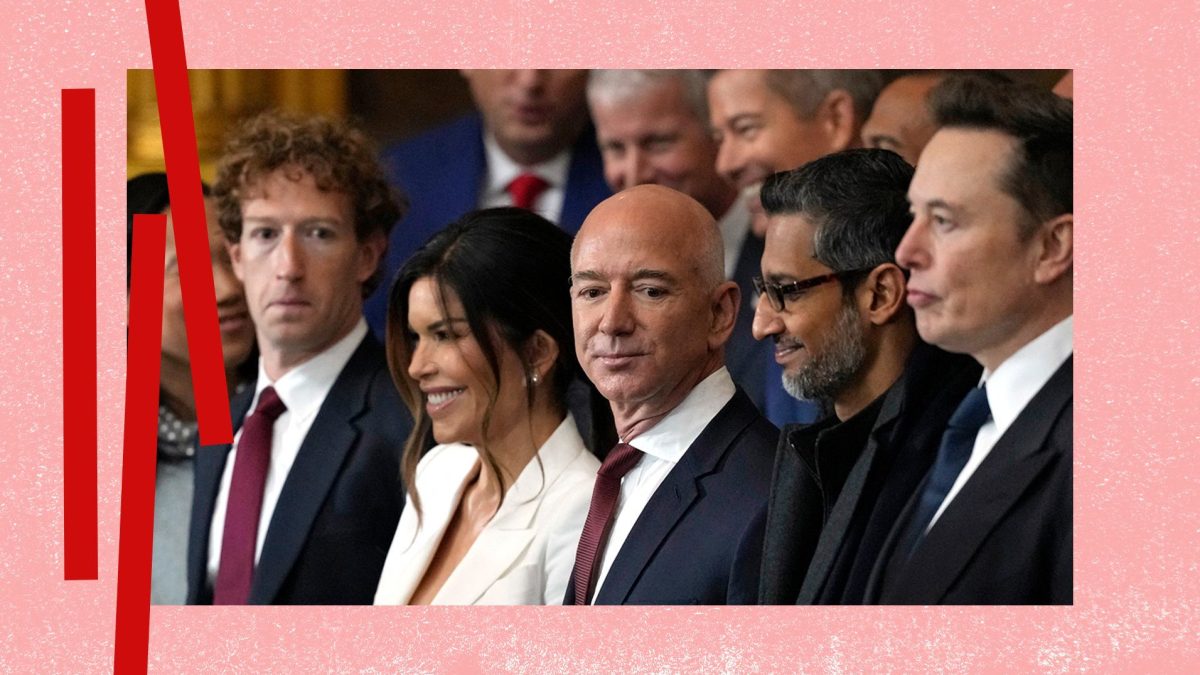
Welcome to Trump’s America, The i Paper’s World Insight series presenting the sharpest, deepest thinking on an era-defining shift in history and politics, investigating how Donald Trump and his administration have changed the US and the world – and where we go from here. • America can’t afford to retire• The middle-class American Dream is being eaten away• The White House I worked for would have condemned this image. Trump refuses• Maga leaders want ‘traditional American families’ – but can’t stop having affairs• Sin City has lost its shine. It shows how far America has fallen• The Florida street that exposes America’s growing homophobia• Childish Hegseth thinks killing is a goal in itself As recently as a decade ago, you could imagine Silicon Valley as a nerdy and male-dominated but ultimately progressive place. It seemed like the future, both in terms of technology and its values. In the 2016 presidential campaign, Elon Musk, Mark Zuckerberg, and even the more conservative Marc Andreessen lined up to support the Democratic nominee, Hillary Clinton. Barack Obama had actually been chided for embracing Silicon Valley’s money and mindset during his two terms. Broadly speaking, that meant technocratic solutions, technology investment and a commitment to the major progressive issues of the 2010s. Meanwhile, in 2013, 278 companies, including Apple, Google, Facebook, Oracle and Twitter, signed on to a court brief in favour of same-sex marriage. Shorts Yet, by 2024, it was many of those same big tech leaders who had front-row seats at Donald Trump’s second inauguration. The CEOs of Apple, Meta, Google, Amazon, OpenAI and, of course, Tesla and SpaceX, flocked like baronets to the new king’s coronation, eager to demonstrate their fealty to a right-wing populist leader and his reactionary coalition. This shift has two main drivers: an industry reorientation that has been hijacked by Trump, and a cultural change in Silicon Valley pushed by specific radicalisers who see in Trump – and also in JD Vance, his Vice President – their own political champion. The critical change has been tech’s move into AI and cryptocurrency. For a world where sophisticated but sceptical thinkers like PayPal and Palantir co-founder Peter Thiel worried that technology had stagnated, the advent of AI and cryptocurrency has offered a new frontier. Both promised revolutionary products and a massive financial upside for founders, investors and entrepreneurs. The trouble is that they also require vast amounts of energy to run and are so potentially socially disruptive as to require state regulation. Joe Biden’s administration began the process of – depending on how you look at it – either making AI safe or shackling its vast potential. Likewise, it scrutinised the crypto Wild West and set the Securities and Exchange Commission (SEC) on perceived bad actors. To those deep in the Silicon Valley mindset, these steps threatened the two most promising technologies developed in decades. There were security implications, too. Palantir CEO Alex Karp put it in dire terms in 2024 when he told the Reagan National Defence Forum: “These are very dangerous technologies and quite frankly, if we didn’t have the world’s worst enemies, I would be up here saying we should regulate.” But instead, he argued, America had to win the AI race. OpenAI CEO Sam Altman joined Trump for a White House news conference in January 2025, accompanied by Oracle CTO Larry Ellison and SoftBank CEO Masayoshi Son (Photo: Andrew Harnik/Getty) The tech sector came to see the Biden administration as too great a handbrake. Trump, by contrast, presented himself as willing to blast away roadblocks. In 2024, he appointed venture capitalist David Sacks as his AI and crypto czar, and promised that he would make the United States the “crypto capital of the planet”. At the same time, Trump’s personalist approach, which includes frequent litigation against businesses, carries an implied threat. Silicon Valley gambled on him, and the results have been mixed. Trump swiftly rescinded Biden-era regulations and defanged the SEC, but his caprice and unilateral tariffs need constant management. A cultural shift has occurred on top of this economic development. The loudest voices and their hangers-on have clearly moved to the right. The most obvious example is Musk, who came to public attention as someone working to innovate against climate change through his car company, Tesla. Now you only have to look at his X feed to see his more extreme views, as well as those he chooses to promote. Musk isn’t alone. A set of grandiose-thinking venture capitalists have come to define Silicon Valley’s new right-wing posture. The wealth and clout these men (and, yes, they are nearly all men) wield has shifted the cultural zeitgeist in Northern California. But at the same time, their reactionary views are distinct from conservative parts of the American right. The “tech bros” rebelled against the perceived progressive cultural dominance of the 2010s, putting them off the Democratic Party. Strangely enough, the Supreme Court decision enshrining same-sex marriage as a constitutional right paved the way. By partially removing same-sex couples from political fights, it removed an obstacle preventing tech moguls from embracing the Republican Party. Trump’s obvious laissez-faire morality did the same thing. There is also something about the venture capitalist mindset that lends itself to the right. The Silicon Valley elite often combine technical skill, prophecy and salesmanship. They are wont to believe their own hype and are anti-bureaucratic, feeling that politically driven regulation will only curb real innovation. The Musk-led Department of Government Efficiency (Doge), set up in the first days of Trump’s second term, was the perverse outcome of such thinking, disastrously misapplied. At heart, the Silicon Valley right are technocrats, thinking in terms of systems and design, not trade-offs and electoral majorities. This is not a democratic outlook. At present, their support lends the Trumpists some futurist cachet, as well as financial support. But perhaps the most significant impact they have had is shifting the media landscape in a more conservative direction. Even so, chances of a deeper fusion of the tech right with other parts of the conservative coalition seem unlikely. And if the hype behind AI, crypto and their cousins, online sports gambling and betting markets, is real and the technologies are as disruptive or corrosive as some expect, a political backlash may be brewing that could far outlive Trump’s time in office.
Why the tech bros really backed Trump – and why it could backfire
Full Article
Original Source
Read the full article at Inews →KhanList aggregates and links to publicly available news content. We do not host full articles from third-party sources. Always verify important information with original sources.