
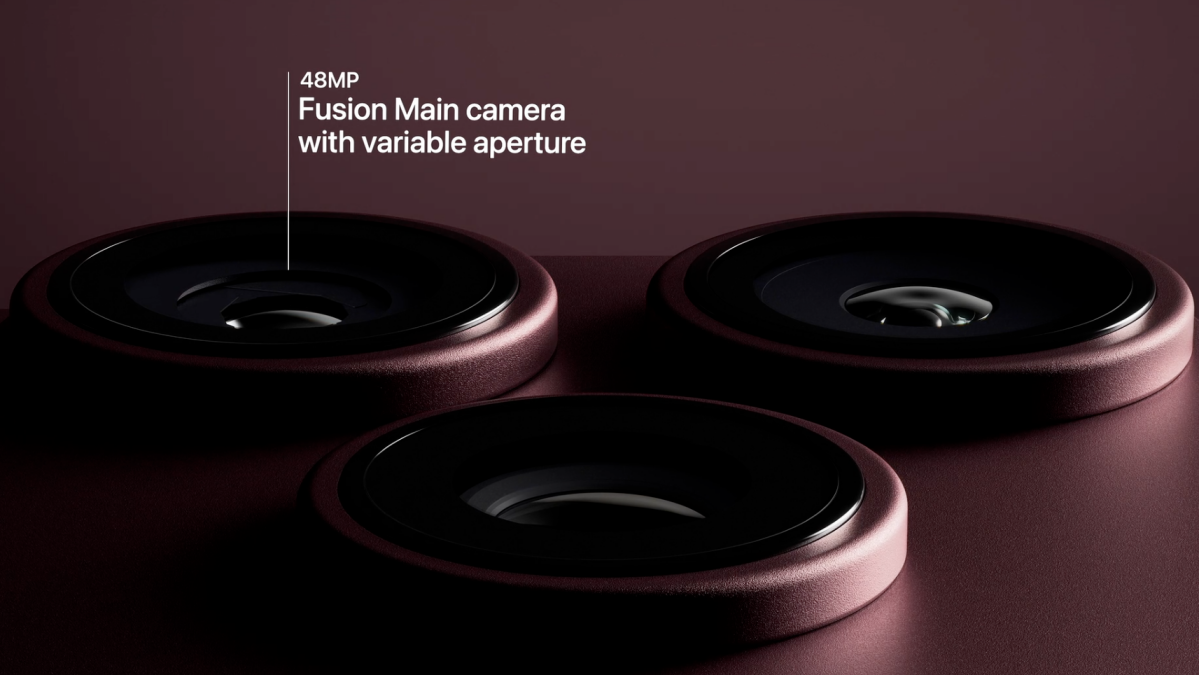
Pranay Parab Pranay Parab Freelance Writer ExperiencePranay Parab is an independent tech journalist based in Mumbai, India. He covers tech for Lifehacker, and specializes in tutorials and in-depth features. Read Full Bio September 9, 2026 Add as a preferred source on Google Add as a preferred source on Google Credit: Apple Key Takeaways The iPhone 18 Pro and the iPhone 18 Pro Max have a variable-aperture lens. The variable aperture lens is unavailable on the more expensive iPhone Duo. Variable aperture gives you more control over photo lighting. Aperture values range from f/1.48, f/1.8, f/2.8, and f/4.0m. Table of Contents Every year, Apple claims its newly launched iPhones have the best cameras ever, and those improvements usually revolve around improved sensors, lenses, and software updates. This year, though, there's an unusual camera upgrade that's going to make a massive difference to your photos and videos: The iPhone 18 Pro and the iPhone 18 Pro Max have a variable-aperture lens, a feature unavailable on the much more expensive iPhone Duo. Variable aperture gives you far greater control over lighting in your iPhone photos.What does "camera aperture" mean?A camera's aperture lets you control how much light reaches the lens. For a brighter photo, you want to let in more light; for a darker one, you'd ideally let in less. This system is similar to the pupils of your eyes, which constrict when the light is too bright and dilate when you suddenly go from bright sunshine to a dark room. In DSLR cameras, you can see overlapping blades that partially cover the lens. This opening increases or decreases in size depending on the aperture value. This technology is expensive to implement in a smartphone lens, and so far, the improvement in photos hasn't been good enough to justify the investment. That's why it's rare to find the feature in most phones. Apple added variable aperture to its smartphones for the first time with the launch of the iPhone 18 Pro series. (Note that aperture values are denoted in f-numbers, which means that when you adjust a camera's aperture, the value looks something like f/1.8, f/4.0, etc. The lower the f-number, the brighter the image becomes.) How variable aperture changes photos and videosThe iPhone 18 Pro has three rear cameras, but only the main camera offers a variable aperture. It's a 48-megapixel sensor with four aperture f-numbers supported. You can pick an aperture value from f/1.48, f/1.8, f/2.8, and f/4.0m, which should make it significantly easier to get the exposure just right in difficult lighting conditions. You'll also be able to take better photos in low light and try a few additional creative shots with your iPhone 18 Pro. Having a variable aperture is great for controlling depth of field, so you can easily blur the background or keep it in sharp focus when you take photos. What do you think so far? With a larger aperture (f/1.48), you'll be able to reduce the depth of field and blur the background for shots that require focus on a single subject. You can use a smaller aperture (f/4.0) to capture stunning landscapes, where you want the entire photo to be in focus. If you're thinking that your iPhone already does these things, you're sort of right. But it's worth remembering that up until now, iPhones had to rely on software to perform these tasks, which gets the job done, but the results aren't always exactly what you'd visualize. Having hardware control over aperture gives you greater control over the output and brings the final result much closer to what you visualized. In theory, variable aperture should make the iPhone 18 Pro better for astrophotography, too, but until all of these tasks are tested, it's hard to say how much impact the new feature will have. Lifehacker has been a go-to source of tech help and life advice since 2005. Our mission is to offer reliable tech help and credible, practical, science-based life advice to help you live better. Our Mission Our Team Newsletter © 2001-2026 Ziff Davis, LLC., A ZIFF DAVIS COMPANY. ALL RIGHTS RESERVED. Lifehacker is a federally registered trademark of Ziff Davis and may not be used by third parties without explicit permission. The display of third-party trademarks and trade names on this site does not necessarily indicate any affiliation or the endorsement of Lifehacker. If you click an affiliate link and buy a product or service, we may be paid a fee by that merchant.
Why the iPhone 18 Pro's Variable Aperture Is a Big Development for Smartphone Photography
Full Article
Original Source
Read the full article at Lifehacker →KhanList aggregates and links to publicly available news content. We do not host full articles from third-party sources. Always verify important information with original sources.