
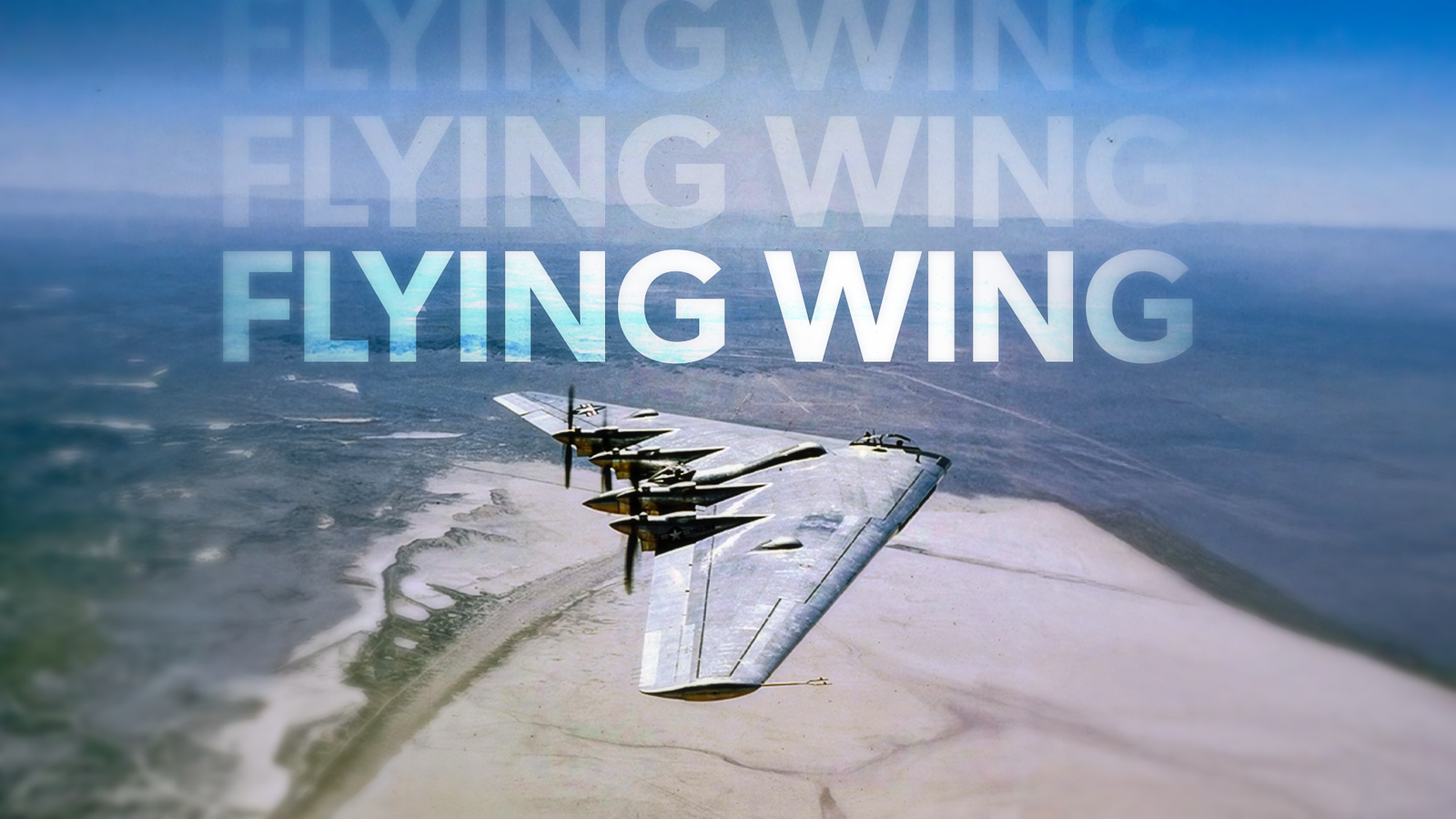
Jack Northrop envisioned a sleek, tailless future when he sent the YB-49 aloft on October 21, 1947, stretching a 172-foot (52.4 meters) wing across the desert sky without a conventional fuselage or vertical stabilizer. Promising lower drag and greater efficiency than traditional layouts, the experimental jet bomber nevertheless battled stability challenges before the second prototype crashed on June 5, 1948, killing all five crew members aboard and leading to the program winding down between 1949 and 1950. Despite the allure of an all-wing silhouette, commercial aviation stuck with cylindrical fuselages and tailed configurations that offered predictable handling, straightforward cabin pressurization, and familiar airport compatibility. Now that digital flight controls and blended-wing concepts are bringing tailless aerodynamics back into the spotlight, what technical, operational, and commercial hurdles still stand between a flying wing concept and a viable passenger airliner? Combining Two Aircraft? Converted from two piston-engined YB-35 airframes, the YB-49 stretched to a 172-foot (52.4-meter) wingspan and measured 53 feet, 1 inch (16.2 meters) in length, trading propeller drives for eight Allison J35 turbojets buried inside the wing, according to The Little Aviation Museum. Removing a conventional fuselage and tail assembly allowed almost the entire planform to contribute to lift with reduced parasite drag, helping the prototype reach roughly 493 mph (793 km/h). At the same time, early turbojet fuel burn and internal volume tradeoffs tempered its range and payload flexibility relative to piston-powered designs. Flying without a tall vertical tail meant the YB-49 had less natural stability in yaw and had delicate pitch and roll-yaw coupling, including dutch roll, during turbulent air, maneuvers, and simulated bombing runs. As noted by MiGFlug, four small vertical fins were fitted to aid directional damping, though in the late 1940s crews relied on mechanical linkages and human coordination rather than high-speed digital flight control computers to manage continuous stability corrections. After its maiden flight on October 21, 1947, the program flew only two converted airframes before the second prototype crashed on June 5, 1948, claiming the lives of all five crew members on board. Production orders were canceled in 1949 as Air Force leadership shifted toward competing bomber programs, and formal flight testing concluded in March 1950 before the surviving airframes were scrapped. What Makes Such A Design Possible To Fly? For an aerodynamically unstable tailless wing to become a dependable aircraft and actually work, it requires replacing purely mechanical linkages with high-speed digital fly-by-wire flight-control computers. Motion sensors can continuously measure aircraft attitude and rate changes, feeding real-time data to flight computers that command rapid, micro-adjusted deflections across trailing-edge control surfaces. That closed-loop automation damps pitch, yaw, and dutch roll oscillations far faster and more consistently than manual pilot inputs alone could achieve in earlier eras. Digital flight control design made the Northrop B-2 Spirit possible by allowing a pure flying wing to achieve low-observable radar signatures without needing a conventional vertical tail. Instead of using a large fin that would compromise stealth, the B-2 uses computer-coordinated elevons and split drag rudders to generate controlled yawing moments and maintain crisp handling across varying weights and flight regimes. Computing redundancy and sensor voting became foundational to keeping a naturally neutral or unstable wing profile predictable from takeoff through landing. Decades later, the Northrop B-21 Raider extends that digital control lineage into a modern low-observable bomber program built on newer avionics and computing architectures. The B-2 and B-21 demonstrate that computerized flight controls conquered the core stability and control challenges of tailless military aircraft, but solving stability in a combat airframe did not automatically translate into an airline cabin, and how to make it a reality. The Modern Day Flying Wing Credit: JetZero The pure flying wing has not necessarily been revived, but JetZero is advancing the Z4 as a blended wing body (BWB) concept designed to carry roughly 230 to 250 passengers by smoothly merging a wide, lifting center body into outer wings. The program has gained traction through a $235 million US Air Force award supporting full-scale demonstrator development alongside plans to establish manufacturing operations in North Carolina. With a full-scale demonstrator targeted to fly in late 2027, the roadmap aims for commercial entry into service in the early 2030s if technical and regulatory hurdles are cleared on schedule. Commercial interest in the Z4 is very real, and carriers such as Japan Airlines and United Airlines have made agreements to support the development of the aircraft. For airlines evaluating next-generation single-aisle and midsize replacements, a BWB promises lower drag and reduced fuel burn per seat compared with conventional tube-and-wing layouts. Making those conditional fleet commitments become firm deliveries, however, depends on proving that the airframe can meet strict safety, manufacturing, and operational standards at scale. Propulsion integration sits near the center of that verification effort, including a November 2026 report from Leeham News noting that the FAA is funding a study into top-mounted engine airflow for JetZero's design. Placing engines above the aft airframe can help shield noise, but maintaining clean airflow and stable engine operation across flight conditions remains a critical engineering focus ahead of commercial certification. Why Is A Flying Wing So Hard To Design? Credit: Nautilus A cylindrical tube naturally resists internal cabin pressure by distributing hoop stress evenly around a circular cross-section, whereas a wide, flattened wing-body hull faces far higher bending and pressure-loading demands. A non-cylindrical cabin shell tends to bow outward when pressurized at cruise altitude, so to compensate, designers need to add structural reinforcement, internal bulkheads, or load-bearing frames that add mass and complexity. Emergency evacuation rules further add to cabin design complexity, particularly the regulatory requirement to evacuate a full aircraft within 90 seconds using half of the available exits, covered in Simple Flying analysis. Unlike a narrow single- or twin-aisle tube where passengers move linearly toward well-marked doors, a wide blended-wing cabin needs carefully engineered pathways, clear signage, and balanced exit placement, so travelers seated deep inside the layout can reach exits without bottlenecks. Cabin tiering across premium and economy zones also needs to align with aisle geometry and exit capacity rather than treating interior floor space as an open hall. On the ground, widebody wingspans around 213 feet (65 meters) must fit within existing terminal gate envelopes, taxiway clearances, and apron stand markings without forcing costly airport rebuilds. Even when a wide airframe clears wingspan limits at a standard widebody gate, its broader center section and altered fuselage contour can complicate jetbridge docking reach, de-icing access, and ground support vehicle positioning. Smooth ramp operations really depend on proving that turnaround tasks load and unload cleanly alongside conventional airliners. How To Appeal To The Flying World Credit: Nautilus Within a wide, open cabin, the sensory rhythm of a flight changes compared with walking down a narrow, low-ceilinged aisle. Designers can shape the atmosphere through layered ambient lighting, tactile fabrics, and warmer material palettes that soften the industrial feel of long-haul travel and create distinct zones for rest, work, or socializing. When the interior feels less like a corridor and more like a curated living space, passenger stress often eases. Sightlines and motion perception play a major role in whether that spaciousness feels inviting or disorienting. Travelers seated further outboard from the centerline can notice more pronounced vertical movement when the aircraft banks or hits chop, making smooth cabin damping and calm visual anchors especially valuable. At the same time, passengers placed in central rows away from outer walls miss natural views of the horizon, requiring thoughtful lighting cues or digital view panels to keep the cabin feeling open and grounded. For airlines, an unconventional cabin layout offers a rare canvas for brand differentiation in a crowded market. Carriers can build an identity around quiet acoustics, signature color schemes, and tailored service rituals that signal innovation without feeling gimmicky. If passengers connect emotionally with the warmth and poise of the space, the cabin itself becomes part of the airline's promise, not something that needs to be explained to customers. Can The Flying Wing Make It To The Airlines? Pure flying wings remained absent from passenger service because winning aerodynamic efficiency on paper is only half the battle when weighed against structural pressure loads, emergency evacuation rules, airport compatibility, and airline economics. Digital flight controls solved the stability hurdles that haunted the YB-49 and paved the way for stealth bombers, but turning a wide, wing-shaped cabin into a profitable, certified airliner is no easy task. Any manufacturer brave enough to try and make something like this has to solve practical constraints that circular fuselages and conventional tails handle with far less friction. Whether a blended wing body can actually fill that divide comes down to proving real-world reliability, passenger acceptance, and unit economics without turning every airport gate or cabin layout into a costly exception. The next major checkpoints arrive with full-scale demonstrator flight testing targeted for late 2027 and potential commercial entry into service in the early 2030s. If JetZero or other ventures like Nautilus can validate aerodynamic performance, propulsion integration, and regulatory certification along that timeline, blended-wing designs could finally move from aviation curiosity to active airline fleets.
Why The Flying Wing Never Became A Commercial Airliner
Full Article
Original Source
Read the full article at Simpleflying →KhanList aggregates and links to publicly available news content. We do not host full articles from third-party sources. Always verify important information with original sources.