
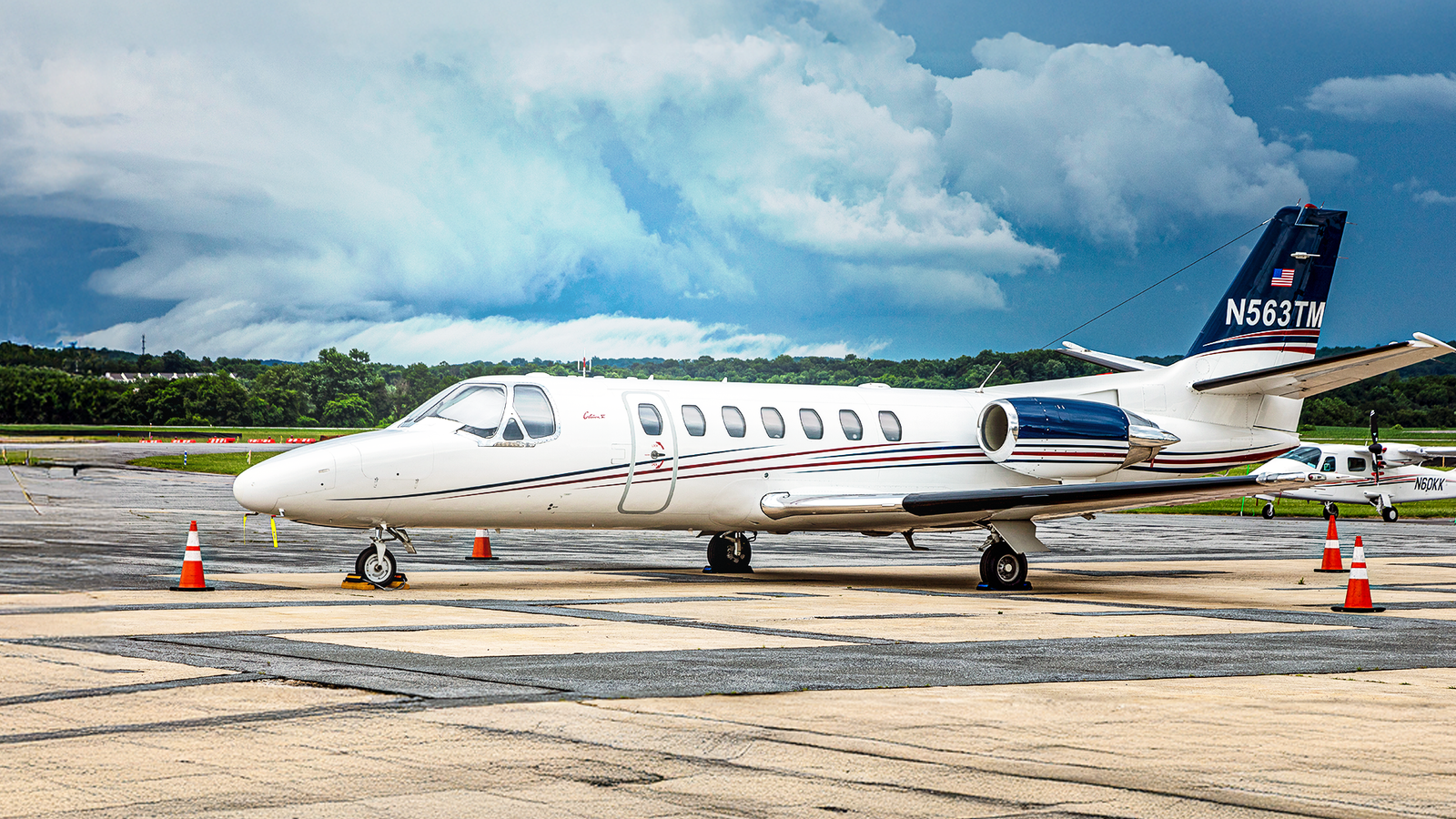
Published Oct 30, 2026, 2:00 PM EDT Luke Diaz is a freelance military writer with experience with active duty experience in the US Navy as well as defense and industrial engineering. He is a former Naval Flight Officer who performed tactical air control on the carrier-based E-2 Hawkeye. The Federal Aviation Administration (FAA) conducted an audit of training providers across the US following the two fatal crashes of single-piloted Cessna Citations in 2025 and determined that 13 of 14 were out of compliance. After 40 years of granting solo pilot exemptions, the FAA concluded that it was no longer in the interest of public safety for the legacy Citation series to be flown without a qualified second in command. The specific mishaps that led the agency to conduct an intensive review of nationwide training practices took place on May 22 and December 18 last year. The first crash killed all six occupants when a Citation went down in San Diego. The second was the fatal accident that killed NASCAR driver Greg Biffle and six others, including his family in North Carolina. The decision took effect immediately on September 29, triggering pushback from the National Business Aviation Association and the Citation Jet Pilots Association. The FAA found that improper training in certification practices was rampant among providers authorized to endorse Part exemptions, including incorrect training, incomplete check rights, and record falsification. According to MiGFLug, the FAA also reviewed 18 years of CE-500 series accidents and found that single-pilot aircraft experienced twice as many mishaps as dual-pilot jets. The NBAA and CJP acknowledged the FAA decision comes in the interest of safety of flight but filed a Freedom of Information Act request for the full analysis behind the ruling. Why A Dual-Pilot Cessna Jet Was Flying With Just One Credit: BlueBarronPhoto | Shutterstock Section 91.531 requires a second in command, meaning a second qualified pilot, in any airplane certificated for more than one pilot or weighing more than 12,500 pounds (5,670 kg). Under Part 25, the rulebook for airliners and business jets, these aircraft would all legally need to have a crew to take off. In 1984, the FAA began to grant special waivers for pilots that had special endorsements to fly solo. This has been a crucial element of the success of the jets in the years that have passed since. As GlobalAir.com observed, many owner pilots chose to buy a Citation because the law let them fly without a second pilot on the payroll. Those models offered a way into jet ownership, and the exemption made them practical for one person to own, schedule, and fly. The exemption was part of the price. The planes from the Citation lineup that were allowed to fly with just one pilot in the cockpit, instead of two, until last month include these airframes: Cessna Citation Models No Longer Single-Pilot Authorized Model 500 Cessna Citation Citation I 550 Citation I S550 Citation S/II 560 Citation V Citation Ultra 550 Bravo 560 Encore 560 Encore+ 552 Navy T-47A For 40 years, the old system permitted private owners and corporate flight departments to operate large business jets with just one person in the cockpit. With the suddenly rescinded exemption, owner-operators are now left with a grounded jet until they can pay for a co-pilot to fly. This could lead to a massive sell-off of planes and severely reduce the number of operations in operation due to the higher cost to fly following the FAA decision. What Owners Face Now Credit: EvrenKalinbacak | Shutterstock Consider the owner of a Citation II who bought the jet to fly alone. From September 29, that owner needs a qualified second in command on every flight, or must leave the airplane on the ramp. Finding, training, scheduling, insuring, and paying a second pilot now falls on owners. The money adds up quickly, which will likely become an insurmountable financial barrier for some owners who never planned for such a scenario. Rob Balzano, chief executive of Citation Jet Pilots, said in GlobalAir.com's analysis that a qualified second pilot can cost roughly $600 to $1,000 per day, before travel, lodging, training and scheduling are counted. A cheaper route is a trained second pilot who does not fly professionally, though that still requires training and a willing person. Selling is not an easy exit either. Citation IIs are listed at an average asking price of $788,600 and sat on the market for 181 days. Bravos were asking $1.5 million and sat for 204 days, with only a handful listed. Balzano warned of lower resale values as demand shifts toward jets that still have single-pilot certification. Owners now face an oncoming drop in resale value alongside higher operating costs. Pushback And A Possible Path Back Credit: Nadezda Murmakova | Shutterstock NBAA and Citation Jet Pilots responded quickly, arguing that rescinding everything at once, with no direct notice to operators, was not the only option the FAA could pursue. The Aircraft Owners and Pilots Association added its own voice. In a letter to FAA Administrator Bryan Bedford, which AOPA published, the group urged the agency to halt what it called an all-or-nothing approach and to withdraw relief only from operators that failed the exemption's minimum standards. The argument rests on a distinction between compliant and noncompliant operators, which the FAA's own review implies. It also asked the FAA to work with industry on safety recommendations. At the industry's annual convention in Las Vegas, Kristie Greco Johnson of NBAA told Administrator Bedford that data might support a path back to single-pilot flying through a supplemental type certificate. An approved modification package could bring extra training and perhaps aircraft changes. FLYING reported that Bedford defended the ban on safety grounds but called the idea worthy of further examination. The FAA could release the accident analysis, publish conditions for an approved modification, and explain how past solo flights on endorsements from providers that had lost their exemptions will be handled under its compliance program. What The Compliance Review Found Credit: Thanhliemnguyen | Shutterstock Nearly all the Part 61 exemption holders were either refused an extension or had their exemptions rescinded, a result that helps explain why the FAA moved against the whole program. The FAA review found incomplete records, required flight training done in an advanced aviation training device that the exemption's conditions did not allow, and examiner checks that included falsified records. The FAA terminated the examiner's designation for those found to have forged documentation. The decision to completely eliminate the pathway rather than issue minor penalties came down to a total failure of the legal standard for a regulatory waiver. The primary catalyst for the shutdown was the discovery of falsified records. To maintain an exemption, providers must prove that single-pilot operations deliver an equivalent level of safety to a traditional two-pilot crew. The compliance review proved the opposite. That paired very negatively with the pilot errors that led to the two fatal accidents in 2025, which was further compounded by an 18-year mishap review that showed roughly twice the accident rate when flown solo compared to similar business jets certified natively for a single pilot. Ultimately, federal officials determined the training network was too compromised to be salvaged, prompting the immediate cancellation of all single-pilot privileges. The Accident That Sparked It All Credit: Aviation Photo Crew | Shutterstock The National Transportation Safety Board (NTSB) is still conducting its final investigation. However, initial results support the theory that pilot error was to blame in 2025. A Citation S550 struck power lines on approach in San Diego on May 22 of last year. The accident killed the pilot and five passengers. According to the NTSB preliminary report, the pilot had been cleared to fly that jet single-pilot just a few months prior, in the previous December. The FAA says the examiner, employed by a Part 61 exemption holder, gave him an improper check before the crash. The second crash, on December 18, 2025, saw Greg Biffle's Citation 550 destroyed during a controlled flight into terrain mishap. They hit the approach lights and crashed short of the runway at Statesville Regional Airport, killing all seven aboard. The NTSB reported that the pilot's type rating carried a limitation requiring a second in command, and that the right seat was occupied by his son, who held only a private pilot certificate. The Citation Jets That Are Still Solo-Pilot Authorized Credit: lorenzatx | Shutterstock The sweeping policy shift from the FAA only affects the legacy Part 25 transport-category Cessna Citation CE-500 series. These are the specific models that require a two-pilot crew according to their original type certificates. Any Citation that was originally certified and designed by Cessna for single-pilot operations is completely unaffected. The regulatory action targeted the decades-old training exemptions used to bypass that two-pilot requirement. The entire modern light-jet lineup from Cessna was natively engineered, tested, and certified for single-pilot flight under Part 23 rules. Pilots with a single-pilot type rating can continue to fly these solo with zero changes: Single-Pilot Authorized Cessna Citation Jet Models Citation M2 / M2 Gen2 CitationJet (CJ1 / CJ1+) CJ2 / CJ2+ CJ3 / CJ3+ CJ4 / CJ4 Gen2 While the FAA banned solo flight in the Part 25 transport-category Citation I and Citation II, Cessna historically manufactured distinct, lighter variants of those exact planes specifically for single-pilot operations under Part 23 rules. Those planes are the Citation I SP (Model 501) and Citation II SP (Model 551). The Model 501 is a single-pilot version of the original Citation I, while the 551 is based on the Citation II.
Why The FAA Ended Single-Pilot Exemptions On Roughly 1,250 Cessna Citations: The Pilots Never Held Them
Full Article
Original Source
Read the full article at Simpleflying →KhanList aggregates and links to publicly available news content. We do not host full articles from third-party sources. Always verify important information with original sources.