
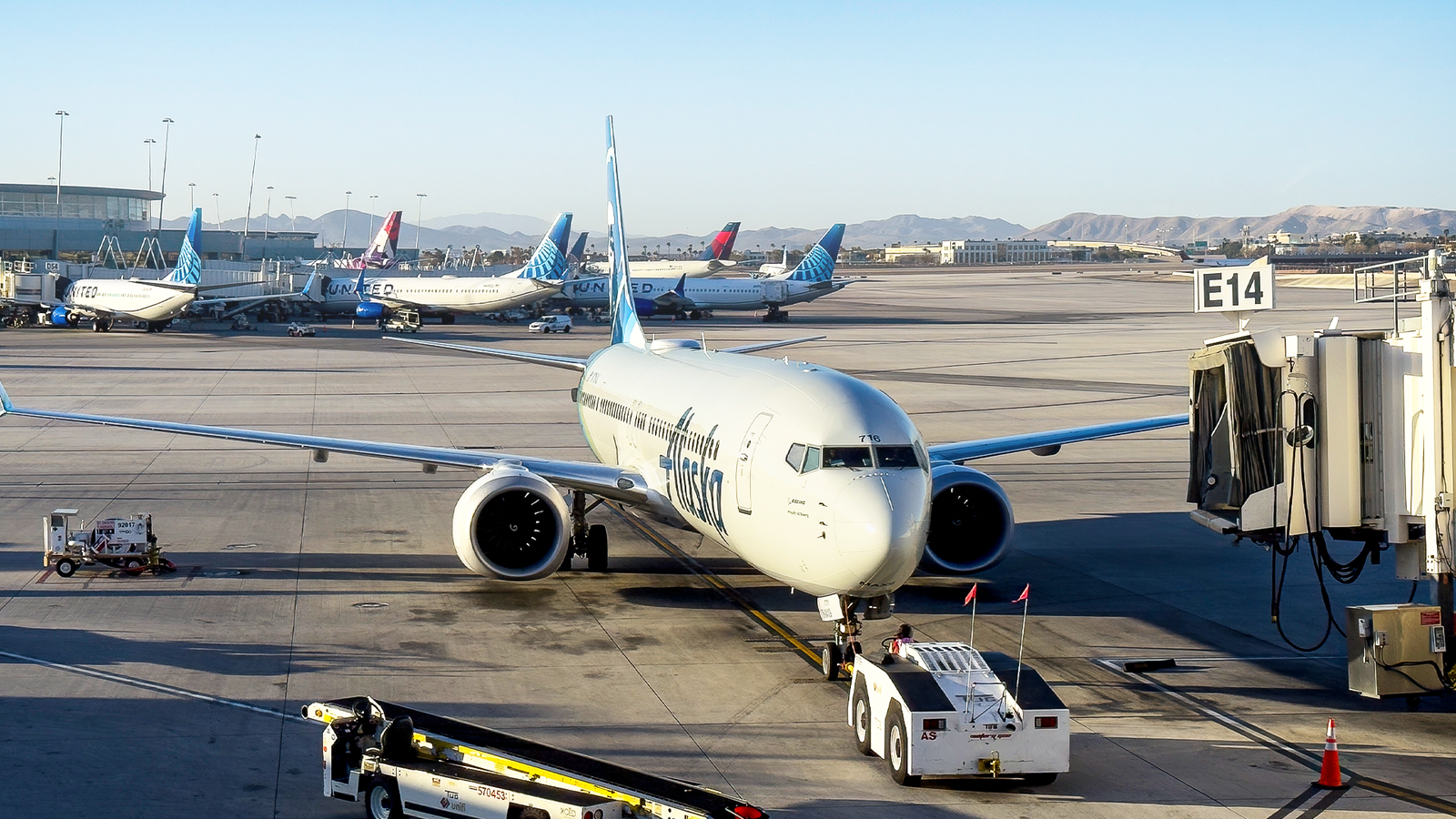
Published Nov 19, 2026, 1:01 PM EST Luke Diaz is a freelance military writer with experience with active duty experience in the US Navy as well as defense and industrial engineering. He is a former Naval Flight Officer who performed tactical air control on the carrier-based E-2 Hawkeye. On a commercial airliner, every pound weighs profit against physics. Financial margins are thin in today's aviation industry, and narrowbody aircraft like the Boeing 737 MAX frequently fly close to their maximum carrying capacity. Airlines employ a clever regulatory provision to fit every passenger, bag, and drop of fuel onto an aircraft without violating safety regulations. Extra fuel is dispensed at the gate as temporary fuel that will burn off prior to takeoff. Because rolling on the ground and flying place different pressures on the frame, an airplane has two distinct weight restrictions from an engineering perspective. When a jet sits at the gate or taxis slowly on flat concrete, only the tires, wheels, and landing gear support the load. Because the plane moves at a walking pace, engineers certify a higher ground limit called Maximum Taxi Weight (MTW), allowing a 737 MAX 8 to weigh 182,700 pounds (82,871 kilograms) at pushback. Takeoff demands a lower limit called Maximum Takeoff Weight (MTOW), which drops the allowance to 182,200 pounds (82,644 kilograms). When pilots advance the throttles to accelerate down the runway, the wings, engines, and brakes take over the workload. The aircraft must be light enough to lift off safely or climb away if one engine fails. That 500-pound (227-kilogram) difference lets dispatchers load extra taxi fuel on top of a full cabin, burning off the surplus before takeoff. How Ground Physics Differ From Takeoff Demands Credit: Photoflash303 | Shutterstock Aviation safety laws clearly distinguish between rolling slowly on pavement and accelerating down a runway. When taxiing at around 15 knots, a jet experiences slight vertical pressures that rarely exceed 1.2 times normal gravity. The primary frame and large landing gear may readily handle extra mass during this slow roll. Because the wings are not yet lifting the aircraft, engineers allow a higher ground-weight restriction without jeopardizing the aircraft's structural integrity. For basic safety of flight, a substantially lower weight limit is mandated while taking off at high speed. If an issue arises before liftoff, the tires and brakes must be able to safely stop the aircraft once it is positioned on the runway. Additionally, the aircraft must be light enough to maneuver over surrounding hills or buildings with just one engine in the event that the other fails. The lower takeoff limit is set by these stringent safety regulations. The amount of weight a plane can safely lift off the ground is further restricted by local weather and runway conditions. Hot summer air and high-altitude airports make the air thinner, which reduces wing lift and engine power. Wet or icy pavement also makes it much harder for the brakes to stop a heavy jet during a canceled takeoff. Because conditions change every day, pilots cannot exceed the strict takeoff limit by even a single pound. How Dispatchers And Pilots Manage The Weight Buffer Credit: Wangkun Jia | Shutterstock Airlines make good use of this weight differential on crowded flights. A Boeing 737 MAX 8, which weighs about 99,360 pounds empty, hits its zero-fuel limit of 145,400 pounds when 172 passengers, luggage, and freight are added. In order to carry the required flight fuel and weather reserves without bumping paying customers, dispatchers load the aircraft to its legal takeoff limit before adding 500 pounds of specialty taxi gasoline on top. To handle this extra weight, the flight crew employs precise ground procedures and fuel monitoring. The cabin air conditioning and electronics are powered by a small tail generator that burns about 100-200 lbs (45-90 kg) of gasoline per hour prior to pushback. The engines gradually use up the remaining buffer when the crew starts both main engines and starts taxiing. Pilots closely monitor the onboard computer weights and fuel gauges during the taxi to the runway. Crew expertise becomes critical whether airport traffic moves faster or more slowly than expected. Pilots must hold short of the runway and burn off excess fuel before advancing the throttles if air traffic control permits the aircraft to take off right away, before the 500-pound buffer is gone. On the other hand, lengthy ground delays force the crew to closely monitor fuel levels to ensure they never run out of what is required for the actual flight. Pilots must make a difficult choice if a traffic bottleneck on the taxiway consumes all of the buffer and begins depleting flying reserves. Before trying to fly, they had to leave the departure line and return to the gate for more fuel. Passengers experience annoying delays when returning to the terminal, but it guarantees the aircraft never takes off without the legally mandated reserves needed to reach its destination without incident. When Fast Runway Clearances Make Jets Too Heavy To Fly Credit: kamilpetran | Shutterstock Only when airport traffic moves at a typical speed does the overloaded ground fuel approach succeed. A jet consumes about 250 pounds of fuel during a normal 12-minute taxi at a busy hub, easily lowering its weight below the permitted takeoff limit. A sudden air traffic control shortcut that shortens the drive to under four minutes leaves the aircraft hundreds of pounds too heavy because both engines consume roughly 20 pounds of fuel per minute when idle. Strict federal safety regulations prohibit pilots from starting their takeoff roll even one pound over the certified takeoff weight. When an unexpectedly fast taxi leaves the jet overweight, the flight crew faces an awkward choice. They must either turn down an immediate takeoff clearance or pull aside onto an open concrete pad to burn off the extra gas while holding the wheel brakes. To shed that surplus weight as fast as possible, pilots advance the throttles slightly and turn the cabin air conditioning systems up to full power. The irony is clear to anyone watching from the terminal. Modern airliners operate so close to their strict structural limits that crews sometimes have to waste valuable time, runway slots, and expensive jet fuel sitting still simply because they reached the runway too early. Why Airbus Jets Have Nearly Twice The Taxi Cushion Credit: MC MEDIASTUDIO | Shutterstock When compared to its primary European competitor, the 737 MAX's narrow weight gap is much more pronounced. Pilots have an 882-pound taxi fuel cushion, while a typical Airbus A320neo is rated for a 174,165-pound takeoff and a 175,047-pound ground limit. Boeing's 500-pound limit is almost doubled on larger aircraft like the A321neo, allowing pilots to manage congested taxiways or lengthy gate waits without depleting crucial flight reserves. When revising the 737 design, Boeing engineers had far less flexibility. The MAX ended up roughly 7,000 pounds heavier than the older 737 model because of stronger wing supports, added fire barriers, and massive new engines mounted higher and farther forward on the wing. That extra base weight squeezed every remaining pound of structural margin out of the classic airframe. Certified Weight Limit Boeing 737 MAX 8 Airbus A320neo Allowable Taxi Fuel Buffer 500 lbs (227 kg) 882 lbs (400 kg) Maximum Taxi Weight (At Gate) 182,700 lbs (82,871 kg) 175,047 lbs (79,400 kg) Maximum Takeoff Weight (At Runway) 182,200 lbs (82,644 kg) 174,165 lbs (79,000 kg) Maximum Landing Weight 152,800 lbs (69,308 kg) 148,592 lbs (67,400 kg) Maximum Zero Fuel Weight 145,400 lbs (65,952 kg) 141,757 lbs (64,300 kg) Operating Empty Weight 99,360 lbs (45,069 kg) 97,700 lbs (44,316 kg) Maximum Payload 46,040 lbs (20,883 kg) 44,057 lbs (19,984 kg) Because Boeing could not heavily reinforce the landing gear mounts without altering the jet's low ground stance, engineers locked the ground-to-takeoff-weight gap at just 500 pounds. Keeping that buffer slim preserved valuable passenger seats and cargo space on paper. However, it leaves flight crews managing razor-thin fuel margins whenever they fly the jet at its maximum range. Why A 1960s Airframe Is A Stretch On Long Flights Credit: d13 | Shutterstock Stretching a 1960s body design to fly long cross-country routes creates hidden trade-offs in passenger comfort. When cruising at 41,000 feet, the cabin pressure inside a 737 MAX feels like standing on an 8,000-foot mountain because its classic aluminum skin can't handle as much internal pressure. Newer rivals maintain a lower cabin altitude, around 6,500 feet, leaving MAX travelers with slightly less oxygen and noticeably more fatigue after landing. Cabin moisture is another victim of that traditional metal construction. Because aluminum frames can corrode if moisture collects inside the wall insulation, engineers cannot pump extra humidity into the air system. During long five-hour flights at maximum takeoff weight, cabin humidity drops to roughly 10%, making the air drier than most deserts and leaving passengers feeling dehydrated. Pushing the 737 MAX to its absolute ramp weight limit allows airlines to carry nearly 180 passengers and cross-country fuel on a single-aisle jet. Those impressive economics keep ticket prices competitive and routes profitable for carriers. However, that efficiency comes at a physical cost, asking travelers to endure a drier, higher-altitude cabin than newer jets flying the same routes.
Why The Boeing 737 MAX Is Often Heavier Than Its MTOW At The Gate
Full Article
Original Source
Read the full article at Simpleflying →KhanList aggregates and links to publicly available news content. We do not host full articles from third-party sources. Always verify important information with original sources.